

 English
 中文简体
 Español
 عربى
 русский



Polyester Mattress Fabric: Advanced Performance, Comfort, and Reliable Textile Manufacturing
Content
- 1 Understanding Polyester Mattress Fabric
- 2 Why Polyester Is Widely Used in Mattress Applications
- 3 Key Product Specifications
- 4 Advantages Compared with Less Specialized Mattress Textiles
- 5 Construction Options for Different Mattress Designs
- 6 Functional Finishing and Performance Development
- 7 Advanced Manufacturing Approach
- 8 Manufacturing Strengths Supporting Global Customers
- 9 Applications Across Mattress and Bedding Markets
- 10 How to Select the Correct Fabric Specification
- 11 Quality, Sustainability, and Responsible Product Development
- 12 Purchasing and Cooperation Considerations
- 13 Q&A: Polyester Mattress Fabric
- 13.1 What is polyester mattress fabric made from?
- 13.2 What weight is available?
- 13.3 Can polyester mattress fabric be customized?
- 13.4 Is polyester mattress fabric breathable?
- 13.5 Can the fabric include flame-retardant treatment?
- 13.6 Is water-repellent polyester fabric waterproof?
- 13.7 Can a small amount of spandex improve mattress-cover fitting?
- 13.8 How does jacquard differ from printed mattress fabric?
- 13.9 What quality tests should buyers consider?
- 13.10 Why is manufacturing experience important?
- 13.11 What makes a reliable mattress fabric supplier?
- 14 Conclusion
- 15 References
- 16 Product: Polyester Mattress Fabric
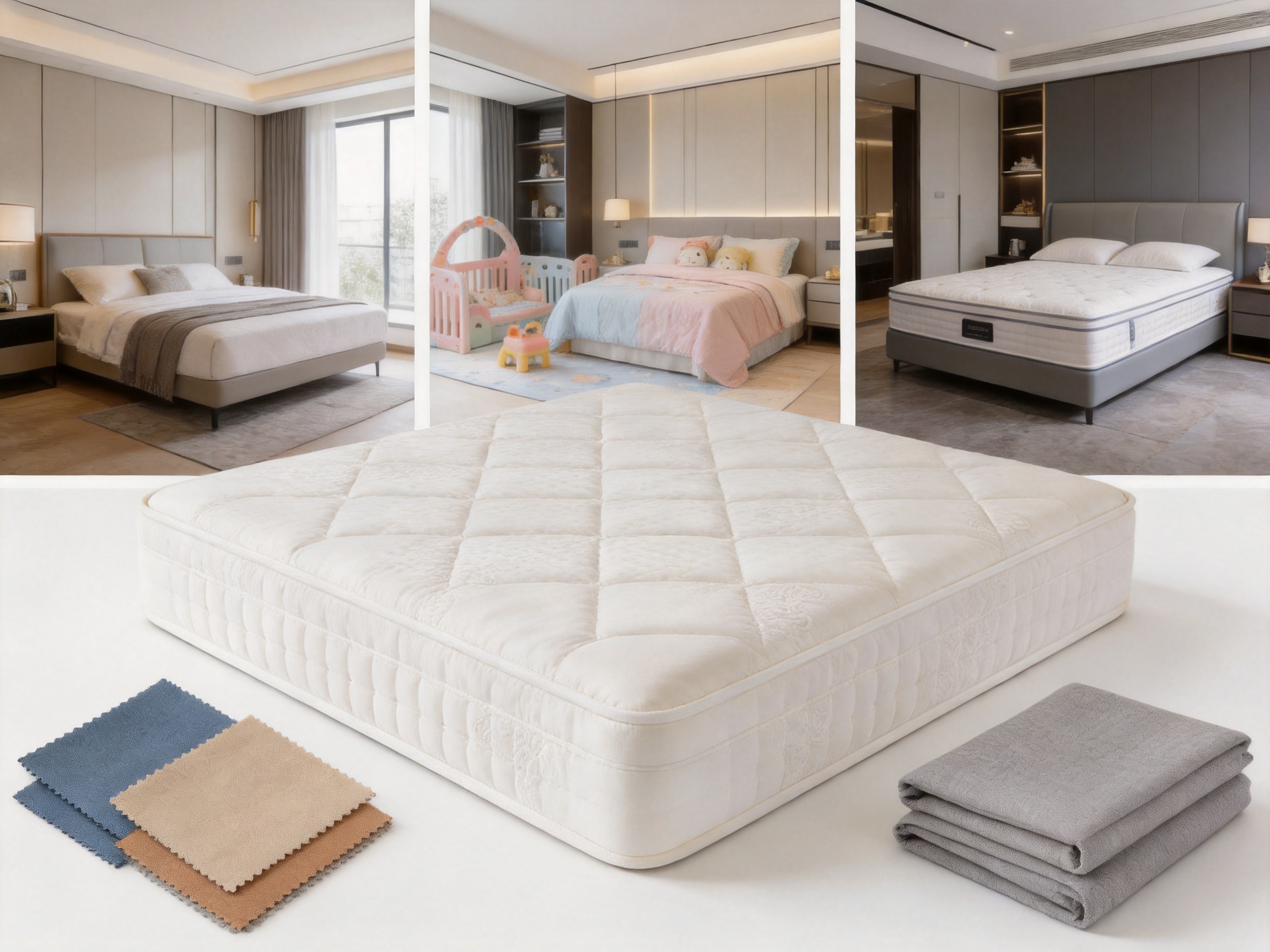
Polyester Mattress Fabric for Modern Bedding Applications
Mattress fabric is far more than an outer decorative layer. It is the textile surface that people touch every night, the protective interface between the sleeper and the mattress core, and an important contributor to comfort, hygiene, durability, appearance, and product positioning. As mattress manufacturers respond to increasingly demanding consumers, fabric suppliers must provide materials that combine softness, dimensional stability, visual appeal, easy care, and dependable production consistency.
Polyester mattress fabric is one of the most adaptable solutions for contemporary bedding products. Made from 100% polyester or polyester blended with a small percentage of spandex, this fabric can be engineered for different mattress constructions, climates, price levels, and design requirements. It can be produced in plain, twill, jacquard, knitted, or air-layer structures, while optional flame-retardant, water-repellent, and anti-static treatments add further functional value.
For mattress producers, wholesalers, furniture manufacturers, hospitality suppliers, and bedding brands, the most valuable textile is not simply attractive when viewed on a sample card. It must remain stable through cutting, sewing, quilting, packaging, transportation, installation, and long-term use. It must also support efficient manufacturing and provide a consistent appearance across repeat orders. A well-developed polyester mattress fabric can meet these requirements while offering a practical balance between performance and cost.
Hangzhou Xinsili Decorative Fabric Weaving Co., Ltd. specializes in the research, development, and manufacturing of functional decorative textiles. With 19 years of industry experience, a 12,000-square-meter factory area, and recognition as a National High-Tech Enterprise in 2023, the company has developed a manufacturing approach centered on reliable quality, design innovation, and practical textile performance. Its fabric solutions are intended for residential, hotel, and commercial environments, where durability, comfort, safety, and appearance must work together.
Understanding Polyester Mattress Fabric
Polyester mattress fabric is a textile developed for mattress covers, mattress panels, quilted surfaces, removable covers, mattress borders, and related bedding applications. The base material is polyester fiber, a synthetic fiber known for strength, abrasion resistance, dimensional stability, and relatively low moisture absorption. Depending on the required performance, the polyester may be woven, knitted, textured, dyed, printed, or combined with other fibers.
A standard construction may use 100% polyester to provide stable performance and economical production. A small percentage of spandex may also be added where greater stretch and recovery are required. This blended construction can help the textile conform more smoothly to mattress contours, reduce tension during assembly, and improve the fit of removable or elasticated covers.
Polyester mattress fabric can be manufactured in different weights and thicknesses. Materials in the approximate range of 200 to 300 grams per square meter are suitable for many mattress layers, although the final specification should be selected according to the mattress design, quilting method, filling structure, intended market, and performance target. A lighter construction may be useful for flexible covers or cost-sensitive products, while a heavier construction can create a fuller hand, stronger visual presence, and greater resistance to handling.
The fabric construction has a direct effect on touch, stretch, breathability, appearance, and durability. Plain weaves offer a clean and dependable structure. Twill weaves can create a subtle diagonal texture and improved surface character. Jacquard constructions allow complex patterns to be integrated into the fabric. Knitted structures can offer softness and flexibility, while air-layer structures may help create a thicker, more cushioned hand.
Why Polyester Is Widely Used in Mattress Applications
Polyester has become an important fiber for mattress textiles because it provides a combination of properties that is difficult to achieve economically with one material. It can be produced in a wide range of yarn types, fabric densities, colors, patterns, and finishes. This flexibility allows manufacturers to develop mattress products for different consumer groups without changing the entire textile supply system.
One important advantage is dimensional stability. Mattress covers are exposed to stretching, compression, friction, folding, sewing tension, and repeated movement. A fabric that changes shape excessively may create wrinkles, loose areas, or an uneven appearance. Polyester helps maintain the intended dimensions of the finished cover when the fabric is correctly engineered and properly processed.
Another advantage is abrasion resistance. Mattress fabric may experience regular friction from sleeping, turning, fitted sheets, mattress protectors, lifting, cleaning, and movement during delivery. A durable polyester construction can help maintain surface integrity and appearance over an extended service period. This is especially important in hotels, dormitories, serviced apartments, healthcare environments, and other settings where bedding is used frequently.
Polyester also supports efficient care and handling. The fiber generally dries faster than many natural fibers and is less likely to retain large amounts of moisture. This can be useful for mattress covers that need practical maintenance and predictable drying behavior. The fabric may also be produced with finishes that support water repellency, anti-static performance, or other specified requirements.
Color and design flexibility is another reason polyester is widely selected. It can be dyed in solid shades or printed with patterns suitable for modern interiors, children’s products, hospitality collections, and coordinated bedding ranges. Good resistance to rubbing and light exposure helps preserve the visual quality of the fabric when the textile is properly dyed and finished according to its intended use.
Key Product Specifications
| Specification | Typical Options | Value for Mattress Manufacturers |
|---|---|---|
| Fiber composition | 100% polyester or polyester blended with a small percentage of spandex | Provides strength, stability, flexibility, and design adaptability |
| Weight | Approximately 200–300 gsm, with other specifications available by requirement | Allows selection according to coverage, thickness, hand feel, and mattress construction |
| Fabric structures | Plain, twill, jacquard, knitted, and air-layer constructions | Supports different tactile effects, visual styles, and functional requirements |
| Finishing options | Flame-retardant, water-repellent, anti-static, and other functional finishes | Helps adapt the textile to safety, care, comfort, and application requirements |
| Color development | Solid dyeing, customized shades, and printed designs | Enables coordination with mattress collections and interior environments |
| Performance focus | Dimensional stability, abrasion resistance, color fastness, and comfort | Supports reliable manufacturing and longer-lasting finished products |
The specifications above should be treated as a starting framework rather than a universal formula. Mattress producers may require different weights, widths, stretch percentages, surface textures, or finishing combinations. The most effective development process begins with a clear understanding of the finished mattress, the expected use environment, the production equipment, and the required testing standards.
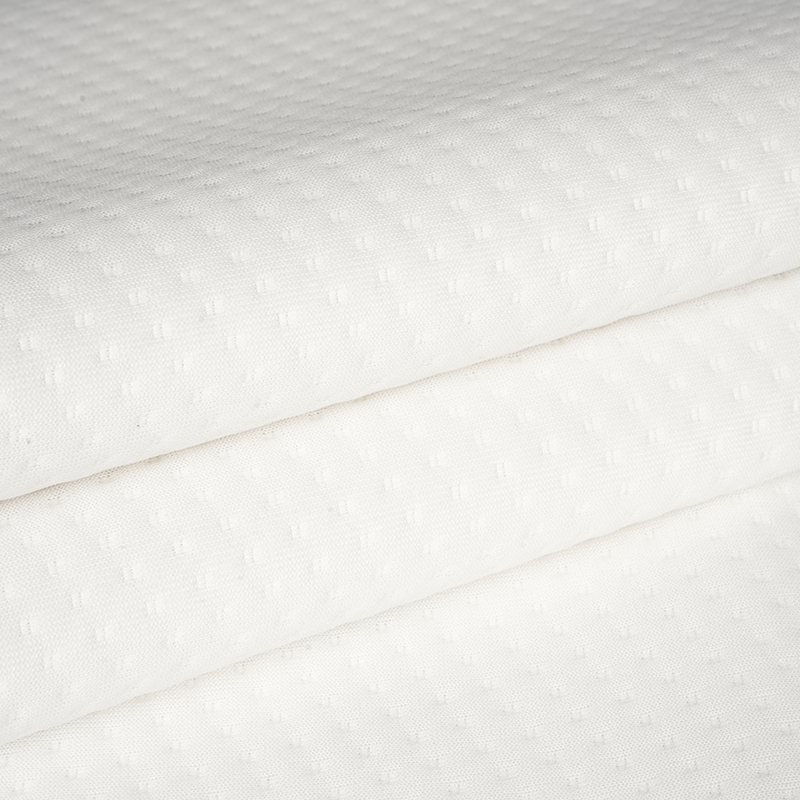
Polyester Mattress Fabric
Advantages Compared with Less Specialized Mattress Textiles
Balanced Performance and Cost
One of the main advantages of polyester mattress fabric is its balanced cost-to-performance profile. Some premium natural fibers may provide a distinctive hand feel, but they can also introduce higher costs, greater moisture sensitivity, or more demanding care requirements. Polyester can deliver consistent strength, color development, and process stability while remaining suitable for large-scale mattress production.
This balance is particularly valuable for manufacturers offering multiple product levels. A standard polyester fabric can be used for entry and mid-range mattresses, while a jacquard, knitted, air-layer, or functional finished version can support premium collections. The same basic fiber platform can therefore serve different commercial strategies.
Better Production Consistency
Mattress assembly involves cutting large fabric panels, matching patterns, sewing borders, attaching zippers, quilting layers, and sometimes fitting elastic components. Inconsistent fabric behavior can lead to production delays, material waste, uneven seams, or visible defects. Properly engineered polyester fabric offers predictable handling during these processes.
Compared with fabrics that are highly sensitive to humidity or mechanical tension, polyester can provide a more stable basis for repeat manufacturing. This does not eliminate the need for careful quality control, but it helps manufacturers maintain consistency when fabric rolls are processed across different production batches.
Broad Structural Choice
Another competitive advantage is the variety of constructions available. Mattress manufacturers are not limited to a single surface effect. A plain weave can provide a clean and economical appearance. A twill construction can create a more substantial visual texture. Jacquard can integrate decorative motifs without relying entirely on surface printing. Knitted and air-layer structures can improve flexibility, softness, and visual fullness.
This structural variety helps product designers differentiate mattress collections. A fabric may be selected to communicate natural simplicity, technical performance, luxury, youthfulness, or hotel durability. The ability to adjust construction gives manufacturers more control over both aesthetics and function.
Compatibility with Functional Finishes
Polyester mattress fabric can be developed with functional finishes that respond to specific market needs. A water-repellent finish may help reduce the speed at which liquid spreads across the surface. An anti-static finish may improve surface comfort and reduce the accumulation of static electricity under suitable conditions. A flame-retardant finish may support specific safety objectives when the complete mattress system is tested according to applicable requirements.
Finishing should always be selected according to the final product, local regulations, and testing protocol. No single finish automatically guarantees compliance in every market. However, the ability to incorporate functional treatments gives polyester mattress fabric an important advantage over materials that offer fewer practical finishing options.
Design and Color Flexibility
Modern consumers often judge a mattress by more than comfort. The appearance of the cover, the coordination with bedroom furniture, and the perceived quality of the textile can influence purchasing decisions. Polyester supports a wide range of shades, patterns, textures, and surface effects.
For hospitality and commercial projects, fabrics can be developed to coordinate with interior design concepts. For children’s mattresses, patterned surfaces and soft colors may support a friendly product identity. For premium bedding, jacquard structures and refined textures can communicate a higher level of craftsmanship. This flexibility allows the textile to become part of the product story rather than simply serving as a protective shell.
Construction Options for Different Mattress Designs
Plain-Weave Polyester
Plain-weave polyester is formed through a simple over-and-under yarn arrangement. Its balanced structure makes it suitable for many general mattress applications. It can offer a smooth surface, dependable dimensional stability, and an efficient production cost. Depending on yarn selection and density, the material may be made lightweight and flexible or denser and more substantial.
This type of fabric is often suitable for mattress panels, inner cover sections, and practical bedding products where a clean appearance and reliable performance are more important than complex decorative effects.
Twill-Weave Polyester
Twill fabric is recognized by its diagonal surface pattern. The construction can create a richer visual effect and a slightly different hand from plain weave. It may be selected for mattress borders, premium-looking covers, or designs that require greater surface character.
Twill can also help designers create subtle contrast when combined with solid panels or quilted sections. Its appearance may support both contemporary and traditional bedding styles.
Jacquard Polyester
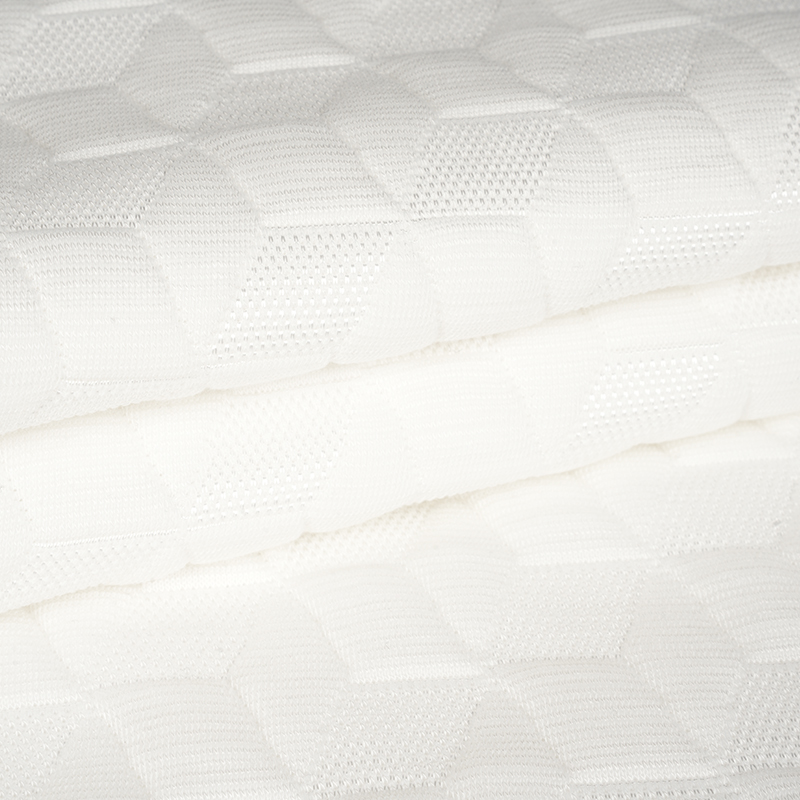
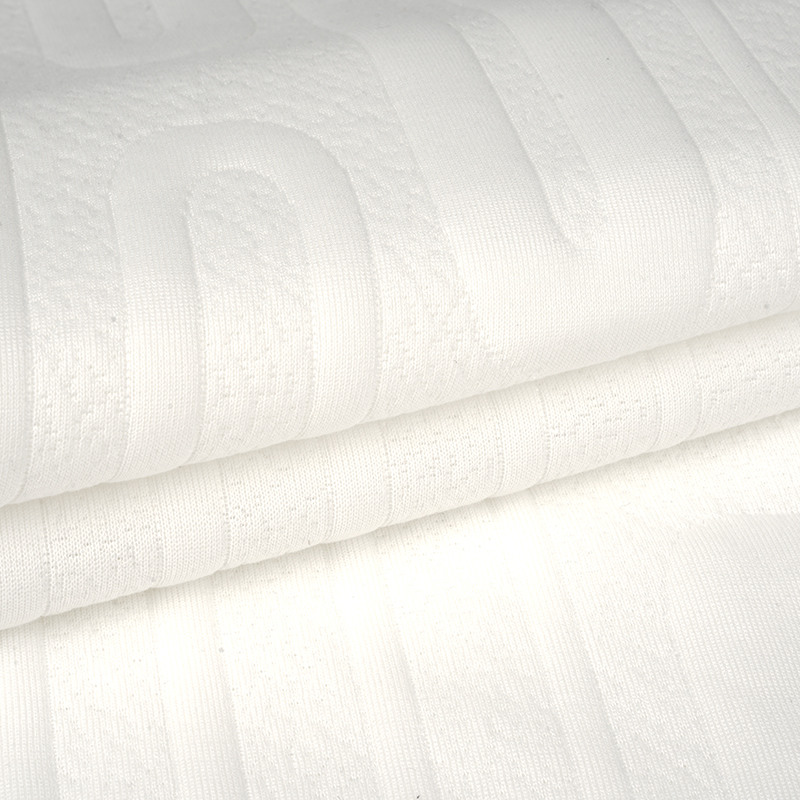
Jacquard construction creates patterns through the arrangement of yarns during weaving. This allows decorative motifs, geometric designs, and tonal effects to become part of the textile structure. Compared with a simple printed surface, jacquard can provide greater dimensional interest and a more integrated appearance.
Jacquard mattress fabric is useful when a manufacturer wants to create a recognizable collection or a premium visual identity. The design possibilities depend on the weaving equipment, yarn selection, pattern complexity, and development process.
Knitted Polyester
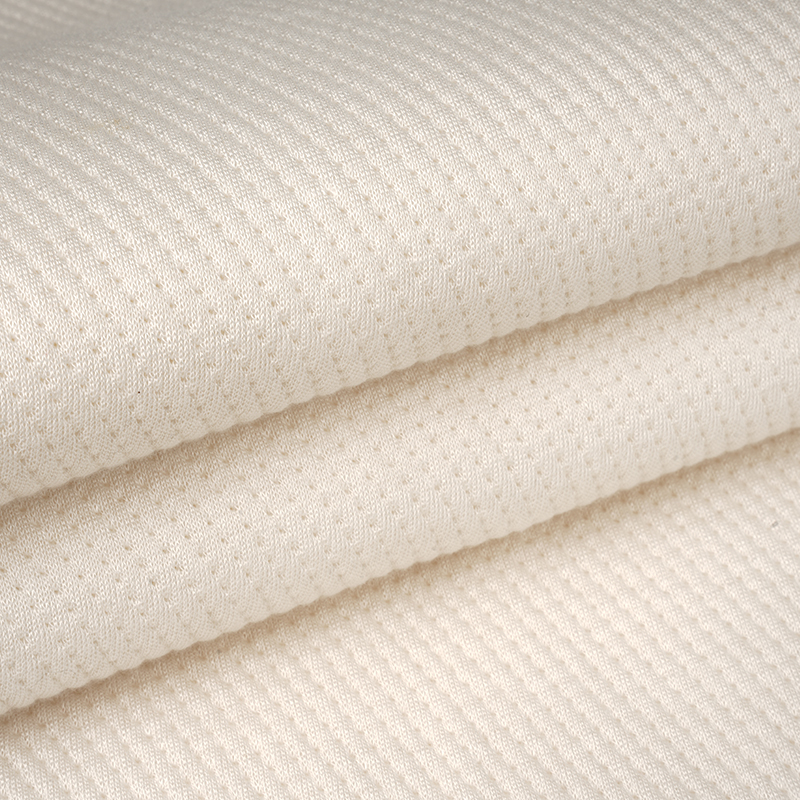
Knitted polyester fabric is made from interlocking loops rather than a traditional woven grid. This structure can provide softness, flexibility, and stretch. When blended with a small amount of spandex, the fabric may offer improved elasticity and recovery for fitted mattress covers or designs with complex contours.
Knitted structures should be selected with attention to dimensional control, edge behavior, snag resistance, and sewing performance. When properly engineered, they can provide a comfortable surface with a modern, flexible hand.
Air-Layer Structures
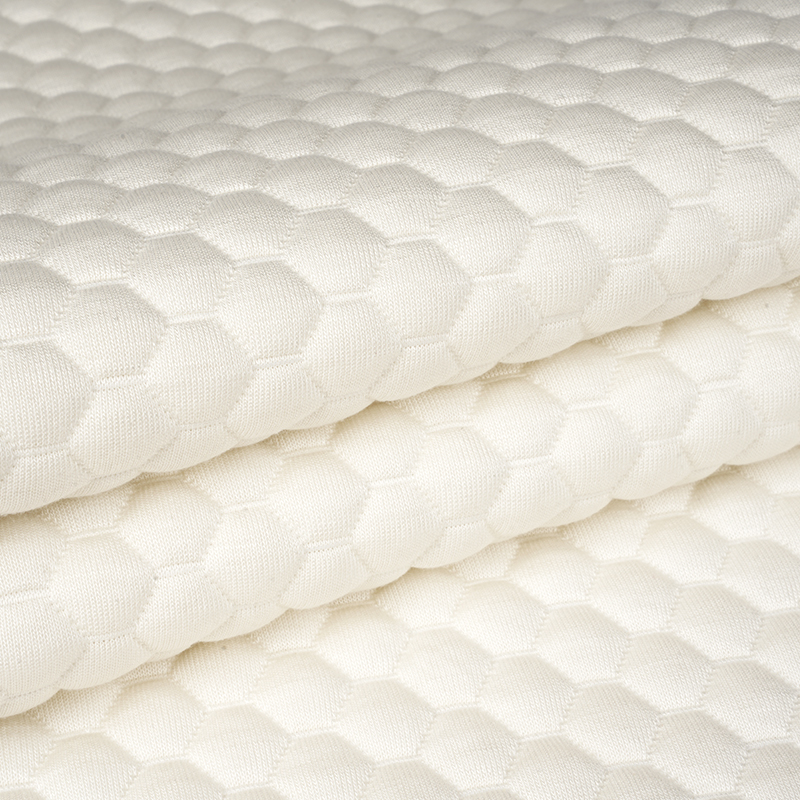
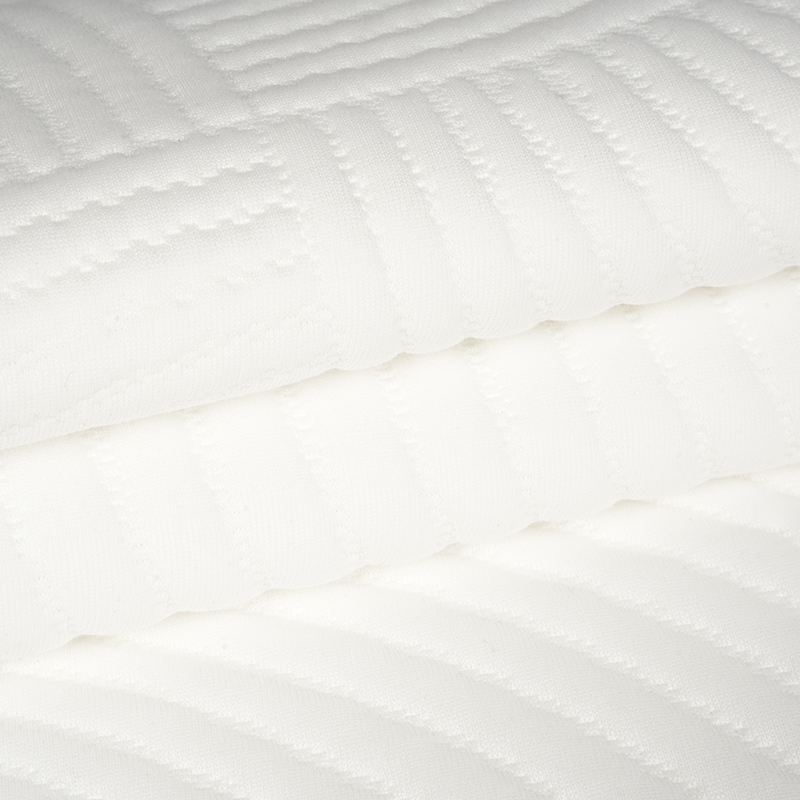
Knitted air-layer structures are designed with a three-dimensional configuration that can create thickness, loft, and cushioning. They may provide a fuller hand and a more supportive surface impression than a very thin single-layer fabric.
These constructions can be useful in mattress products where surface comfort and visual volume are important. Their suitability depends on the mattress architecture, quilting method, ventilation requirements, and final thickness tolerance.
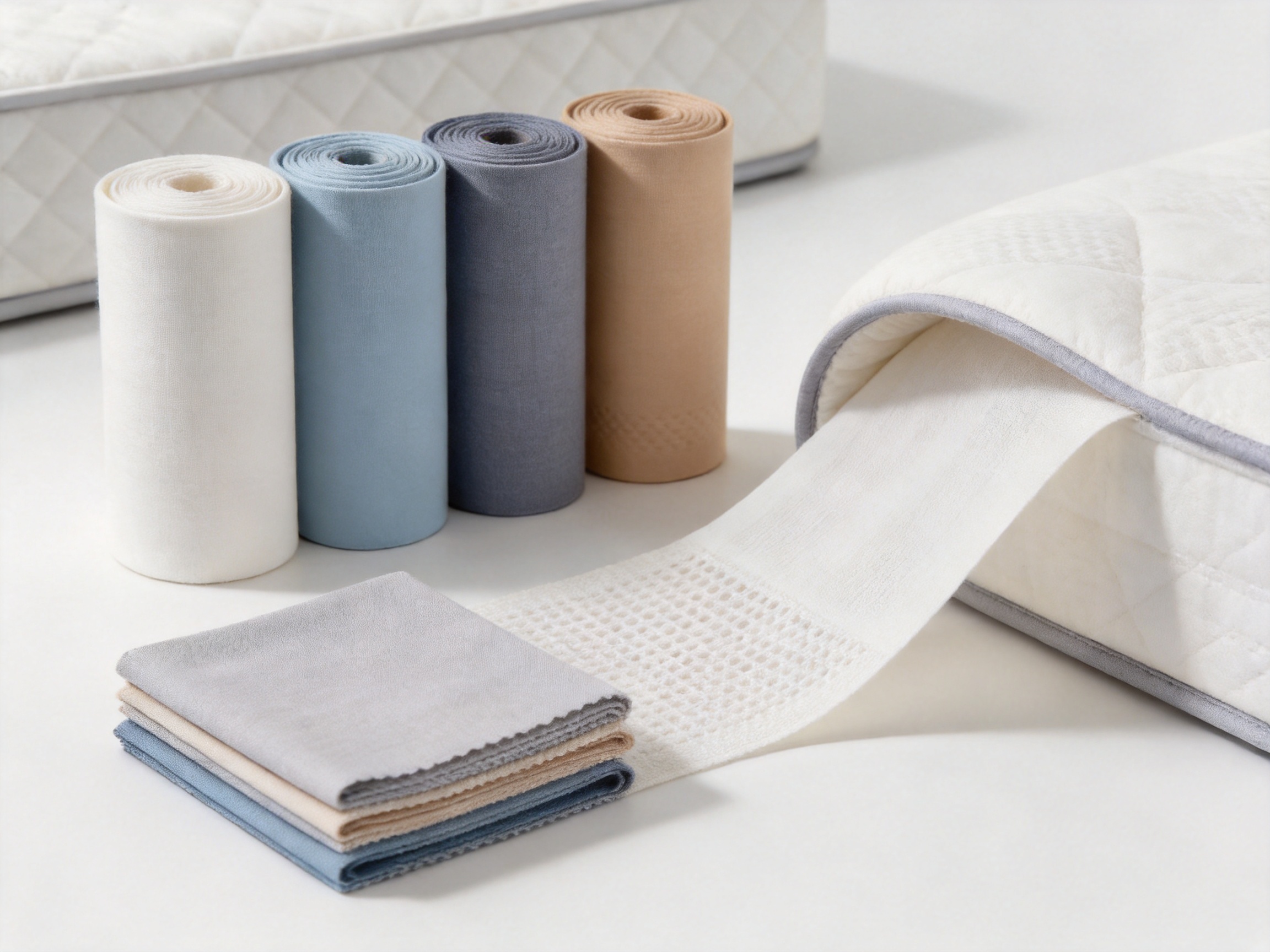
Functional Finishing and Performance Development
Fabric finishing is an important part of mattress textile development because the base construction does not determine every final property. Finishing can modify the surface feel, resistance to liquids, static behavior, flame response, and visual quality. The correct finish must be selected in relation to the fiber composition, fabric density, intended use, washing or cleaning method, and required test procedure.
Flame-Retardant Treatment
Flame-retardant treatment may be considered for mattress products that must meet specific fire-safety expectations. The performance of a finished mattress depends on the complete product system, including the cover, filling, foam, thread, quilting layers, and construction method. Consequently, a flame-retardant fabric should not be evaluated in isolation.
A responsible development process includes communication between the fabric supplier and mattress manufacturer, clear identification of the target market, and testing of the final assembled product. The fabric can contribute to the overall safety strategy, but the completed mattress must be assessed according to the applicable regulations and test methods.
Water-Repellent Treatment
Water-repellent finishing can help limit the rapid penetration or spreading of small liquid spills on the fabric surface. This may be valuable for children’s bedding, hospitality mattresses, rental products, and everyday home use. Water repellency can also support easier surface maintenance when combined with a suitable mattress protector or removable cover.
The level of water repellency, durability after cleaning, and compatibility with printing or dyeing should be confirmed during development. A water-repellent surface is not necessarily waterproof, and product communication should describe the actual tested performance accurately.
Anti-Static Treatment
Static electricity can affect the perceived comfort of textile products, particularly in dry indoor environments. An anti-static finish may help reduce static accumulation under appropriate conditions. Its effectiveness can depend on humidity, friction, laundering, fiber composition, and the presence of other materials in the mattress system.
When anti-static performance is requested, it should be included in the technical specification and verified through an agreed testing approach. The purpose is not only to add a marketing feature, but also to create a more comfortable and controlled user experience.
Surface Handle and Comfort Finishing
Mattress fabric directly influences the first tactile impression of a product. Finishing can be adjusted to create a smoother, softer, fuller, or more structured hand. For a sleeping surface, comfort is especially important because the textile may remain in contact with bed sheets and mattress protectors for many hours at a time.
Surface comfort must be balanced with durability. An excessively soft finish may not provide the required abrasion resistance, while a very firm finish may reduce the sense of comfort. Experienced textile development therefore considers hand feel alongside tensile strength, seam performance, pilling resistance, color fastness, and dimensional behavior.
Advanced Manufacturing Approach
The quality of a mattress fabric depends on more than the fiber name printed on a specification sheet. It is the result of material selection, yarn preparation, fabric formation, coloration, finishing, inspection, and order management. Advanced manufacturing means integrating these stages into a controlled process rather than treating them as separate activities.
Material and Yarn Selection
The manufacturing process begins with selecting polyester yarns that match the required fabric structure and end use. Yarn count, filament or staple construction, texturing, strength, uniformity, and surface characteristics can all affect the final fabric. If spandex is included, the blend ratio and recovery behavior must be controlled carefully to achieve the intended stretch without creating excessive instability.
Material selection also considers the target weight, width, hand feel, dyeing behavior, and finishing compatibility. A fabric designed for a smooth mattress panel may require a different yarn system from a thick air-layer construction or a highly decorative jacquard.
Precision Weaving and Knitting
During weaving or knitting, machine settings influence density, width, pattern accuracy, loop stability, and surface uniformity. Controlled production parameters help reduce problems such as uneven tension, streaks, holes, pattern distortion, loose edges, and inconsistent thickness.
For jacquard fabrics, pattern programming and repeat accuracy are essential. For knitted fabrics, loop formation and tension control influence stretch, recovery, and surface appearance. For air-layer materials, the spacing and connection between layers must be maintained to preserve the intended three-dimensional structure.
Coloration and Pattern Development
Color development requires careful control because mattress fabric is often produced in coordinated collections. A color that appears correct on a small sample may look different across a large production roll, under different lighting conditions, or next to other bedding materials. Reliable dyeing and printing procedures help maintain shade consistency and reduce variation between batches.
Color fastness is also important. Mattress textiles may experience rubbing from sheets, skin, clothing, packaging materials, and cleaning processes. Good resistance to rubbing and light exposure helps the fabric retain its visual quality. Testing should be performed according to the agreed standard and intended use environment.
Finishing and Surface Stabilization
After fabric formation and coloration, finishing can be used to adjust the surface and functional properties. The finishing line must apply treatment evenly across the width and length of the fabric. Uneven application may create differences in hand feel, water repellency, shade, or surface appearance.
Heat setting or other stabilization processes may be used where appropriate to control width, reduce shrinkage, and improve dimensional consistency. The exact process depends on the fabric construction and fiber blend. Polyester and spandex fabrics require particular attention to temperature and tension because excessive heat or mechanical stress may affect elasticity and recovery.
Inspection and Quality Control
Quality inspection should continue throughout the manufacturing process rather than being limited to the final roll. Incoming materials, machine operation, semi-finished fabric, dyed fabric, finished fabric, and packed goods each require appropriate checks.
Typical inspection areas include fabric width, weight, thickness, shade, pattern alignment, surface defects, holes, stains, broken yarns, loose edges, stretch, recovery, and handle. For specific applications, additional tests may address abrasion, pilling, tensile strength, tear strength, seam slippage, color fastness, water repellency, anti-static performance, or flame response.
A systematic inspection process helps identify the cause of a defect before a large quantity is completed. It also supports more accurate communication with customers and creates a stronger foundation for repeat orders.
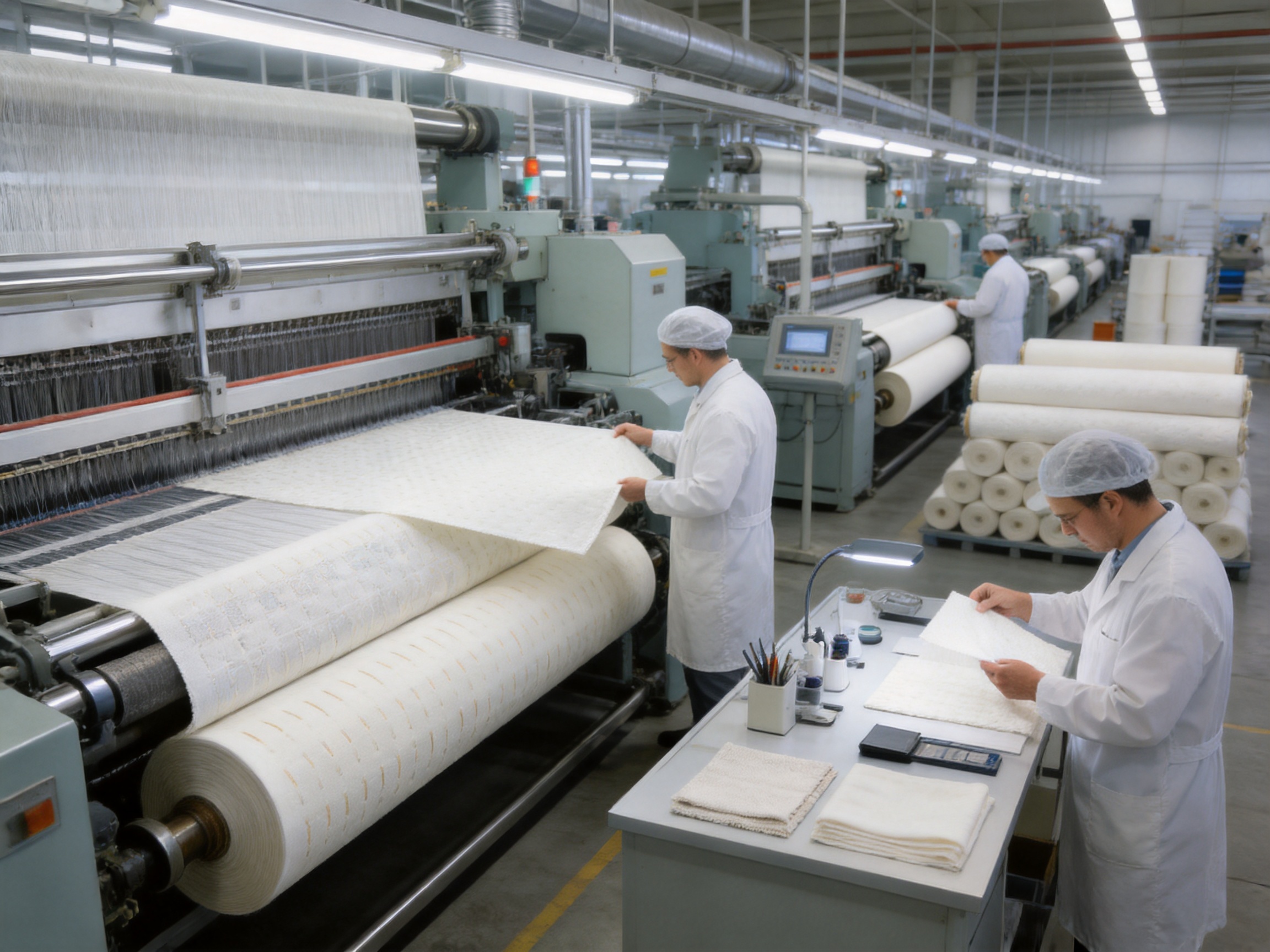
Manufacturing Strengths Supporting Global Customers
Hangzhou Xinsili Decorative Fabric Weaving Co., Ltd. combines textile development with practical manufacturing experience. Its focus on functional decorative fabrics allows it to serve applications that require both appearance and performance. Mattress textiles benefit from this approach because the fabric must contribute to the comfort and visual identity of the product while also meeting technical and production requirements.
The company’s 19 years of industry experience provide a foundation for understanding changing market expectations, fabric construction choices, finishing requirements, and customer development processes. Experience is particularly valuable when a product must be adjusted through several sample stages. Small changes in weight, yarn type, texture, color, or finishing can significantly affect the final result, and an experienced manufacturer can help connect these variables.
A 12,000-square-meter factory area supports organized production and development activities. Factory scale alone does not guarantee quality, but it can provide the space needed for material management, machinery, inspection, sample preparation, finished-goods handling, and production coordination. These capabilities are important for customers who require stable supply rather than one-time sampling.
Recognition as a National High-Tech Enterprise in 2023 reflects the company’s emphasis on research, technical advancement, and product development. For functional mattress fabric, technological development may involve improved construction methods, more effective finishing, better process control, new surface effects, and textile solutions designed around comfort, health, safety, and sustainability.
The company’s stated focus includes antibacterial, moisture-resistant, flame-retardant, sleep-supporting, and comfort-improving textile functions. These areas are relevant to modern mattress design, but each performance claim must be connected to a defined construction, treatment, and test result. This technical orientation helps customers move from general concepts to practical fabric specifications.
Applications Across Mattress and Bedding Markets
Residential Mattresses
For household mattresses, polyester fabric can provide a durable and visually appealing cover that supports everyday comfort. Different constructions can be selected for children’s mattresses, guest-room beds, premium adult mattresses, or adjustable mattress systems. Stretch fabrics may be useful for fitted covers, while stable woven fabrics may be preferred for quilted panels and structural borders.
Hotel and Hospitality Mattresses
Hotel mattresses must withstand frequent use, routine handling, and demanding housekeeping schedules. A fabric with good abrasion resistance, color stability, and practical care characteristics can help support a longer service life. Neutral colors, subtle jacquards, and clean textures are often appropriate for hospitality environments where the textile should coordinate with many interior styles.
Children’s Mattress Products
Children’s mattresses may require soft hand feel, attractive designs, easy care, and carefully reviewed safety characteristics. Polyester fabric can be dyed or printed in colors and patterns suitable for children’s rooms. Where specific performance treatments are required, the final product should be tested as a complete mattress system and labeled according to applicable requirements.
Pregnancy and Specialty Pillows
Although the primary product is mattress fabric, the same textile development capabilities may support pregnancy pillows, pillowcases, and other bedding products. Stretch, softness, wash-care expectations, and color coordination are important for these applications. A shared textile platform can help manufacturers create a visually consistent bedding collection.
Commercial and Institutional Bedding
Commercial bedding products used in dormitories, rental accommodation, healthcare-related settings, and other institutions may benefit from durable and easy-to-manage polyester constructions. The ideal specification depends on cleaning practices, expected frequency of use, safety requirements, and budget. Fabric development should be based on the actual operating environment rather than on appearance alone.
How to Select the Correct Fabric Specification
The first step is to define the mattress structure. Is the textile used on the sleeping surface, side panel, bottom panel, removable cover, quilted layer, or protective inner cover? Each position may require a different balance of stretch, abrasion resistance, thickness, appearance, and cost.
The second step is to determine the required hand feel. Some products need a soft and flexible surface, while others require a firmer, more structured appearance. Sample evaluation should include touch, visual effect, sewing behavior, quilting compatibility, and performance after the intended finishing process.
The third step is to confirm the target weight and thickness. A 200 gsm fabric may behave very differently from a 300 gsm fabric, even when both use the same fiber. Weight affects coverage, drape, breathability, visual fullness, and material consumption. Thickness may influence the finished mattress profile and the ease of sewing through multiple layers.
The fourth step is to evaluate stretch and recovery. If the cover must fit around curved corners or a thick mattress profile, a polyester-spandex blend or knitted construction may be useful. However, excessive stretch can create cutting and sewing challenges. The required elongation should therefore be determined from the actual cover design.
The fifth step is to identify functional treatments. Flame-retardant, water-repellent, and anti-static properties should be selected according to the intended market and verified through testing. It is also important to consider whether a treatment will affect softness, color, breathability, elasticity, or cleaning performance.
The final step is to establish an inspection and approval standard. This should include acceptable shade variation, roll length, width tolerance, surface defects, packaging method, test requirements, and sample approval procedures. Clear standards reduce misunderstanding and support stable repeat production.
Quality, Sustainability, and Responsible Product Development
Responsible textile development requires attention to the complete life cycle of the product. Polyester mattress fabric should be designed for appropriate durability so that the mattress cover can perform for its intended service period. A durable textile may reduce premature replacement and material waste, particularly in high-use environments.
Manufacturers should also consider efficient use of raw materials, control of production waste, responsible chemical management, and accurate communication of product performance. If recycled polyester or other lower-impact materials are required, the source and verification method should be clearly identified during development.
Sustainability should not be treated as a substitute for quality. A fabric that fails early may create more waste even if its initial material profile appears favorable. The most responsible solution is often one that combines suitable material selection, reliable processing, long service life, efficient production, and clear end-use information.
Hangzhou Xinsili’s focus on environmentally friendly decorative fabric solutions is aligned with the broader movement toward safer, healthier, more comfortable, and more sustainable living spaces. For mattress manufacturers, this means evaluating not only softness and appearance, but also process reliability, functional performance, durability, and responsible sourcing.
Purchasing and Cooperation Considerations
When purchasing polyester mattress fabric, customers should request a complete technical description rather than relying only on a product name. The description should identify composition, weight, width, construction, color, finishing, stretch behavior, packing method, and applicable test information.
Sample approval is an essential stage. A small fabric cutting can confirm color and hand feel, but a larger sample or trial roll may be necessary to evaluate cutting, quilting, sewing, seam appearance, pattern matching, and finished-cover behavior. This is especially important for knitted fabrics, spandex blends, jacquards, and air-layer structures.
Customers should also discuss minimum order quantities, lead times, repeat-order shade control, production capacity, packaging, inspection procedures, and documentation. These factors influence the total cost and reliability of supply. A low unit price is not an advantage if the fabric causes production interruptions or inconsistent finished products.
For customized development, technical communication should include drawings, photographs, target samples, physical performance requirements, and a description of the final mattress application. The more specific the input, the more efficiently the supplier can recommend a construction and finishing route.
Q&A: Polyester Mattress Fabric
What is polyester mattress fabric made from?
It is generally made from 100% polyester, although some versions combine polyester with a small percentage of spandex to improve elasticity and recovery. The final composition depends on the required stretch, hand feel, stability, and mattress-cover design.
What weight is available?
Common options include approximately 200 to 300 grams per square meter, while other weights may be developed according to the mattress construction and coverage requirements. The appropriate weight should be selected after considering thickness, quilting, durability, cost, and finished appearance.
Can polyester mattress fabric be customized?
Yes. Customization may include composition, weight, thickness, weave or knit structure, color, pattern, width, stretch level, and functional finishing. Customers should provide the intended application and performance objectives so the specification can be developed accurately.
Is polyester mattress fabric breathable?
Breathability depends on yarn type, fabric density, structure, thickness, finishing, and the complete mattress system. Knitted and air-layer structures may offer different air movement characteristics from dense woven constructions. Breathability should be evaluated through an agreed test method rather than assumed from fiber content alone.
Can the fabric include flame-retardant treatment?
Flame-retardant finishing can be considered for applications with specific safety requirements. The finished mattress must be tested as a complete product because the cover, foam, filling, thread, quilting, and construction all influence fire performance.
Is water-repellent polyester fabric waterproof?
Not necessarily. Water-repellent treatment can help liquids bead or spread more slowly on the surface, but it does not automatically make the fabric waterproof. The actual level of performance should be confirmed through testing and described accurately in product information.
Can a small amount of spandex improve mattress-cover fitting?
Yes. A controlled amount of spandex can provide greater elasticity and recovery, helping the fabric fit curved or contoured mattress shapes. The blend must be carefully engineered because excessive stretch may make cutting, sewing, and dimensional control more difficult.
How does jacquard differ from printed mattress fabric?
Jacquard patterns are created through the arrangement of yarns during weaving, while printed patterns are applied to the surface after the fabric is formed. Jacquard can provide integrated texture and dimensional interest, whereas printing offers broad visual flexibility and may be more suitable for certain detailed images or color effects.
What quality tests should buyers consider?
Depending on the application, buyers may consider tests for weight, width, thickness, tensile strength, tear strength, abrasion, pilling, color fastness to rubbing and light, dimensional stability, stretch and recovery, seam performance, water repellency, anti-static behavior, and flame response. The final test list should match the target market and product requirements.
Why is manufacturing experience important?
Manufacturing experience helps a supplier understand how fiber selection, construction, dyeing, finishing, and mattress assembly affect one another. It also supports more consistent repeat production, faster problem solving, and better communication during customized development.
What makes a reliable mattress fabric supplier?
A reliable supplier should provide stable product quality, clear technical information, development support, organized inspection, realistic lead times, and consistent communication. Factory capacity, research capability, experience, and the ability to adjust fabric structures or finishes are also important considerations.
Conclusion
Polyester mattress fabric offers a practical and versatile foundation for modern bedding products. Its combination of strength, dimensional stability, color flexibility, abrasion resistance, manageable care characteristics, and compatibility with functional finishing makes it suitable for residential, hospitality, commercial, and specialty mattress applications.
The material becomes more valuable when it is matched with the correct construction. Plain, twill, jacquard, knitted, and air-layer structures provide different combinations of appearance, softness, flexibility, thickness, and performance. Polyester can also be blended with a small percentage of spandex where stretch and recovery are required.
For mattress manufacturers, the greatest advantage comes from working with a supplier that understands the entire textile process. Fiber selection, yarn preparation, weaving or knitting, coloration, finishing, stabilization, inspection, and packing must be coordinated to produce a fabric that performs consistently in the finished mattress.
Hangzhou Xinsili Decorative Fabric Weaving Co., Ltd. brings 19 years of industry experience, a 12,000-square-meter factory area, functional textile research capabilities, and a focus on safe, comfortable, practical, and environmentally responsible fabric solutions. Its manufacturing strengths support customers seeking dependable polyester mattress fabric for residential, hotel, commercial, and specialized bedding products.
By defining the application clearly, selecting the correct fabric structure, confirming functional requirements, and establishing appropriate quality standards, buyers can obtain a mattress textile that contributes to comfort, visual appeal, durability, production efficiency, and long-term product value.
References
1. Textile Institute, Textile Terms and Definitions, reference material concerning fiber, yarn, weaving, knitting, and finishing terminology.
2. International Organization for Standardization, Textile Testing Principles, reference material concerning textile performance evaluation and laboratory practice.
3. ASTM International, Standard Methods for Testing Textiles, reference material concerning abrasion, color fastness, tensile properties, and dimensional stability.
4. International Association for the Study of Obesity and Sleep Research Publications, general reference material concerning sleep comfort and bedding environments.
5. Society of Dyers and Colourists, Colour Index and Textile Coloration Reference Materials, reference material concerning dyeing, printing, and color fastness.
6. General textile manufacturing principles concerning polyester fiber selection, fabric construction, functional finishing, inspection, and quality management.
Product: Polyester Mattress Fabric
Our Featured Products
-
Polyester Mattress Fabric
Polyester Mattress Fabric
Haven’t Found The Products You Want?
-
-
Shen Jinyan:+86-15158070676
[email protected]
Liang Jinwen:+86-15757186621
[email protected]
Qiu Yingyingn:+86-13819545790
[email protected]
Yi qiao Town, Xiaoshan District, Hangzhou City, Zhejiang Province, China
-
Products
Mattress Fabric Children Mattress Fabric Pillowcase Fabric Pregnancy Pillow Fabric Cooling Mat Fabric Bedding Fabric Sofa Fabric Pet Friendly Fabrics -
Contact Information
About Us Products Strength Sustainability News Contact Us
Copyright © Hangzhou Xinsili Decorative Fabric Weaving Co.,Ltd. All Rights Reserved.
Functional Decorative Textile Manufacturers
