

 English
 中文简体
 Español
 عربى
 русский



Polyester Cooling Mat Fabric for Comfortable, Functional Bedding and Home Textiles
Content
- 1 Understanding Polyester Cooling Mat Fabric
- 2 Key Applications of the Fabric
- 3 Advantages of Polyester Cooling Mat Fabric
- 4 Comparison with Common Alternative Materials
- 5 Functional Performance in Cooling Products
- 6 Advanced Manufacturing Capabilities
- 7 Company Strengths and Manufacturing Reliability
- 8 Customization Options for Global Buyers
- 9 Product Development and Order Process
- 10 Quality and Compliance Considerations
- 11 Sustainability and Long-Term Product Value
- 12 Why Choose This Fabric for Competitive Products?
- 13 Recommended Buyer Checklist
- 14 Frequently Asked Questions
- 14.1 What is Polyester Cooling Mat Fabric used for?
- 14.2 Does the fabric itself create the cooling effect?
- 14.3 Can the fabric be customized?
- 14.4 Is polyester suitable for repeated use?
- 14.5 Can the fabric be used for pet cooling mats?
- 14.6 Is the fabric suitable for hotel applications?
- 14.7 What information should be provided when requesting a quotation?
- 14.8 How should samples be evaluated?
- 14.9 Can the fabric be used in products for children or pregnant users?
- 14.10 What makes an experienced supplier important?
- 15 Conclusion
- 16 References
- 17 Product: Polyester Cooling Mat Fabric

As consumers place greater importance on sleep quality, thermal comfort, hygiene, and practical home design, cooling textiles are becoming an increasingly valuable material category. Polyester Cooling Mat Fabric is developed for manufacturers of cooling mats, bedding products, mattress accessories, pillow products, pet comfort goods, and other textile applications that require a pleasant surface feel combined with dependable performance.
This fabric provides a versatile foundation for products designed to help manage surface comfort in warm conditions. It can be incorporated into cooling mats, mattress pads, pillow covers, pet mats, sofa accessories, and other decorative or functional textile products. Its polyester construction supports consistent production, attractive finishing, easy care, and compatibility with a broad range of manufacturing processes.
For buyers, importers, wholesalers, bedding brands, furniture manufacturers, and project developers, selecting a cooling fabric involves more than choosing a visually appealing textile. The material must be suitable for regular use, stable during manufacturing, practical to maintain, and adaptable to different product structures. It should also support reliable supply, consistent quality, and customization requirements.
Hangzhou Xinsili Decorative Fabric Weaving Co., Ltd. manufactures functional decorative textiles for residential, hotel, commercial, bedding, and lifestyle applications. With 19 years of industry experience, a 12,000-square-meter factory area, and National High-Tech Enterprise recognition in 2023, the company combines textile manufacturing experience with product development and process control. Its approach is based on practical innovation, stable quality, and the creation of safer, more comfortable, and more sustainable living environments.
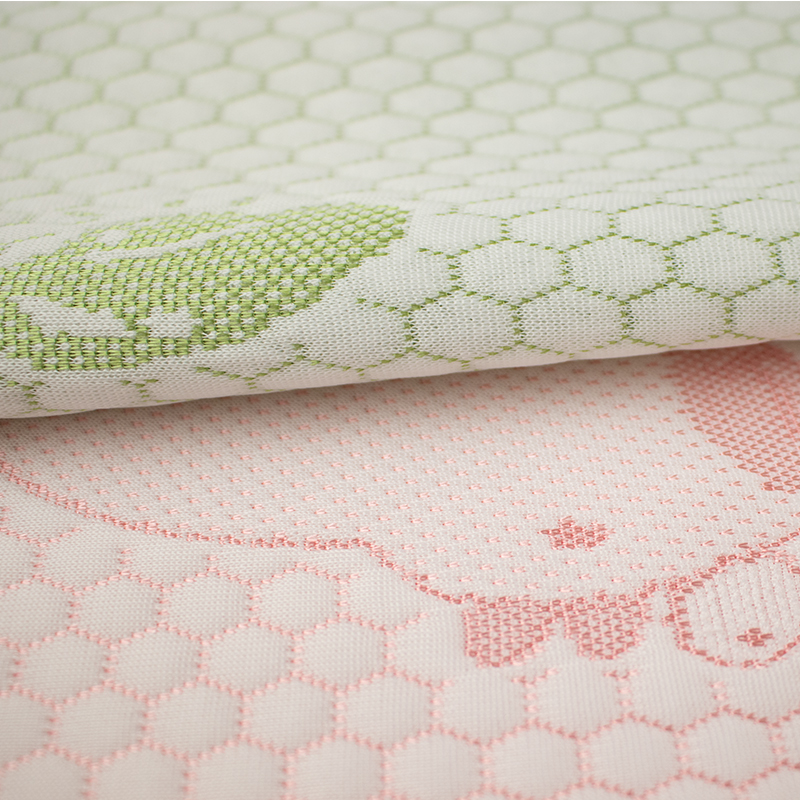
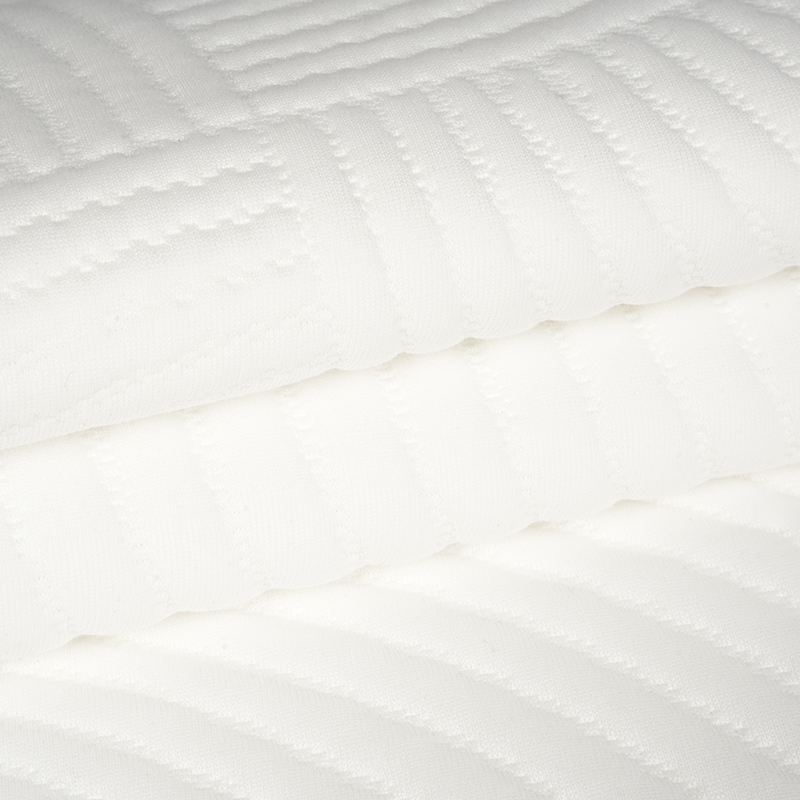
Polyester Cooling Mat Fabric
Understanding Polyester Cooling Mat Fabric
Polyester Cooling Mat Fabric is a functional textile designed for products where surface comfort and temperature perception are important. It is commonly used as an outer layer, cover material, or textile component in cooling mats and related bedding products. Depending on the final construction, the fabric may be combined with filling materials, cooling gel layers, foam, mesh, quilting, elastic structures, or other technical components.
The fabric itself does not replace the complete cooling system of a finished mat. Instead, it contributes to the user experience by providing a textile surface that can be engineered for softness, breathability, durability, and a comfortable touch. The quality of the surface fabric has a direct influence on how the finished product feels during use, how easily it can be handled, and how well it maintains its appearance over time.
Polyester is widely selected for functional textiles because it offers a useful balance between strength, dimensional stability, processing flexibility, and cost efficiency. Compared with many natural fibers, polyester can provide improved resistance to stretching, shrinking, and everyday abrasion. It also accepts a wide range of colors, patterns, textures, and finishing treatments, making it suitable for both practical and decorative product designs.
For cooling products, the fabric needs to support a smooth contact experience. A surface that feels harsh, unstable, or excessively heavy may reduce the comfort of the final product. Polyester Cooling Mat Fabric can be developed with an appropriate construction and finishing method to support a pleasant hand feel while maintaining the strength necessary for production and repeated use.
Key Applications of the Fabric
Cooling Mats
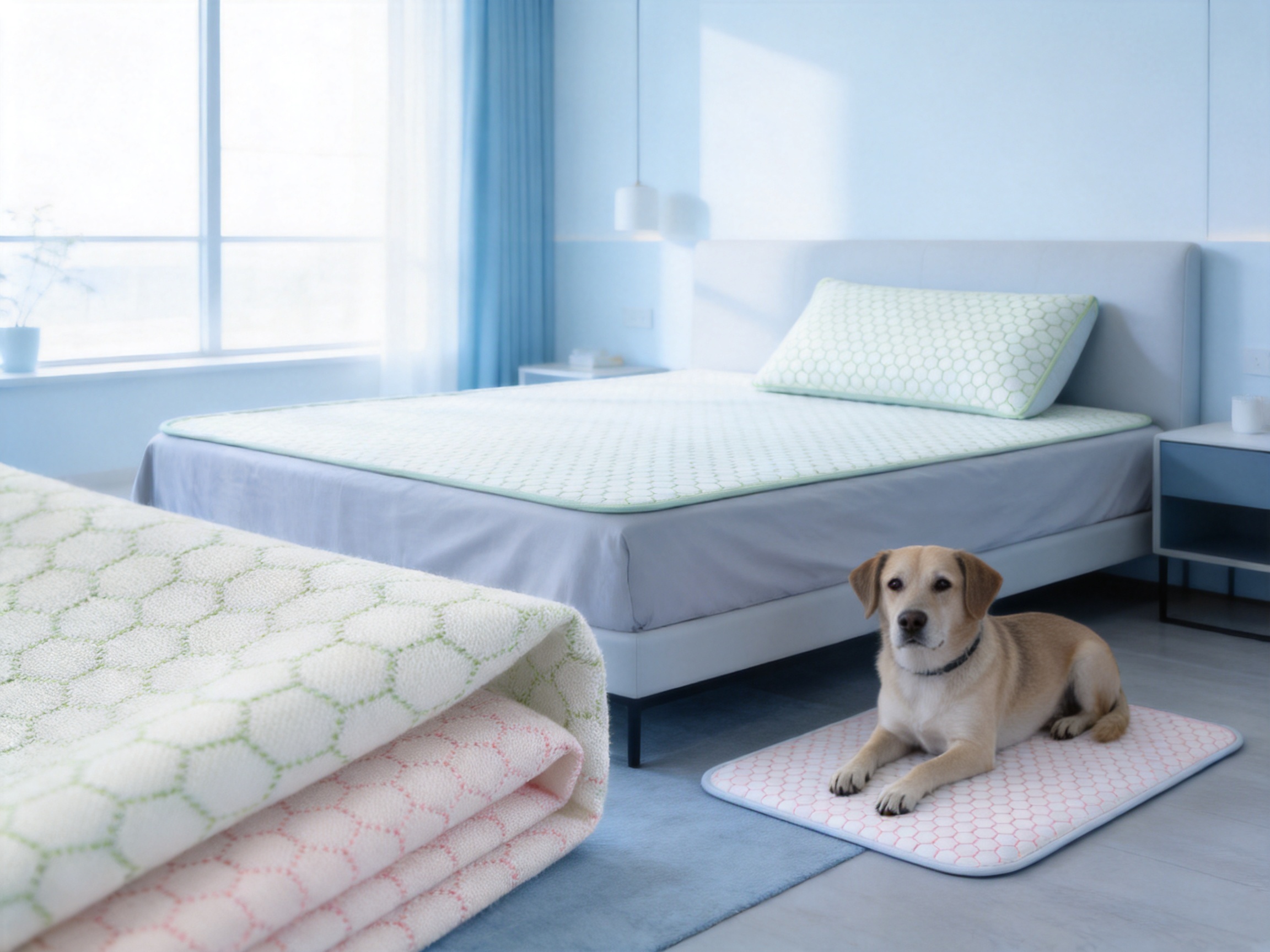
The primary application is the production of cooling mats for bedrooms, living rooms, travel, and seasonal use. The fabric can serve as the external cover or a principal textile layer in a multi-layer mat. Manufacturers may combine it with cooling gel, phase-change materials, foam, woven padding, or other internal structures according to the intended product specification.
Its polyester composition makes it suitable for cutting, sewing, quilting, edge binding, and other standard textile operations. This allows cooling mat producers to develop different sizes and shapes without changing their entire production system. The fabric can be used for flat mats, foldable mats, rollable mats, pet mats, and specially shaped comfort products.
Mattress Covers and Mattress Accessories
Cooling comfort is increasingly relevant in mattress protectors, mattress toppers, bed pads, and seasonal bedding accessories. Polyester Cooling Mat Fabric can be selected as a cover or surface component where a functional textile appearance is required. It may also be used in combination with quilting or layered construction to create a more supportive and visually finished product.
For mattress manufacturers, fabric consistency is especially important. Large panels must maintain a stable appearance, and the material should be suitable for efficient cutting and sewing. A reliable fabric construction helps reduce handling difficulties during assembly and supports a more uniform result across production batches.
Pillow and Pregnancy Pillow Products
Pillows and pregnancy pillows are used for extended periods, often in direct contact with the body. A suitable outer fabric should offer a comfortable touch, practical durability, and an appearance that fits the intended market. Cooling fabric may be used for pillow covers, removable cases, bolster covers, or specialized support products.
The fabric can support product development for side sleepers, maternity support products, travel pillows, and general home comfort items. When paired with a removable closure system, it can also contribute to convenient care and maintenance. Product developers may select different fabric colors or surface textures to distinguish collections and address different consumer preferences.
Pet Cooling Mats
Pets can also benefit from cooling comfort during warm weather. Polyester Cooling Mat Fabric may be used in dog mats, cat mats, kennel pads, travel mats, and other pet comfort products. For this application, abrasion resistance, easy handling, and practical maintenance are important considerations.
Pet products must often withstand repeated contact, movement, clawing, and routine cleaning. A durable polyester textile can provide a useful outer layer for these products, particularly when it is combined with reinforced seams, secure edge construction, and an appropriate inner filling or cooling component.
Decorative and Lifestyle Products
Functional textiles are not limited to bedding. The same fabric development capabilities can support sofa cushions, lounge accessories, decorative pads, hotel comfort products, and other home textile items. Designers may use a cooling or comfort-oriented textile in spaces where appearance and performance are expected to work together.
This wider application range allows buyers to develop coordinated product collections. For example, a company may use related materials for cooling mats, pillow covers, pet products, and sofa accessories while maintaining a consistent color direction or surface style.
Advantages of Polyester Cooling Mat Fabric
Balanced Strength and Comfort
A cooling product must be comfortable, but it must also withstand handling, folding, storage, and repeated use. Polyester offers a practical balance between surface comfort and mechanical performance. The fabric can be engineered to provide a smooth or soft touch while maintaining sufficient stability for cutting, sewing, quilting, and final assembly.
This balance is valuable because extremely delicate fabrics may be difficult to process or may show wear more quickly, while excessively rigid fabrics can reduce user comfort. Through appropriate yarn selection, construction, finishing, and inspection, the material can be developed for a more controlled combination of touch and durability.
Dimensional Stability
Dimensional stability is essential for cooling mats and bedding components. If the fabric changes shape significantly during manufacturing or use, it may create wrinkles, uneven edges, poor fitting, or an unattractive final appearance. Polyester is generally recognized for its stable behavior and low tendency to shrink compared with many untreated natural fiber alternatives.
Stable fabric dimensions help manufacturers improve cutting accuracy and reduce problems during sewing or lamination. They can also support better alignment between the fabric cover and internal cooling layers. This is particularly important for products that require neat edges, accurate quilting lines, or repeated sizing across a product range.
Flexible Design Options
Cooling products are sold in many market segments, from affordable household items to premium sleep accessories. A fabric supplier must therefore support a broad design vocabulary. Polyester Cooling Mat Fabric can be developed in different colors, weights, textures, patterns, and finishing styles according to project needs.
Design flexibility enables brands to create products for children, adults, hotels, pet owners, maternity users, and general home furnishing markets. It also allows a buyer to match the fabric to an existing bedding collection, furniture palette, seasonal campaign, or private-label identity.
Practical Care and Maintenance
Cooling mats and bedding products are exposed to skin contact, perspiration, dust, household handling, and occasional spills. A fabric that is practical to clean and maintain can improve the long-term usability of the finished product. Polyester textiles are commonly selected for their manageable care requirements and resistance to everyday handling.
The final care instructions depend on the complete product construction, including the filling, coating, cooling layer, stitching, and closure system. Nevertheless, a polyester outer textile can support product designs that are easier to wipe, wash, or maintain than some more delicate alternatives, subject to appropriate testing and labeling.
Efficient Manufacturing Compatibility
Fabric performance must be considered alongside production efficiency. Polyester Cooling Mat Fabric is compatible with common textile manufacturing methods, including roll handling, automated or semi-automated cutting, sewing, quilting, binding, and packaging. This compatibility can help manufacturers integrate the fabric into existing workflows.
Efficient processing can reduce material waste and support more predictable production schedules. When fabric width, weight, surface appearance, and dimensional behavior remain consistent, operators can work with greater confidence and reduce the need for repeated adjustments.
Suitable for Multiple Market Levels
The fabric can be positioned for different product levels depending on construction, finishing, design, and supporting materials. It may be used in practical everyday cooling mats, coordinated bedding products, premium comfort collections, hotel supplies, or specialized pet items.
This adaptability gives buyers more options when planning a product portfolio. Instead of relying on a single design or application, they can work with a fabric platform that supports several product concepts and customer groups.
Comparison with Common Alternative Materials
Material selection is always dependent on the product’s intended use, target price, performance requirements, and consumer expectations. Polyester Cooling Mat Fabric offers several advantages when compared with common alternatives, although each material category has its own appropriate applications.
| Material consideration | Polyester Cooling Mat Fabric | Common alternative characteristics | Value for product manufacturers |
|---|---|---|---|
| Dimensional stability | Generally supports stable sizing and controlled production | Some natural or loosely constructed fabrics may experience greater shrinkage or deformation | Helps improve cutting, sewing, fitting, and finished appearance |
| Design flexibility | Can support varied colors, textures, weights, and finishing options | Some specialized materials may offer fewer decorative choices or require different processing | Supports more product styles and market positioning |
| Processing compatibility | Suitable for common cutting, sewing, quilting, and edge-finishing processes | Coated, laminated, or highly delicate fabrics may need special equipment | Can simplify production planning and reduce process changes |
| Everyday durability | Offers a practical balance of strength and comfort for repeated handling | Very soft or delicate materials may require additional reinforcement | Supports longer service expectations when properly designed |
| Maintenance practicality | Often suitable for manageable care and routine household use | Some natural fibers or complex constructions may require more careful maintenance | Improves convenience for consumers and commercial users |
| Supply suitability | Can be produced for repeat orders and coordinated product programs | Limited or specialized materials may have narrower supply options | Supports stable sourcing and collection development |
The key competitive advantage is not based on one isolated property. Instead, the value comes from the combined performance of strength, design flexibility, stable processing, practical care, and suitability for large-scale textile production. For commercial buyers, this balanced profile can be more useful than selecting a material that performs exceptionally in only one area.
Functional Performance in Cooling Products
The performance of a finished cooling mat depends on the complete product structure. The inner cooling component, foam or padding, surface textile, stitching, edge treatment, and surrounding environment all influence the user experience. The fabric should therefore be selected as part of an integrated product development process.
As the user-contact layer, the textile affects first touch, surface smoothness, friction, moisture perception, and visual quality. A well-developed fabric can make the product feel more inviting and comfortable. It may also help the product maintain a neat appearance after folding, transportation, and repeated use.
Breathability and moisture management may be important for certain cooling mat designs. The exact performance depends on fabric construction, density, finishing, and the layers beneath it. Buyers should define their requirements clearly and request suitable samples and testing before finalizing a large production order.
For warm-weather products, color and surface design can also influence consumer perception. Light, fresh, and clean-looking colors are often associated with coolness and comfort, while textured surfaces may contribute to a more premium appearance. With flexible polyester fabric development, brands can create a visual identity that supports the functional message of the product.
Advanced Manufacturing Capabilities
Research and Development Orientation
Hangzhou Xinsili Decorative Fabric Weaving Co., Ltd. focuses on the research, development, and precision manufacturing of decorative and functional textiles. This development orientation is important for buyers seeking more than a standard commodity fabric. Functional textiles must be designed according to specific performance targets, user requirements, and product structures.
The company’s product focus includes materials intended to support antibacterial, moisture-resistant, flame-retardant, sleep-supporting, and comfort-improving applications. These capabilities create a broader technical foundation for developing cooling mat fabrics and related bedding textiles.
Research and development may involve the selection of suitable yarns, construction parameters, finishing methods, surface treatments, color systems, and application-specific testing. Each project can be evaluated according to its final use, whether it is a household cooling mat, hotel bedding accessory, pet product, or decorative comfort item.
Precision Weaving and Process Control
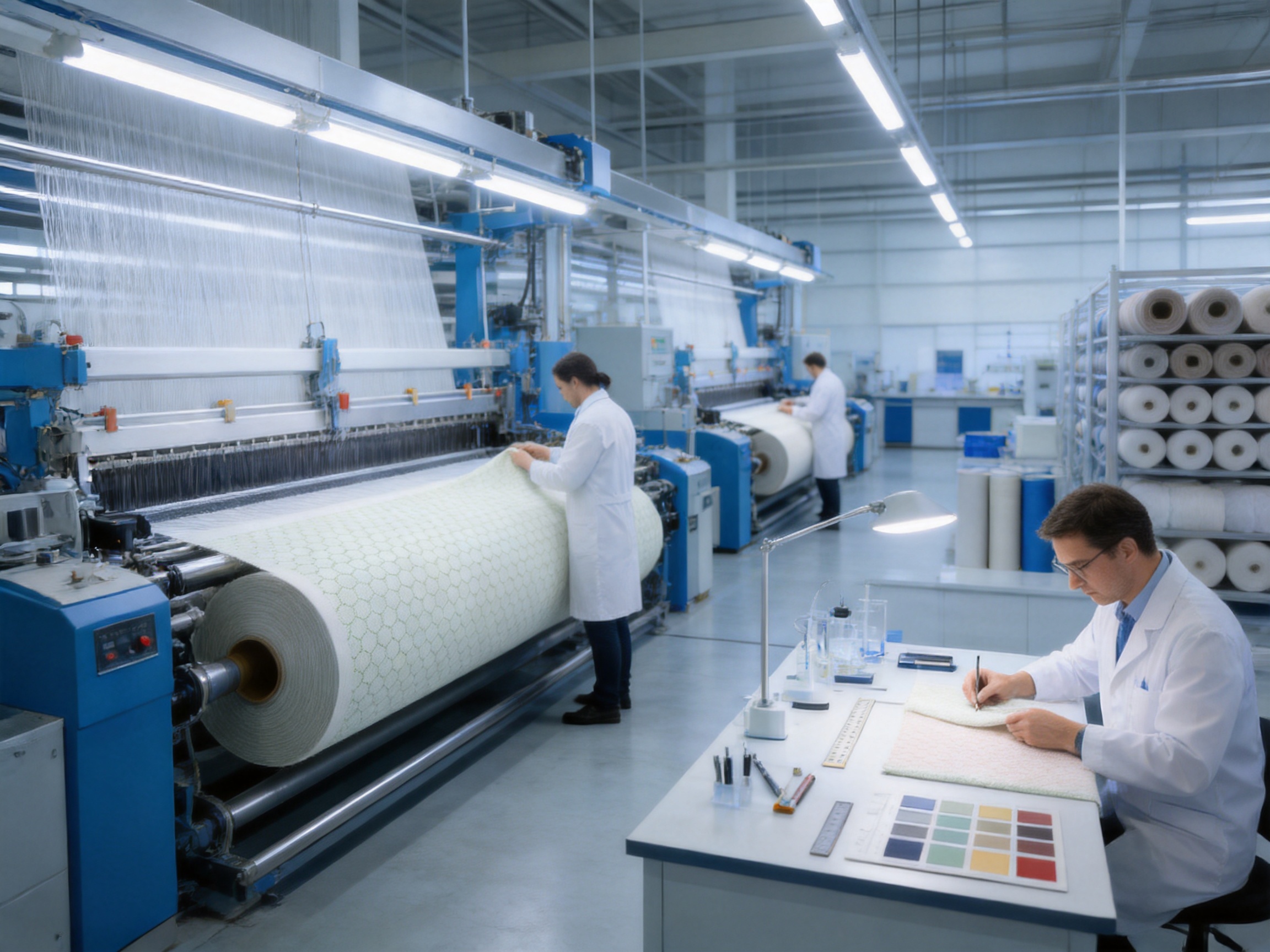
Consistent weaving is central to reliable textile quality. Fabric appearance, width, weight, surface texture, and strength can be influenced by the control of yarn tension, machine settings, production speed, and inspection procedures. A precision-oriented production approach helps reduce variation and supports stable performance across different rolls.
For cooling mat manufacturers, consistent fabric construction is particularly valuable. Uneven fabric can create difficulties during cutting or sewing, while irregular appearance may reduce the quality of the finished product. Stable production helps manufacturers maintain a uniform look across individual items and larger product batches.
Process control also supports better coordination between fabric production and downstream operations. When the textile behaves predictably, the manufacturer can plan cutting layouts, seam allowances, edge finishing, quilting patterns, and packaging more efficiently.
Integrated Development of Functional Textiles
Functional decorative textiles require a combination of visual design and technical performance. A fabric may need to look attractive in a bedroom or hotel environment while also offering comfort, durability, or specialized treatment. The integration of design and functionality is therefore a major part of advanced textile manufacturing.
Xinsili’s focus on home, hotel, and commercial applications provides a practical understanding of how fabrics perform in real environments. Residential products may prioritize softness and easy care, hotel products may require repeated handling and coordinated aesthetics, and commercial products may require durability, standardization, and project-specific specifications.
This application-based approach allows the development process to consider the complete use scenario rather than focusing only on laboratory properties. The result is a more balanced textile solution that can be adapted to the requirements of the finished product.
Quality Inspection
Quality inspection is an essential part of fabric manufacturing. Inspection programs may review surface appearance, color consistency, roll condition, width, weight, construction, and visible defects. The exact inspection standards should be agreed upon between the supplier and buyer before production.
For cooling mat applications, buyers may also require evaluations related to seam performance, abrasion, pilling, colorfastness, dimensional change, moisture behavior, and compatibility with internal materials. Testing requirements vary according to market, product category, and applicable regulations.
A dependable supplier should be prepared to discuss inspection criteria and provide samples for approval. Pre-production confirmation can help reduce misunderstandings and support more consistent bulk manufacturing.
Company Strengths and Manufacturing Reliability
Hangzhou Xinsili Decorative Fabric Weaving Co., Ltd. has 19 years of industry experience. This length of experience provides an established foundation in textile production, customer communication, product development, and quality management. For international buyers, an experienced supplier can offer valuable support when specifications are complex or when a product must be adapted for a new market.
The company operates a 12,000-square-meter factory area, providing space for production, material handling, inspection, development, and order fulfillment activities. A dedicated manufacturing environment supports better organization of processes and gives the company a foundation for handling both standard products and customized textile programs.
Recognition as a National High-Tech Enterprise in 2023 reflects the company’s emphasis on technological development and innovation. This recognition is consistent with its focus on functional decorative textiles and the integration of advanced textile technologies into practical products.
The company’s stated vision, “Weaving Beautiful Spaces,” expresses a combination of design awareness and manufacturing capability. Its products are developed not only for technical use but also for residential, hotel, and commercial environments where appearance, comfort, and atmosphere are important.
The company also emphasizes environmentally friendly decorative fabric solutions. Environmental responsibility in textiles may involve material selection, process efficiency, product durability, responsible finishing, waste reduction, and the development of products that support longer service life. Buyers can discuss specific environmental requirements, certifications, restricted substances, and documentation during project development.
Customization Options for Global Buyers
Customization is often essential for bedding and cooling product manufacturers. A standard fabric may not provide the exact combination of color, weight, texture, width, or performance required for a particular brand. Polyester Cooling Mat Fabric can be considered as a customizable material platform for different product strategies.
Color and Appearance
Color selection can be aligned with brand identity, seasonal collections, hotel interiors, children’s products, pet product lines, or home furnishing trends. Buyers may request color references, laboratory samples, strike-offs, or approval samples before bulk production.
Surface appearance may also be adjusted through construction and finishing choices. Depending on the project, the fabric may be developed with a smooth, brushed, textured, patterned, or quilt-compatible appearance. The final design should be evaluated under the lighting conditions in which the finished product will be sold or used.
Width and Weight
Fabric width affects cutting efficiency and the amount of material waste generated during manufacturing. Buyers should provide the dimensions of the finished product, cutting layout, seam allowances, and any edge treatment requirements when discussing the appropriate width.
Fabric weight influences hand feel, appearance, handling, and the overall balance of the finished cooling mat. A lighter textile may support flexible or portable products, while a heavier construction may provide a more substantial surface impression. The correct selection depends on the internal structure and positioning of the product.
Construction and Finishing
Different products may require different textile constructions. A cooling mat cover may need a stable surface for sewing, a soft touch for direct contact, or a particular level of flexibility for folding and storage. Finishing can be developed to support the desired hand feel, appearance, and functional requirements.
When a buyer requests special functions such as moisture resistance, antibacterial performance, flame retardancy, or other treatment characteristics, the requirements should be defined with measurable standards. The supplier and buyer should confirm durability expectations, testing methods, treatment compatibility, and labeling obligations.
Private-Label and Project Support
Manufacturers of branded bedding or home textile products may require coordinated fabrics across several product categories. A supplier with experience in decorative and functional textiles can help develop related materials for cooling mats, mattress accessories, pillows, sofa cushions, and pet products.
Project support may include sample preparation, specification confirmation, color development, production scheduling, packaging coordination, and quality documentation. Early communication is especially important for new products because it allows the textile to be evaluated together with the cooling layer, filling, stitching, and final packaging.
Product Development and Order Process
A successful cooling mat fabric project begins with a clear product brief. The buyer should identify the intended application, target market, user group, product dimensions, expected price range, performance requirements, care method, and estimated order quantity.
The next step is sample evaluation. Samples should be reviewed for hand feel, surface appearance, color, flexibility, sewing behavior, dimensional stability, and compatibility with the intended cooling material. If the product will be used by children, pregnant users, pets, hotels, or other specific groups, the evaluation should also consider the relevant safety and durability expectations.
After sample approval, the buyer and supplier should confirm technical specifications in writing. These may include fiber composition, fabric width, weight, construction, color reference, finishing, packaging, tolerances, inspection standards, and testing requirements.
A pre-production sample or approved reference sample can serve as a practical quality benchmark. During bulk production, the supplier can compare output against the approved reference to help maintain consistency. The buyer may also arrange third-party inspection when required by internal purchasing procedures or market regulations.
Packaging and transportation should be considered as part of the product process. Fabric rolls need suitable protection against moisture, dust, compression, and handling damage. Cooling mat manufacturers should also ensure that the fabric arrives in a condition suitable for cutting and assembly.
Quality and Compliance Considerations
Cooling mat fabrics are often used in direct or close contact with the body, so quality and safety should be treated as essential purchasing considerations. The exact requirements depend on the destination market and the finished product. Buyers should identify applicable textile regulations, restricted substance requirements, labeling rules, and customer expectations before placing an order.
Common evaluation areas may include colorfastness to washing, rubbing, perspiration, and light; dimensional change; pilling; abrasion; tearing strength; tensile strength; seam slippage; surface appearance; and odor. If the textile receives a functional treatment, its performance should be evaluated both initially and after suitable durability testing.
The complete cooling mat should also be assessed, not only the fabric. For example, the internal cooling material may influence washing instructions, heat behavior, flexibility, and product safety. The textile should be compatible with the finished structure and should not create unexpected problems during use.
Buyers should maintain clear records of approved samples, test results, production specifications, and inspection reports. This documentation supports repeat ordering and helps both parties resolve quality questions efficiently.
Sustainability and Long-Term Product Value
Sustainability in textile products involves more than the use of a particular fiber. It also includes product durability, manufacturing efficiency, responsible chemical management, packaging, logistics, and the expected service life of the finished product. A durable cooling mat that remains useful for a longer period may reduce the need for frequent replacement.
Polyester can support long-term product value when it is developed with appropriate construction and used in a well-designed finished product. Stable fabric dimensions, resistance to everyday handling, and practical maintenance can help a cooling mat retain its appearance and function over time.
Manufacturing efficiency is another consideration. Accurate production control can reduce defects and material waste. Efficient cutting layouts and suitable fabric widths can help optimize material consumption during product assembly. Buyers may discuss waste-reduction goals, packaging choices, and environmental documentation with the supplier.
For projects that require recycled fibers, certified materials, or specific environmental standards, the buyer should communicate these requirements at the beginning of development. Documentation and certification should be reviewed according to the destination market and the claims planned for the finished product.
Why Choose This Fabric for Competitive Products?
Competition in the bedding and home textile market increasingly depends on the ability to combine comfort, function, appearance, reliability, and value. Polyester Cooling Mat Fabric supports this combination through a balanced material profile and flexible development potential.
Compared with fabrics selected only for decorative appearance, it is more closely aligned with comfort-oriented product design. Compared with highly specialized materials that may require complex processing, it can provide greater compatibility with common textile manufacturing methods. Compared with less stable constructions, it can support more predictable cutting, sewing, and finished-product consistency.
Its value is also connected to supplier capability. A technically suitable fabric is most useful when it can be produced consistently, customized according to project needs, and supported by a manufacturer with experience in functional decorative textiles. The combination of product adaptability, production knowledge, research orientation, and factory resources gives buyers a stronger foundation for developing market-ready cooling products.
For brands, this means the fabric can support product differentiation through color, texture, construction, and function. For wholesalers, it can provide a practical material for a variety of product categories. For hotels and commercial users, it can contribute to coordinated comfort products. For pet product manufacturers, it can support durable and attractive cooling mats. For bedding companies, it can extend a cooling concept across mattresses, pillows, toppers, and accessories.
Recommended Buyer Checklist
Before selecting Polyester Cooling Mat Fabric, buyers should prepare a detailed technical and commercial checklist. This helps ensure that the selected fabric is appropriate for the final product rather than being evaluated only as an isolated textile sample.
- Define the exact finished product and intended user group.
- Confirm the cooling layer, filling, foam, or internal structure that will be used.
- Specify required fabric width, weight, color, texture, and construction.
- Evaluate hand feel and surface comfort through physical samples.
- Test cutting, sewing, quilting, binding, and other assembly processes.
- Review dimensional stability, abrasion, pilling, colorfastness, and strength requirements.
- Confirm care instructions for the complete finished product.
- Identify applicable market regulations and restricted substance requirements.
- Discuss minimum order quantities, lead times, packaging, and repeat-order planning.
- Approve a reference sample before bulk manufacturing.
- Confirm inspection standards and documentation requirements.
- Discuss customization and future collection development possibilities.
This checklist can reduce project risk and improve communication between the buyer and supplier. It also helps manufacturers calculate production costs more accurately and prepare products that meet the expectations of retailers, distributors, and end users.
Frequently Asked Questions
What is Polyester Cooling Mat Fabric used for?
It is primarily used as a textile cover or surface component for cooling mats. It can also be applied to mattress pads, mattress covers, pillowcases, pregnancy pillows, pet cooling mats, sofa cushions, hotel bedding accessories, and other comfort-oriented home textile products.
Does the fabric itself create the cooling effect?
The cooling performance of a finished mat depends on the complete product structure. The fabric contributes to surface comfort, touch, breathability, appearance, and usability, while the internal cooling layer or material provides the principal cooling mechanism. The fabric should therefore be evaluated together with the complete product design.
Can the fabric be customized?
Customization may be available for color, width, weight, surface appearance, construction, finishing, and selected functional requirements. Buyers should provide a detailed product brief and confirm technical feasibility, sample approval procedures, minimum order quantities, and testing requirements.
Is polyester suitable for repeated use?
Polyester is widely used in repeated-use textile products because it can provide a practical combination of strength, dimensional stability, and processing flexibility. The actual service life depends on fabric construction, finishing, product design, care conditions, and the intensity of use.
Can the fabric be used for pet cooling mats?
Yes. It may be used for dog mats, cat mats, kennel pads, travel mats, and other pet comfort products. Pet products should include suitable seam construction, edge reinforcement, cleaning instructions, and performance testing based on the intended use.
Is the fabric suitable for hotel applications?
It can be considered for hotel bedding accessories, guest-room comfort products, lounge cushions, and other commercial textile applications. Hotel projects should pay particular attention to appearance consistency, durability, cleaning procedures, replacement planning, and any flame-retardancy or contract textile requirements.
What information should be provided when requesting a quotation?
Buyers should provide the application, required fabric composition, width, weight, color, quantity, finishing requirements, packaging expectations, destination market, testing standards, and target delivery schedule. Product drawings or photographs may also help clarify the required construction.
How should samples be evaluated?
Samples should be checked for color, touch, surface appearance, flexibility, width, weight, dimensional stability, sewing behavior, and compatibility with the cooling layer. If the product will be washed or exposed to frequent handling, appropriate durability tests should be completed before approval.
Can the fabric be used in products for children or pregnant users?
It may be developed for children’s bedding products, maternity pillows, pregnancy support products, and other specialized comfort items. Such products require careful evaluation of material safety, construction, cleaning instructions, labeling, and applicable regulations. The finished product should be assessed according to the requirements of its intended market.
What makes an experienced supplier important?
An experienced supplier can help buyers address fabric selection, customization, production consistency, inspection, and application-specific challenges. Experience in functional decorative textiles is especially useful when the fabric must combine appearance, comfort, technical performance, and compatibility with downstream manufacturing.
Conclusion
Polyester Cooling Mat Fabric is a flexible and practical material for manufacturers developing cooling mats, bedding accessories, pillow products, pet comfort items, and decorative lifestyle textiles. Its value comes from a balanced combination of comfort, strength, dimensional stability, design flexibility, maintenance practicality, and compatibility with common manufacturing processes.
The fabric can support both standard and customized product programs. It may be developed in different colors, weights, textures, widths, and finishing styles, allowing brands and manufacturers to create products for residential, hotel, commercial, maternity, children’s, and pet markets.
Hangzhou Xinsili Decorative Fabric Weaving Co., Ltd. strengthens this product offering through 19 years of textile industry experience, a 12,000-square-meter factory area, research and development capabilities, precision manufacturing, and National High-Tech Enterprise recognition in 2023. Its focus on functional decorative textiles reflects an understanding that modern fabrics must combine visual appeal with practical performance.
For buyers seeking a dependable textile foundation for cooling and comfort products, this fabric provides a strong starting point. Through clear specifications, sample evaluation, application testing, and close communication with the manufacturer, it can be adapted into reliable, attractive, and market-ready products for changing consumer needs.
References
1. Textile Institute, Principles of Textile Manufacturing and Fabric Performance.
2. International Organization for Standardization, General Guidance for Textile Testing and Quality Evaluation.
3. American Association of Textile Chemists and Colorists, Colorfastness and Textile Performance Test Methods.
4. International Trade Centre, Sustainable Textile Production and Responsible Sourcing Guidance.
5. Industry information supplied for the development of Polyester Cooling Mat Fabric product content.
6. Manufacturer information concerning functional decorative textile research, weaving production, factory resources, and application development.
Product: Polyester Cooling Mat Fabric

Our Featured Products
-
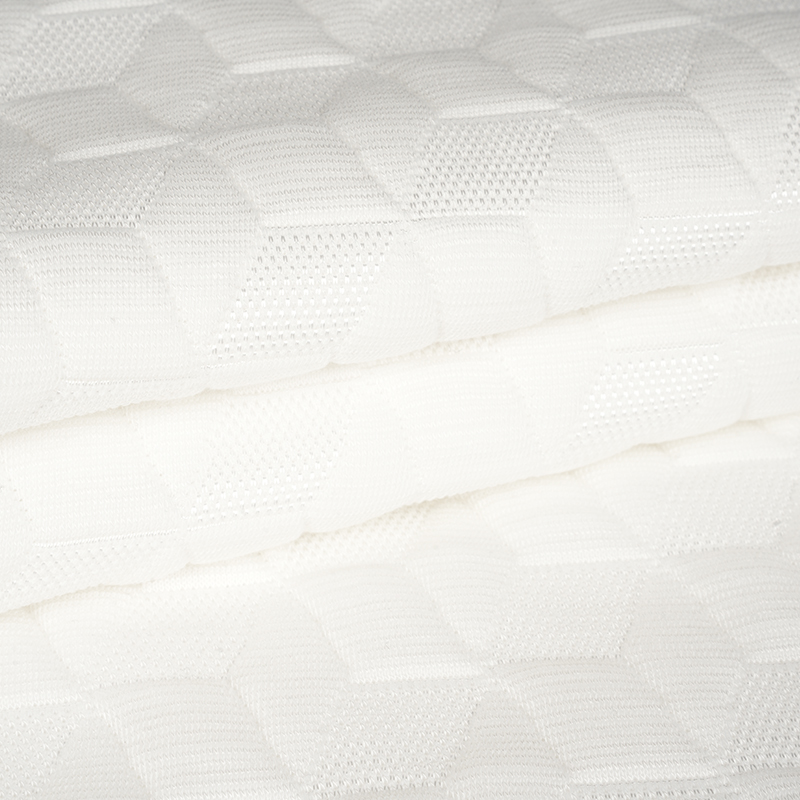
Polyester Mattress Fabric
Polyester Mattress Fabric
Haven’t Found The Products You Want?
-
-
Shen Jinyan:+86-15158070676
[email protected]
Liang Jinwen:+86-15757186621
[email protected]
Qiu Yingyingn:+86-13819545790
[email protected]
Yi qiao Town, Xiaoshan District, Hangzhou City, Zhejiang Province, China
-
Products
Mattress Fabric Children Mattress Fabric Pillowcase Fabric Pregnancy Pillow Fabric Cooling Mat Fabric Bedding Fabric Sofa Fabric Pet Friendly Fabrics -
Contact Information
About Us Products Strength Sustainability News Contact Us
Copyright © Hangzhou Xinsili Decorative Fabric Weaving Co.,Ltd. All Rights Reserved.
Functional Decorative Textile Manufacturers
