

 English
 中文简体
中文简体 Español
 عربى
عربى русский


Polyester Children’s Mattress Fabric for Safe, Comfortable, and Durable Bedding
Content
- 1 Why Mattress Fabric Matters in Children’s Bedding
- 2 Key Advantages of Polyester Children’s Mattress Fabric
- 3 Design Flexibility for Children’s Mattress Products
- 4 Functional Possibilities for Modern Children’s Bedding
- 5 Advanced Manufacturing Strengths
- 6 Advantages Compared with Less Specialized Alternatives
- 7 Quality Control from Yarn to Finished Fabric
- 8 Customization and Product Development Process
- 9 Practical Applications
- 10 Sustainability and Responsible Textile Development
- 11 Why Choose an Experienced Manufacturing Partner
- 12 Ordering and Communication Considerations
- 13 Care and Use Guidance
- 14 Frequently Asked Questions
- 14.1 What is polyester children’s mattress fabric?
- 14.2 Is polyester comfortable enough for children’s mattresses?
- 14.3 Is the fabric suitable for direct skin contact?
- 14.4 Can the fabric be customized?
- 14.5 Can polyester mattress fabric be quilted?
- 14.6 Can it be made moisture-resistant?
- 14.7 Can the fabric have antibacterial functionality?
- 14.8 Can it meet flame-retardant requirements?
- 14.9 Is polyester more durable than cotton for children’s mattress covers?
- 14.10 What information should be provided when requesting a quotation?
- 14.11 How should the fabric be tested before bulk production?
- 14.12 What makes an experienced textile supplier valuable?
- 15 Conclusion
- 16 References
- 17 Product: Polyester Children Mattress Fabric
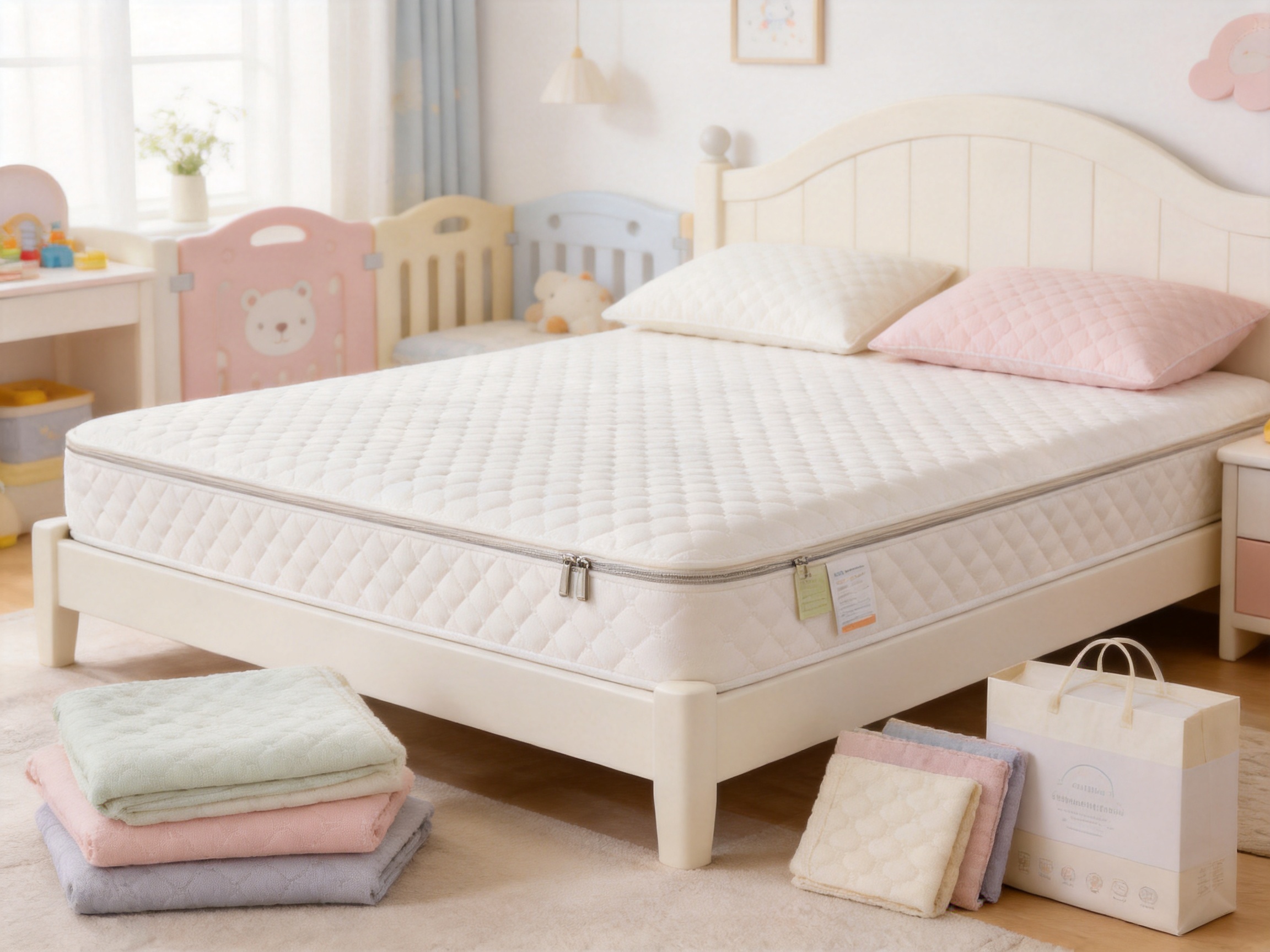
Children’s bedding requires a careful balance of comfort, durability, cleanliness, appearance, and practical performance. A mattress fabric used in a child’s bedroom is exposed to frequent movement, repeated washing, accidental spills, changing room temperatures, and the everyday activity associated with growing children. For manufacturers of children’s mattresses, mattress protectors, bedding collections, and upholstered sleep products, the fabric selected for the outer construction is therefore far more than a decorative surface. It is an important part of the product’s overall performance, safety profile, service life, and customer appeal.
Polyester children’s mattress fabric offers a versatile solution for these requirements. Through appropriate yarn selection, weaving technology, finishing treatment, and quality control, polyester fabric can be engineered to provide a soft hand feel, stable dimensions, attractive appearance, practical abrasion resistance, and compatibility with different mattress structures. It can also serve as a platform for functional textile development, including moisture management, antibacterial treatment, flame-retardant performance, cooling comfort, and enhanced sleep support, depending on the intended application and confirmed specifications.
The polyester children’s mattress fabric supplied by Hangzhou Xinsili Decorative Fabric Weaving Co., Ltd. is developed within a broader manufacturing system focused on functional decorative textiles. The company serves home, hotel, and commercial environments while applying its experience to fabrics that contribute to safe, healthy, comfortable, and sustainable living spaces. Its manufacturing capabilities, product development experience, and emphasis on consistent quality make the fabric suitable for mattress producers and bedding brands seeking dependable textile materials for children’s products.
Why Mattress Fabric Matters in Children’s Bedding
A mattress fabric is the visible and functional textile layer that supports the user’s daily contact with the mattress. In children’s products, it may be used as a mattress cover, quilted mattress surface, removable cover, mattress protector, pillow-related component, or part of a coordinated bedding system. Although the fabric is not the only factor determining mattress quality, it strongly influences how the product feels, performs, and maintains its appearance over time.
Children often sleep in different positions and may move frequently during the night. Their bedding can also be exposed to food, drinks, perspiration, dust, skin oils, and occasional accidents. A suitable fabric must therefore be comfortable against the skin while remaining practical to clean and maintain. It should hold its structure during production and use, resist premature wear, and support the mattress manufacturer’s desired visual identity.
The fabric also affects production efficiency. If a textile stretches unpredictably, frays excessively, loses its shape during quilting, or varies significantly between batches, it can create difficulties during cutting, sewing, lamination, binding, and final inspection. A stable polyester construction can help manufacturers achieve more consistent processing and reduce avoidable production problems.
For parents and caregivers, the fabric’s appearance, softness, cleanliness, and durability are often among the first visible indicators of product quality. For retailers and brand owners, the material must support attractive packaging, dependable inventory planning, and customer satisfaction. For manufacturers, the ideal fabric combines technical performance with reliable supply and professional communication.
Key Advantages of Polyester Children’s Mattress Fabric
Soft and Comfortable Surface Performance
Polyester is a highly adaptable fiber. By selecting appropriate filament or spun yarn structures and controlling the weaving process, textile manufacturers can create fabrics with different surface effects and hand feels. A children’s mattress fabric can be engineered to feel smooth, soft, brushed, textured, or quilt-friendly according to the product design.
A comfortable surface is important because children may spend many hours in bed every day. Excessively rough or stiff materials can reduce comfort, especially when used without an additional protective layer. A well-developed polyester fabric offers a pleasant contact surface while maintaining enough structural integrity for repeated use.
Softness does not have to mean weakness. Through yarn selection and finishing control, the fabric can be balanced so that it feels comfortable without becoming overly loose or difficult to process. This balance is particularly valuable for manufacturers producing mattresses in different sizes and constructions.
Durability for Everyday Use
Children’s mattresses are used intensively. Repeated changes of sleeping position, jumping or kneeling on the bed, moving the mattress, and routine cleaning can place stress on the fabric. Polyester is widely valued for its practical strength and resistance to everyday wear.
A properly constructed polyester mattress fabric can help reduce the risk of early surface damage, seam stress, and visual deterioration. Its performance depends on factors such as yarn count, density, weave structure, finishing process, and final application. For this reason, fabric selection should be made according to the complete mattress design rather than by fiber name alone.
Compared with many delicate natural or blended fabrics, polyester generally offers a more economical route to long-term service performance. It can retain its appearance through normal use and is well suited to products that must provide consistent value across different price levels.
Dimensional Stability
Dimensional stability is essential when a fabric is cut, sewn, quilted, laminated, or fitted over a mattress core. Excessive shrinkage or distortion may result in loose panels, uneven quilting, wrinkled surfaces, or difficulty matching the cover to the mattress structure.
Polyester fabrics can be engineered for relatively stable dimensions when the yarn, weaving, heat-setting, and finishing conditions are properly controlled. Stable fabric behavior supports more predictable cutting and assembly. It can also help the finished mattress maintain a neat appearance after handling and normal laundering, subject to the confirmed care instructions.
For children’s mattresses with removable covers, dimensional stability becomes especially important. The cover should be capable of being removed and refitted without excessive deformation. Manufacturers should confirm the relevant shrinkage, washing, and heat-resistance requirements before finalizing a production specification.
Easy-Care Characteristics
Parents generally prefer bedding that is straightforward to clean and maintain. Polyester fabric is commonly selected for practical care performance because it dries relatively quickly and can be developed for resistance to wrinkling and routine handling.
Its easy-care characteristics can support removable mattress covers, washable bedding components, and products designed for busy households. However, actual laundering performance depends on the fabric construction, dyeing method, finishing treatments, sewing method, and care label. Testing should be completed for the intended cleaning process, including water temperature, detergent type, mechanical action, and drying method.
When the fabric is designed as part of a broader bedding system, care instructions should be clear and consistent. A suitable care program helps preserve color, surface softness, dimensional stability, and functional finishes over the expected product life.
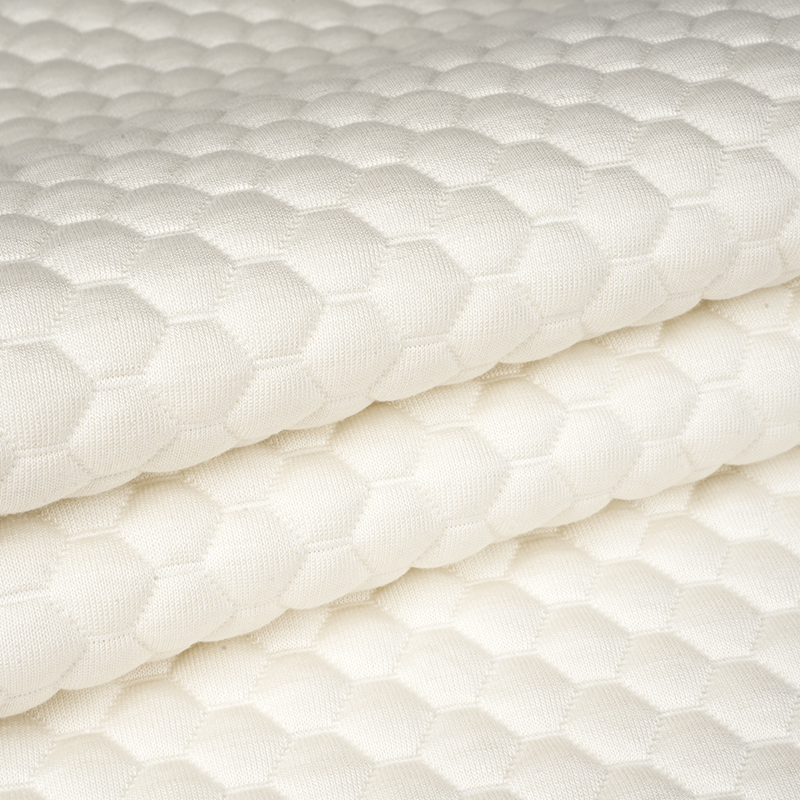
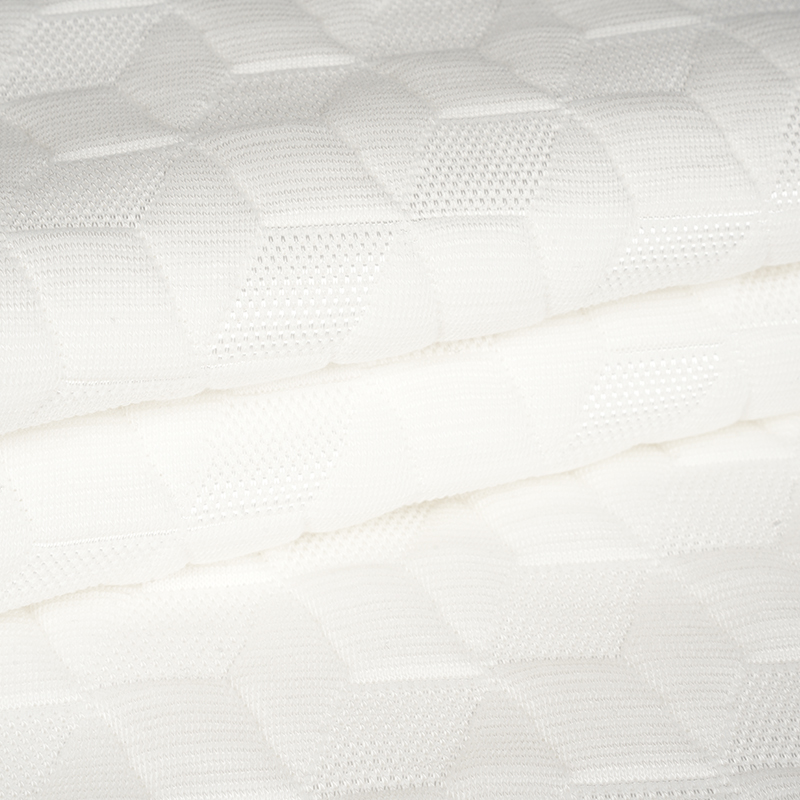
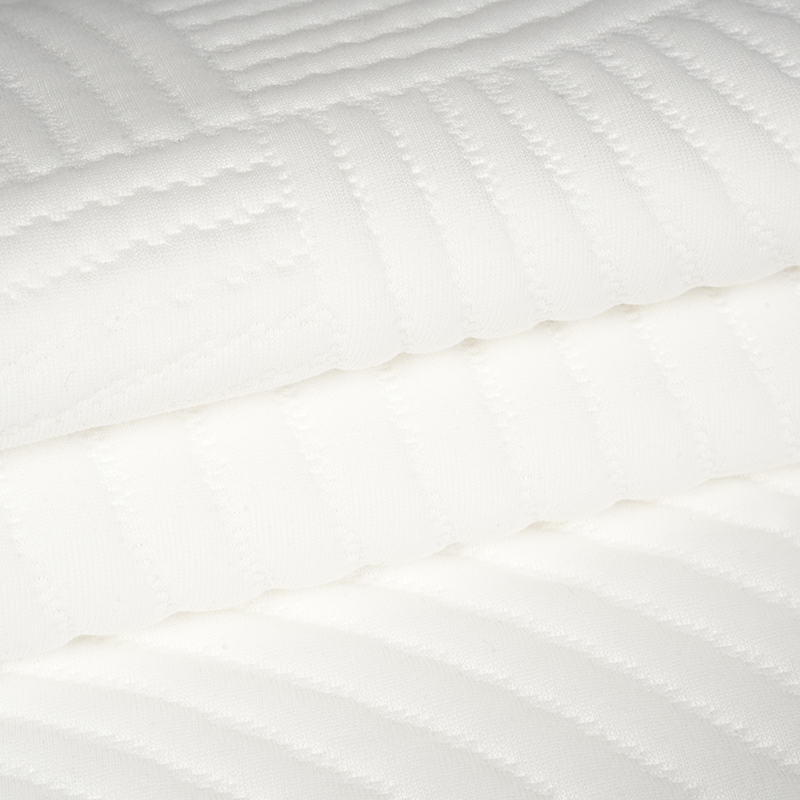
Polyester Children Mattress Fabric
Design Flexibility for Children’s Mattress Products
Children’s bedding is often expected to be visually engaging while remaining suitable for bedrooms, nurseries, schools, hotels, and other environments. Polyester mattress fabric provides a flexible design foundation for different colors, textures, patterns, and surface appearances.
Manufacturers can develop plain fabrics for minimalist products, patterned materials for themed children’s collections, or coordinated surfaces that match pillowcases, mattress protectors, cushions, and other bedroom accessories. The fabric may also be combined with quilting, printing, embroidery, jacquard effects, or other decorative processes, depending on the design brief.
Color consistency is particularly important when a mattress is sold as part of a coordinated bedding collection. Differences between fabric lots can affect the appearance of the complete product. A professional supply process should therefore include color management, sample approval, production inspection, and batch traceability where required.
The fabric’s surface can also be selected to communicate a specific market position. A finely textured surface may suggest sophistication, while a smooth or softly brushed construction may emphasize comfort. A more technical appearance may support a cooling, moisture-management, or protective bedding range.
Compatibility with Quilting and Mattress Assembly
Many children’s mattresses use quilted covers to create a soft surface and improve visual appeal. The fabric must be compatible with the selected filling, foam, batting, thread, and quilting pattern. It should feed steadily through production equipment and maintain an even surface after stitching.
Fabric stability helps reduce puckering, uneven tension, and pattern distortion. The manufacturer should evaluate the fabric together with the complete quilted structure because the performance of the final panel depends on the interaction between face fabric, filling, backing, thread, and machine settings.
Polyester mattress fabric can also be considered for laminated or multi-layer constructions. For example, it may be combined with a waterproof membrane, breathable layer, nonwoven backing, or protective barrier. The correct combination depends on whether the product prioritizes softness, liquid resistance, breathability, cooling comfort, or another performance objective.
Functional Possibilities for Modern Children’s Bedding
Consumer expectations for bedding are increasingly moving beyond appearance. Parents and product developers are looking for materials that support cleanliness, comfort, temperature balance, and practical daily use. Functional decorative textile development makes it possible to integrate several performance objectives into a fabric system.
Moisture-Resistant and Moisture-Management Options
Children’s bedding may be exposed to perspiration, spills, and humidity. A moisture-resistant finish can help reduce the penetration of liquids, while a moisture-management construction may support the movement and evaporation of perspiration. These are different functions and should be specified separately.
A moisture-resistant fabric may be suitable for mattress protectors or products where surface protection is important. A moisture-management fabric may be more appropriate where breathability and sleeping comfort are the priority. In some products, the best solution is a multi-layer design that combines a comfortable textile surface with a protective membrane or backing.
Any moisture-related claim should be confirmed through appropriate laboratory testing. Performance can vary according to liquid type, pressure, contact time, washing cycles, and finishing durability. Clear technical communication helps manufacturers select the correct material for the intended use.
Antibacterial Textile Development
Cleanliness is an important consideration in children’s bedding. Functional textile technology can be used to develop fabrics with antibacterial properties, subject to the selected treatment, applicable testing method, and regulatory requirements in the destination market.
An antibacterial treatment may help control the growth of certain microorganisms on the textile surface. It should not be presented as a replacement for regular cleaning, proper ventilation, mattress hygiene, or responsible product care. Instead, it can be considered as one part of a broader hygiene-oriented bedding design.
Manufacturers should request documentation for any antibacterial finish, including the tested organisms, test method, treatment durability, and recommended care conditions. This information supports accurate product labeling and prevents performance claims from exceeding verified results.
Flame-Retardant Requirements
Some bedding markets and institutional applications require specific flame-retardant performance. Polyester children’s mattress fabric can be developed or combined with suitable materials to help meet defined requirements, but the final performance must be evaluated on the complete mattress assembly.
Flammability behavior may be affected by the fabric weight, construction, dyeing, finishing, filling, foam, quilting thread, zipper, backing, and other components. Testing only the face fabric may not represent the behavior of the finished mattress. Product developers should establish the applicable standard early in the design process and arrange complete-product testing where necessary.
Flame-retardant functionality must also be balanced with hand feel, breathability, appearance, environmental considerations, and care durability. A technically appropriate solution is one that satisfies the required performance without creating unnecessary disadvantages in comfort or processing.
Cooling and Sleep-Comfort Features
Temperature comfort can influence sleep quality, particularly in warm climates or rooms with limited ventilation. Cooling textile development may involve yarn selection, surface structure, moisture management, thermal-transfer properties, or specialized finishing technology.
A cooling mattress fabric should be evaluated as part of the complete mattress rather than considered in isolation. Foam density, filling thickness, mattress protector construction, room temperature, humidity, and user behavior all affect the final sleeping experience.
For children’s products, cooling comfort should be presented realistically. The fabric may contribute to a cooler or more comfortable contact experience, but it does not replace appropriate room temperature control, breathable mattress construction, or suitable sleepwear.
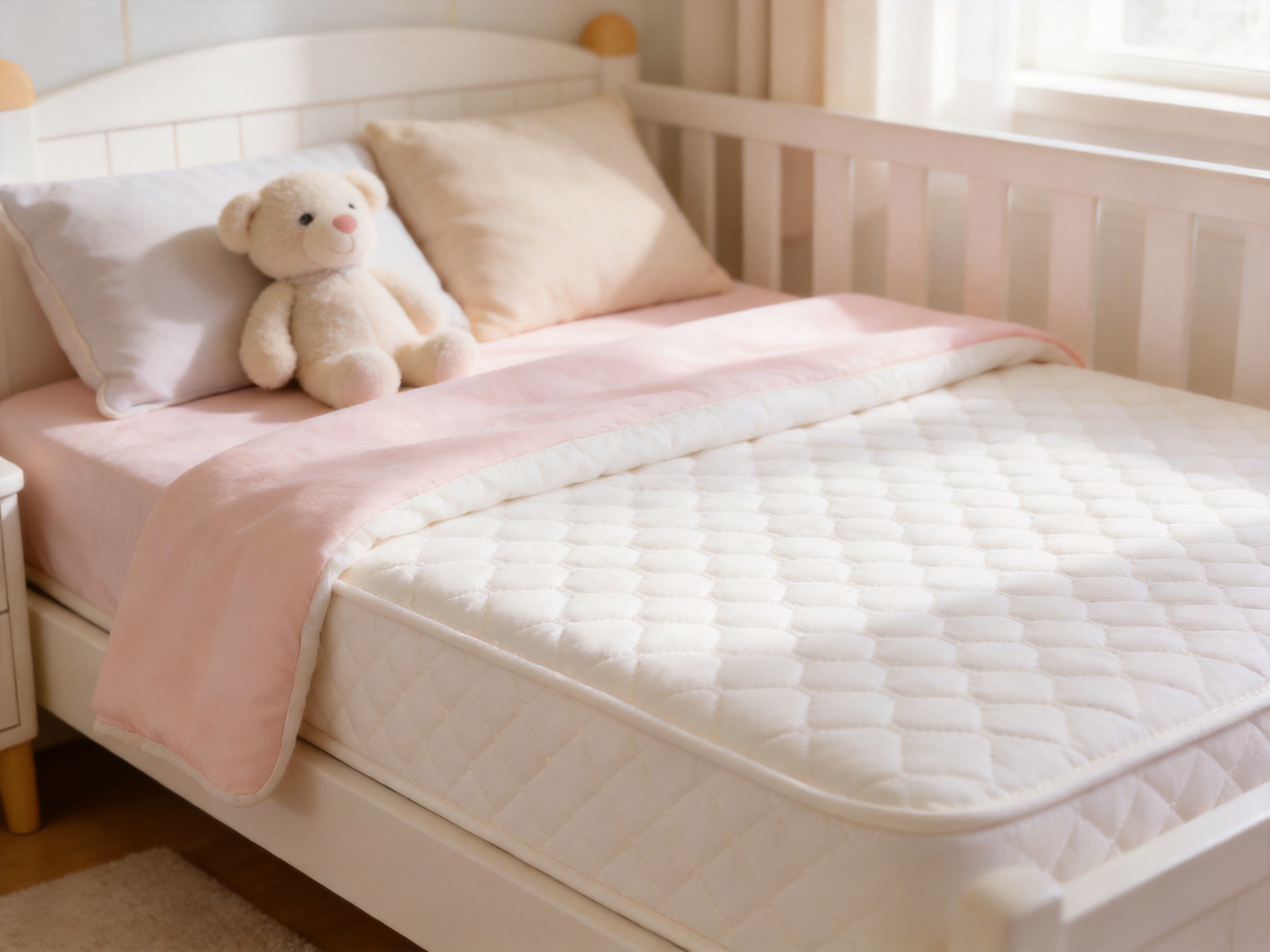
Advanced Manufacturing Strengths
Hangzhou Xinsili Decorative Fabric Weaving Co., Ltd. focuses on the research, development, and precision manufacturing of decorative textiles. Its stated manufacturing background includes 19 years of industry experience and a factory area of approximately 12,000 square meters. The company was recognized as a National High-Tech Enterprise in 2023, reflecting its emphasis on technology development and organized innovation.
The company’s manufacturing philosophy combines craftsmanship-driven production, design innovation, and long-term cooperation. This approach is relevant to children’s mattress fabric because successful textile supply requires more than a single attractive sample. It requires repeatable production, controlled specifications, responsive development, and stable communication throughout the order cycle.
Research and Development Orientation
Textile research and development can involve fiber selection, yarn engineering, weaving structure, surface treatment, functional finishing, color development, and application testing. A fabric manufacturer with an R&D orientation can help customers move from a general idea to a more practical material specification.
For example, a mattress brand may request a fabric that is soft, breathable, washable, resistant to pilling, and suitable for quilting. These requirements can sometimes conflict with one another. A development-oriented supplier can evaluate the balance between surface softness, strength, cost, production efficiency, and functional performance.
R&D collaboration is also helpful when a customer needs a differentiated product. Instead of using a standard textile with limited customization, the manufacturer can discuss weave effects, weight, color, finish, and application requirements before confirming the production route.
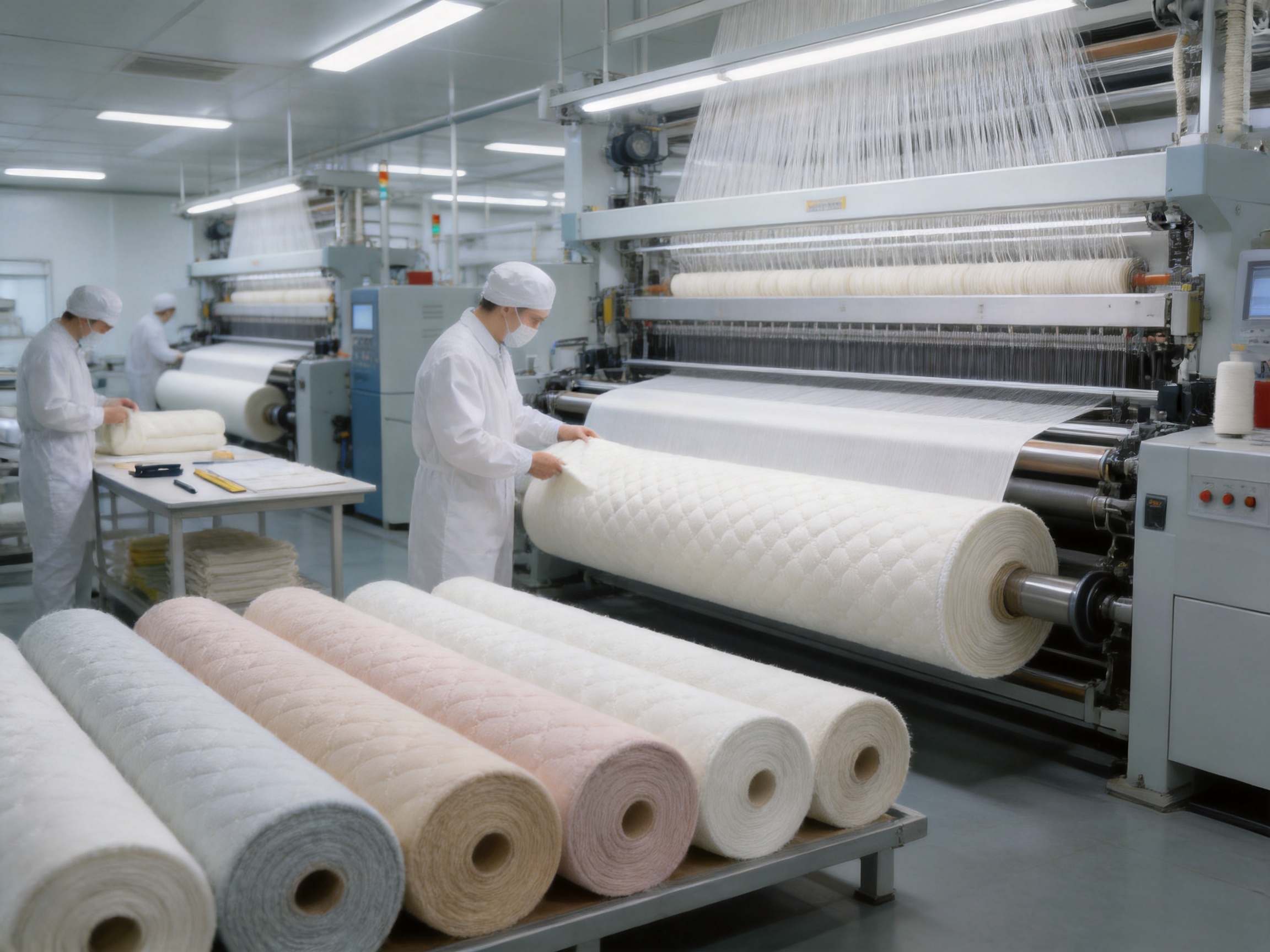
Precision Weaving and Process Control
Weaving quality influences fabric appearance, strength, density, hand feel, and processing behavior. Consistent warp and weft control helps reduce defects such as streaks, uneven density, broken yarns, and irregular surface effects.
Precision production is particularly valuable for mattress panels because large, uninterrupted surfaces can make visual defects easy to notice. A stable construction also improves the fabric’s suitability for cutting and quilting. Process control should cover incoming yarn inspection, loom settings, production monitoring, fabric inspection, finishing, and final packaging.
Reliable fabric production is not defined only by the appearance of one roll. It is demonstrated through consistency across multiple rolls and production batches. For mattress manufacturers, this consistency supports predictable assembly, reduced waste, and more reliable product presentation.
Functional Finishing Capability
Functional finishing can transform a basic polyester textile into a material designed for a more specific application. Depending on the customer’s needs, finishing may address moisture resistance, antibacterial performance, flame retardancy, hand feel, surface smoothness, or other functional objectives.
Each finish should be selected with attention to compatibility. A treatment that improves one property may influence softness, color, breathability, friction, washing durability, or bonding performance. This is why product development should include comparative testing rather than relying only on theoretical performance.
The finishing route should also be reviewed for production scale. A laboratory sample may perform well, but the same result must be reproduced consistently in bulk manufacturing. Proper process records, inspection standards, and sample retention can help maintain continuity between development and delivery.
Advantages Compared with Less Specialized Alternatives
Children’s mattress manufacturers can purchase general-purpose polyester fabric from many sources. However, a fabric developed specifically for mattress and functional decorative applications may offer several practical advantages over an undifferentiated textile.
| Evaluation Area | General-Purpose Fabric | Application-Focused Polyester Mattress Fabric |
|---|---|---|
| Primary Design Objective | Broad textile use with limited application specialization | Developed around mattress comfort, appearance, processing, and durability |
| Surface Comfort | May vary significantly by supplier and batch | Can be developed for a specified hand feel and contact experience |
| Dimensional Stability | Requires separate verification for quilting and cover assembly | Can be evaluated for cutting, sewing, quilting, and mattress-cover use |
| Functional Options | Often limited to standard constructions | May include moisture, antibacterial, flame-retardant, cooling, or comfort-oriented development |
| Design Coordination | May not support matching bedding components | Can be coordinated with broader decorative and bedding textile programs |
| Technical Communication | May focus mainly on price and availability | Can include structured discussion of specifications, testing, and application requirements |
| Customization Potential | Often restricted to stock colors or standard widths | May support customized colors, structures, finishes, and product directions |
| Long-Term Development | Suitable mainly for immediate purchasing needs | Better suited to brands seeking repeat programs and product improvement |
This comparison does not mean that every general-purpose polyester fabric is unsuitable. Rather, it highlights the value of selecting a material according to the actual demands of children’s mattress production. A specialized development process can reduce the risk of choosing a fabric that looks attractive in a sample but performs poorly during quilting, laundering, or long-term use.
Compared with some natural fiber fabrics, polyester may provide advantages in dimensional stability, drying speed, abrasion resistance, and cost control. Natural fibers can offer excellent comfort and a distinctive hand feel, but they may require additional treatment or careful construction to meet the same practical requirements. The best selection depends on the product’s positioning, market expectations, sustainability goals, and technical specification.
Compared with very low-cost synthetic fabrics, a carefully developed polyester mattress fabric may offer better consistency, more controlled appearance, and more reliable functional performance. The lowest initial fabric price does not always represent the lowest total cost if the material causes production waste, high return rates, premature damage, or inconsistent product quality.
Quality Control from Yarn to Finished Fabric
Quality control begins before weaving. Yarn properties can affect strength, evenness, color, surface appearance, and fabric performance. Incoming materials should be reviewed against the approved specification so that variation is identified early.
During weaving, production personnel monitor fabric construction and visible quality. Important checks may include width, weight, density, surface defects, broken yarns, stains, pattern alignment, and roll formation. Depending on the customer’s requirements, additional tests may be performed for tensile strength, tear strength, abrasion resistance, pilling, colorfastness, shrinkage, air permeability, moisture resistance, or functional treatment durability.
Finishing is another critical stage. Heat setting, washing, coating, brushing, calendaring, and other processes can significantly change the hand feel and dimensional behavior of the fabric. The finishing recipe and operating conditions must be controlled to maintain consistency.
Final inspection should confirm that the finished fabric matches the approved sample and technical data. Packaging should protect the rolls from dust, moisture, crushing, and unnecessary handling damage during storage and transportation. Clear labeling supports lot identification and efficient warehouse management.
Testing for the Intended Application
Testing should reflect actual use. A fabric for a removable children’s mattress cover may require stronger laundering and shrinkage evaluation than a fabric intended for a fixed decorative panel. A fabric used in a hotel children’s room may require different abrasion and cleaning performance from one intended for a private home.
Testing should also consider the complete product. For a quilted mattress, the face fabric, batting, backing, thread, zipper, and mattress core can influence performance. For a waterproof mattress protector, the fabric should be tested with the membrane and seam structure. For an antibacterial or flame-retardant product, claims must correspond to verified test results and applicable regional requirements.
Manufacturers should communicate the intended market, product construction, care method, and target performance before requesting a final quotation. This allows the textile supplier to recommend a more appropriate construction and avoid confusion caused by incomplete specifications.
Customization and Product Development Process
Step One: Define the Application
The first step is to identify how the fabric will be used. Important questions include whether it will be used as a mattress cover, protector, quilted panel, fitted sheet component, pillow-related fabric, or decorative side panel. The expected mattress size, filling structure, sewing method, and care requirements should also be recorded.
Step Two: Confirm Technical Requirements
Technical requirements may include composition, fabric weight, width, color, pattern, hand feel, abrasion resistance, pilling resistance, shrinkage, breathability, moisture performance, flame behavior, antibacterial treatment, and packaging. Not every project requires every test, but the critical requirements should be defined before bulk production.
Step Three: Review Samples
Sample review should examine both appearance and practical behavior. The customer may evaluate softness, drape, color, surface texture, quilting performance, sewing compatibility, and ease of cleaning. If the fabric is intended for a functional product, the relevant performance test reports or development data should also be reviewed.
Step Four: Conduct Trial Production
A small production trial can reveal problems that are not obvious in a hand sample. The fabric should be cut, sewn, quilted, washed, and assembled using conditions similar to those used in the customer’s factory. Trial production helps identify tension problems, edge fraying, distortion, color variation, or incompatibility with adhesives and membranes.
Step Five: Approve the Bulk Specification
Once the product meets the required standards, the customer and supplier should confirm the final specification. This may include approved color standards, construction details, width tolerance, weight tolerance, functional treatment, inspection method, roll length, packaging, and care information.
Step Six: Maintain Batch Consistency
For repeat orders, the approved sample and technical specification should remain the reference point. Batch-to-batch comparison helps preserve the identity of the children’s mattress collection. If the customer changes the filling, quilting pattern, or care method, the fabric should be reviewed again because the overall product performance may change.
Practical Applications
Polyester children’s mattress fabric can be used in several product categories. Its final application depends on construction, weight, finish, and customer requirements.
Children’s mattresses for bedrooms, nurseries, and family homes.
Quilted mattress covers with removable or fixed constructions.
Mattress protectors designed for moisture resistance or easier maintenance.
Children’s bedding collections requiring coordinated colors and textures.
Hotel, dormitory, daycare, and institutional sleeping products.
Mattress side panels and decorative bed components.
Portable children’s mattresses and travel sleep products.
Pet and family bedding programs requiring durable synthetic textiles.
In each application, the fabric should be selected according to contact comfort, cleaning frequency, structural stress, and the desired product position. A fabric appropriate for a decorative side panel may not be suitable for direct skin contact. Likewise, a fabric selected for a home mattress may not meet the higher cleaning demands of an institutional environment.
Sustainability and Responsible Textile Development
Sustainability in textile production involves more than fiber selection. It also includes product durability, efficient manufacturing, responsible chemical management, reduced waste, packaging choices, and the useful life of the finished product.
A durable children’s mattress fabric can support sustainability by helping the mattress remain functional for a longer period. Longer service life may reduce the frequency of replacement and the material consumption associated with producing new products. Easy-care characteristics may also reduce drying time, although actual environmental impact depends on washing habits and energy sources.
Polyester can be considered in recycled or resource-conscious textile programs when the required yarn and supply chain are available. Any recycled content claim should be supported by appropriate documentation and chain-of-custody information. Customers should also consider whether a multi-layer mattress construction can be separated or recycled at the end of its service life.
Responsible development requires a balance between safety, performance, comfort, cost, and environmental impact. A fabric that fails prematurely may create more waste than a slightly more durable material with a higher initial price. For this reason, lifecycle thinking should be included in product development decisions.
Why Choose an Experienced Manufacturing Partner
Experience is valuable when a textile supplier must manage the relationship between design, production, function, and commercial delivery. With 19 years in the textile industry, Hangzhou Xinsili Decorative Fabric Weaving Co., Ltd. brings an established understanding of decorative fabric manufacturing and customer-oriented product development.
The company’s approximately 12,000-square-meter factory area supports organized production and development activities. Its recognition as a National High-Tech Enterprise in 2023 reflects a commitment to innovation and technology-based advancement. These strengths are relevant to customers seeking more than a basic fabric quotation.
Xinsili’s stated vision, “Weaving Beautiful Spaces,” is connected to its focus on fabrics for residential, hotel, and commercial environments. The company’s product direction includes functional decorative textiles that contribute to antibacterial, moisture-resistant, flame-retardant, sleep-supporting, and comfort-improving applications. For children’s mattress manufacturers, this broader capability can make it easier to develop coordinated products across mattress, bedding, pillowcase, sofa, and related textile categories.
An experienced supplier can also help identify potential conflicts in a design brief. For instance, a very dense fabric may improve durability but reduce breathability. A heavy coating may improve liquid resistance but affect softness. A highly brushed surface may create a comfortable hand feel but require additional pilling evaluation. Early technical discussion allows these factors to be considered before production investment.
Ordering and Communication Considerations
When requesting polyester children’s mattress fabric, buyers should provide as much information as possible. A clear inquiry may include the intended application, composition preference, target weight, required width, color or pattern, order quantity, sample requirements, performance targets, destination market, and expected delivery schedule.
It is also useful to state whether the fabric will be used for direct skin contact, whether it must be removable and washable, and whether the final product is intended for a specific certification or regulatory program. The more complete the information, the more accurately the supplier can recommend a construction.
For project discussions, Hangzhou Xinsili Decorative Fabric Weaving Co., Ltd. can be contacted through the following business details:
Company: Hangzhou Xinsili Decorative Fabric Weaving Co., Ltd.
Telephone: +86-15158070676
Additional telephone contacts: +86-15757186621 and +86-13819545790
Email: [email protected]
Additional email contacts: [email protected] and [email protected]
Address: Yi Qiao Town, Xiaoshan District, Hangzhou City, Zhejiang Province, China
Customers should confirm current contact arrangements, minimum order quantities, production lead times, sample charges, payment terms, packaging details, and shipping conditions during the quotation process.
Care and Use Guidance
The care method for a polyester children’s mattress fabric depends on the complete product construction. A removable cover may be machine washable, while a laminated or fixed cover may require spot cleaning. The presence of foam, membrane, quilting, zipper, elastic, or special finish can change the recommended procedure.
Care instructions should be tested before being printed on the product label. Testing should cover washing, drying, ironing if applicable, colorfastness, shrinkage, surface appearance, and functional performance after repeated cycles. Customers should avoid making broad care claims based only on the fiber composition.
Routine maintenance can include regular ventilation, vacuuming of the mattress surface where appropriate, prompt treatment of spills, and compliance with the manufacturer’s washing instructions. A fabric with moisture-resistant or antibacterial functionality still requires normal hygiene practices.
Frequently Asked Questions
What is polyester children’s mattress fabric?
It is a polyester textile developed for use in children’s mattresses, mattress covers, protectors, quilted panels, and related bedding products. Its performance depends on the yarn, weave, weight, finishing treatment, and intended application.
Is polyester comfortable enough for children’s mattresses?
Yes, polyester can be engineered with a soft and comfortable hand feel. The final comfort depends on the fabric surface, finishing process, quilting structure, mattress filling, and whether an additional sheet or protector is used.
Is the fabric suitable for direct skin contact?
Some constructions may be suitable for direct contact, but this should be confirmed through the relevant softness, colorfastness, chemical, and safety evaluations required for the target market. The complete product should be reviewed rather than relying only on fiber composition.
Can the fabric be customized?
Customization may include color, pattern, width, weight, texture, weave structure, and functional finishing. The available options depend on order quantity, production feasibility, testing requirements, and the desired delivery schedule.
Can polyester mattress fabric be quilted?
Many polyester mattress fabrics are suitable for quilting, provided that the construction is compatible with the filling, backing, thread, needle, machine settings, and quilting pattern. A trial production is recommended before bulk manufacturing.
Can it be made moisture-resistant?
Moisture-resistant options may be developed through fabric construction, surface finishing, coating, lamination, or a combination of layers. The required performance should be defined clearly because water repellency, liquid resistance, and waterproofing are not identical properties.
Can the fabric have antibacterial functionality?
Antibacterial textile treatments may be available for suitable projects. The treatment, tested microorganisms, durability, and market-specific requirements should be confirmed through technical documentation and laboratory testing.
Can it meet flame-retardant requirements?
Flame-retardant development may be possible, but the final mattress assembly must be evaluated against the applicable standard. The fabric alone may not represent the behavior of the complete product.
Is polyester more durable than cotton for children’s mattress covers?
Polyester often provides strong practical durability, dimensional stability, and quick-drying performance. Cotton may offer a distinctive natural hand feel and breathability. The better choice depends on the product design, care requirements, budget, sustainability objectives, and performance testing.
What information should be provided when requesting a quotation?
Buyers should provide the application, composition, target weight, width, color, quantity, functional requirements, testing expectations, destination market, packaging needs, and delivery schedule. Samples or reference materials can also improve communication.
How should the fabric be tested before bulk production?
The fabric should be evaluated for appearance, width, weight, dimensional stability, strength, abrasion, pilling, colorfastness, hand feel, sewing, quilting, and relevant functional properties. If the final cover will be washed, laundering trials should be performed on the complete construction.
What makes an experienced textile supplier valuable?
An experienced supplier can help balance comfort, durability, appearance, functional performance, production efficiency, and cost. It can also support sample development, technical communication, quality control, and repeat-order consistency.
Conclusion
Polyester children’s mattress fabric is a practical and adaptable material for modern bedding products. Its advantages can include softness, durability, dimensional stability, easy-care performance, design flexibility, and compatibility with quilting and layered mattress construction. With appropriate development, it may also support moisture-resistant, antibacterial, flame-retardant, cooling, and other comfort-oriented functions.
The quality of the final result depends on more than the word “polyester” on a specification sheet. Yarn selection, weaving precision, finishing control, testing, application compatibility, and batch consistency all influence performance. For this reason, children’s mattress manufacturers should work with a textile partner capable of combining material knowledge with organized manufacturing and responsive product development.
Hangzhou Xinsili Decorative Fabric Weaving Co., Ltd. offers an application-focused manufacturing background supported by 19 years of industry experience, an approximately 12,000-square-meter factory area, and National High-Tech Enterprise recognition in 2023. Its focus on functional decorative textiles and its commitment to safe, healthy, comfortable, and sustainable spaces provide a suitable foundation for developing polyester mattress fabrics for children’s bedding.
By defining the application clearly, confirming the required performance, testing the complete mattress construction, and maintaining communication from sample to bulk production, buyers can obtain a fabric solution that supports comfort, reliability, attractive design, and long-term product value.
References
1. Textile Fiber Properties and Performance Evaluation, general principles for synthetic fiber selection and fabric testing.
2. Mattress and Bedding Product Development Practices, guidance on fabric construction, quilting, laundering, and finished-product evaluation.
3. Standard Textile Testing Methods for Colorfastness, Dimensional Stability, Abrasion, Pilling, Tensile Strength, and Tear Strength.
4. Functional Finishing in Technical and Decorative Textiles, principles of moisture management, antibacterial treatments, flame retardancy, and comfort enhancement.
5. Sustainable Textile Manufacturing, considerations for durability, resource efficiency, responsible finishing, and product lifecycle performance.
Product: Polyester Children Mattress Fabric
Our Featured Products
-
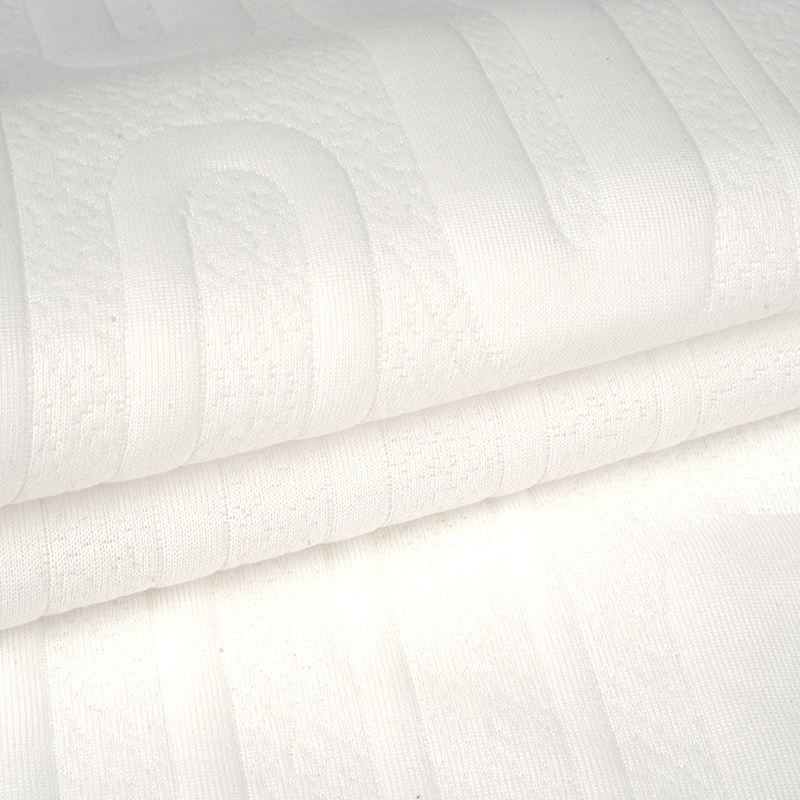
Polyester Children Mattress Fabric
Polyester Children Mattress Fabric
Haven’t Found The Products You Want?
-
-
Shen Jinyan:+86-15158070676
[email protected]
Liang Jinwen:+86-15757186621
[email protected]
Qiu Yingyingn:+86-13819545790
[email protected]
Yi qiao Town, Xiaoshan District, Hangzhou City, Zhejiang Province, China
-
Products
Mattress Fabric Children Mattress Fabric Pillowcase Fabric Pregnancy Pillow Fabric Cooling Mat Fabric Bedding Fabric Sofa Fabric Pet Friendly Fabrics -
Contact Information
About Us Products Strength Sustainability News Contact Us
Copyright © Hangzhou Xinsili Decorative Fabric Weaving Co.,Ltd. All Rights Reserved.
Functional Decorative Textile Manufacturers
