

 English
 中文简体
中文简体 Español
 عربى
عربى русский


Cotton Bedding Fabric: Advanced Comfort, Reliable Performance, and Sustainable Textile Manufacturing
Content
- 1 Understanding Cotton Bedding Fabric
- 2 Core Advantages of Cotton Bedding Fabric
- 3 Advantages Over Lower-Quality and Less Adaptable Alternatives
- 4 Functional Development for Modern Bedding
- 5 Advanced Manufacturing Process
- 5.1 1. Fiber and Raw Material Selection
- 5.2 2. Spinning and Yarn Preparation
- 5.3 3. Warping and Weaving
- 5.4 4. Inspection of Greige Fabric
- 5.5 5. Pretreatment and Scouring
- 5.6 6. Dyeing and Color Management
- 5.7 7. Functional Finishing
- 5.8 8. Heat Setting and Dimensional Control
- 5.9 9. Final Inspection and Packing
- 6 Manufacturing Strengths and Company Capabilities
- 7 Applications of Cotton Bedding Fabric
- 8 Customization Options for Buyers
- 9 Sustainability and Responsible Textile Production
- 10 Quality Evaluation Checklist
- 11 Why Professional Supplier Selection Matters
- 12 Care and Maintenance Considerations
- 13 Q&A: Cotton Bedding Fabric
- 13.1 Q1: What makes cotton bedding fabric suitable for sleeping products?
- 13.2 Q2: Is cotton bedding fabric suitable for all seasons?
- 13.3 Q3: Can cotton bedding fabric be used for hotel bedding?
- 13.4 Q4: Can the fabric be customized in color and construction?
- 13.5 Q5: Can cotton bedding fabric have antibacterial properties?
- 13.6 Q6: Is cotton bedding fabric suitable for children’s products?
- 13.7 Q7: Can cotton fabric be used for pregnancy pillow covers?
- 13.8 Q8: How does high-quality cotton fabric differ from inexpensive bedding fabric?
- 13.9 Q9: What should buyers request before placing a bulk order?
- 13.10 Q10: How can a manufacturer support product development?
- 13.11 Q11: Is cotton bedding fabric environmentally responsible?
- 13.12 Q12: What information should be included in a fabric specification?
- 14 Conclusion
- 15 References
- 16 Product: Cotton Bedding Fabric
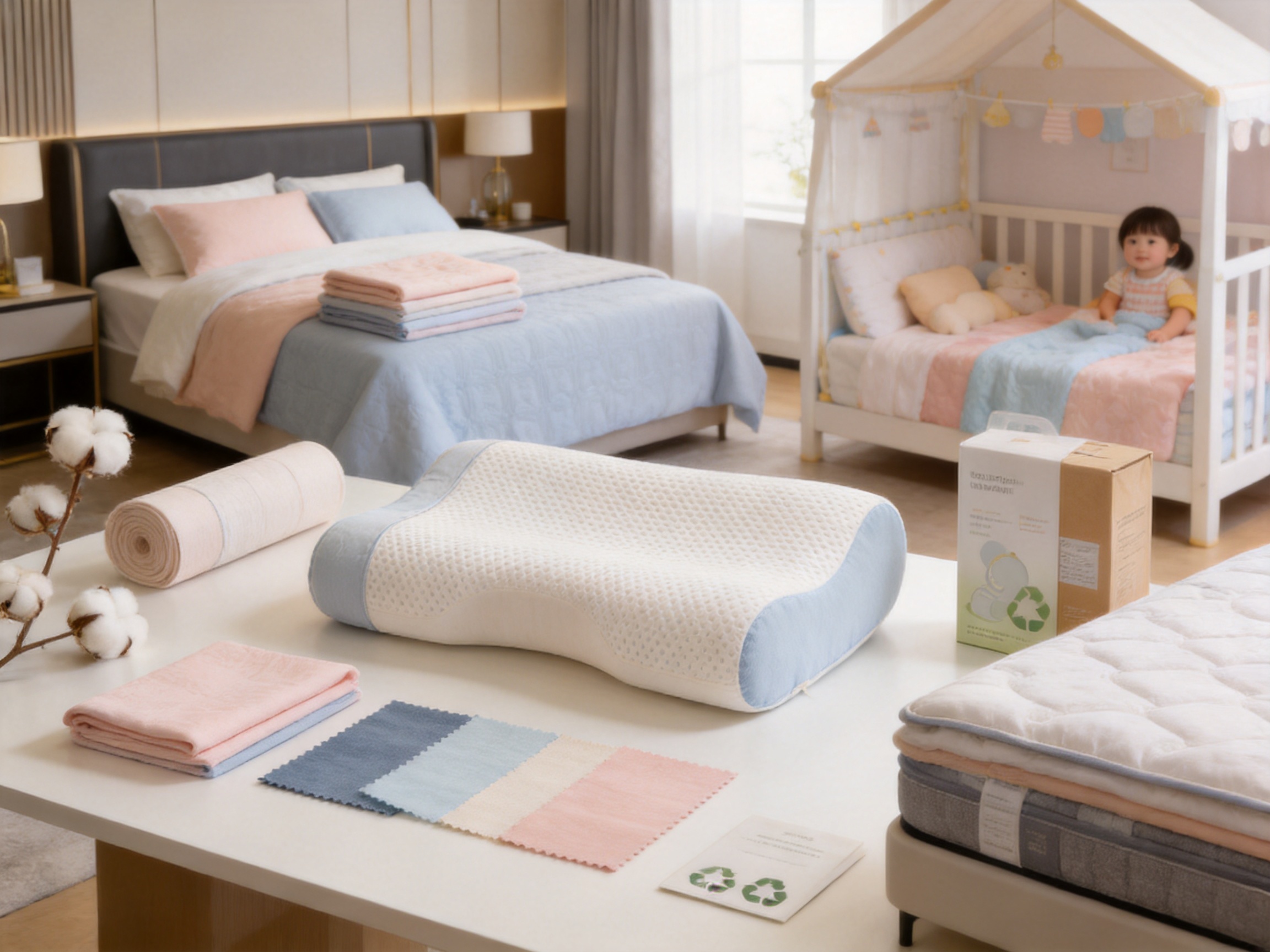
Cotton bedding fabric remains one of the most trusted textile choices for bedrooms, hospitality environments, healthcare spaces, and other applications where comfort, breathability, and dependable performance matter. As consumers become more attentive to sleep quality, skin comfort, environmental responsibility, and product durability, bedding manufacturers are looking for fabrics that combine natural softness with modern functional performance.
High-quality cotton bedding fabric provides a balanced textile solution. It can feel soft against the skin, absorb moisture during sleep, support air circulation, and maintain a comfortable sleeping environment across different seasons. At the same time, improvements in yarn selection, weaving technology, finishing processes, inspection systems, and functional treatment development have made cotton fabrics more durable and adaptable than conventional basic bedding materials.
Hangzhou Xinsili Decorative Fabric Weaving Co., Ltd. specializes in the research, development, and manufacturing of functional decorative textiles, including cotton bedding fabric for residential, hotel, and commercial applications. With 19 years of industry experience, a 12,000-square-meter factory area, and recognition as a National High-Tech Enterprise in 2023, the company combines textile craftsmanship with practical innovation. Its manufacturing philosophy is centered on stable quality, reliable delivery, environmental responsibility, and the development of fabrics that improve everyday comfort.
This article examines the structure, advantages, applications, manufacturing process, quality controls, and customization potential of cotton bedding fabric. It also explains why professionally developed cotton textile products can offer meaningful advantages over lower-quality or poorly controlled alternatives.
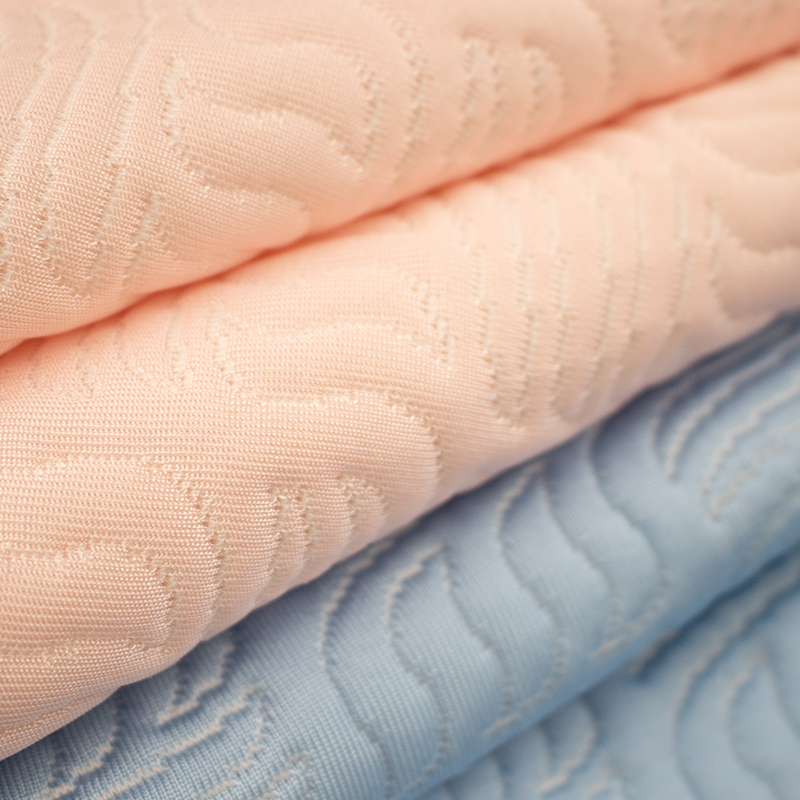
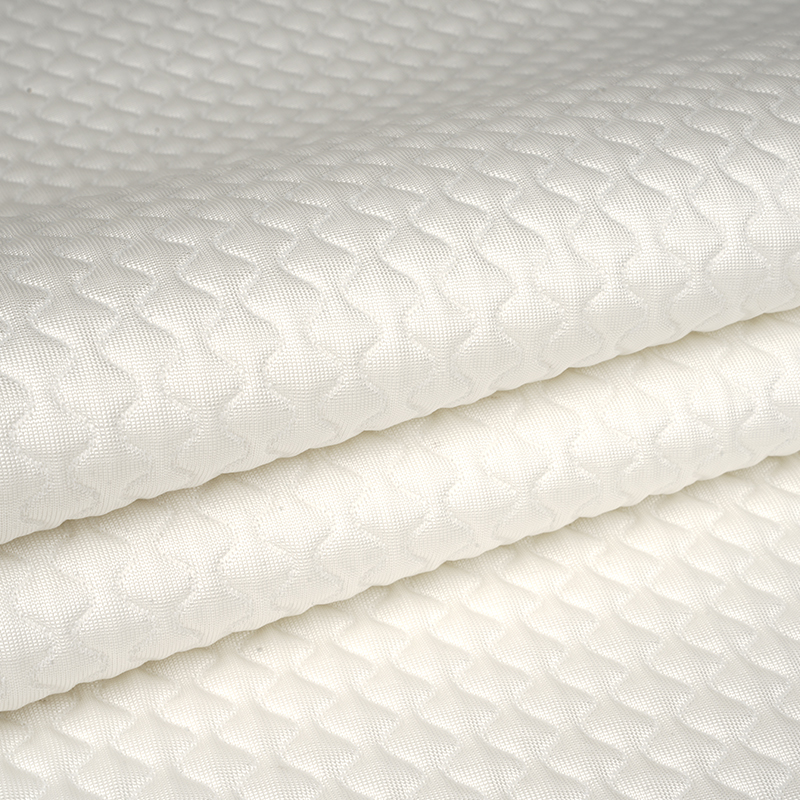
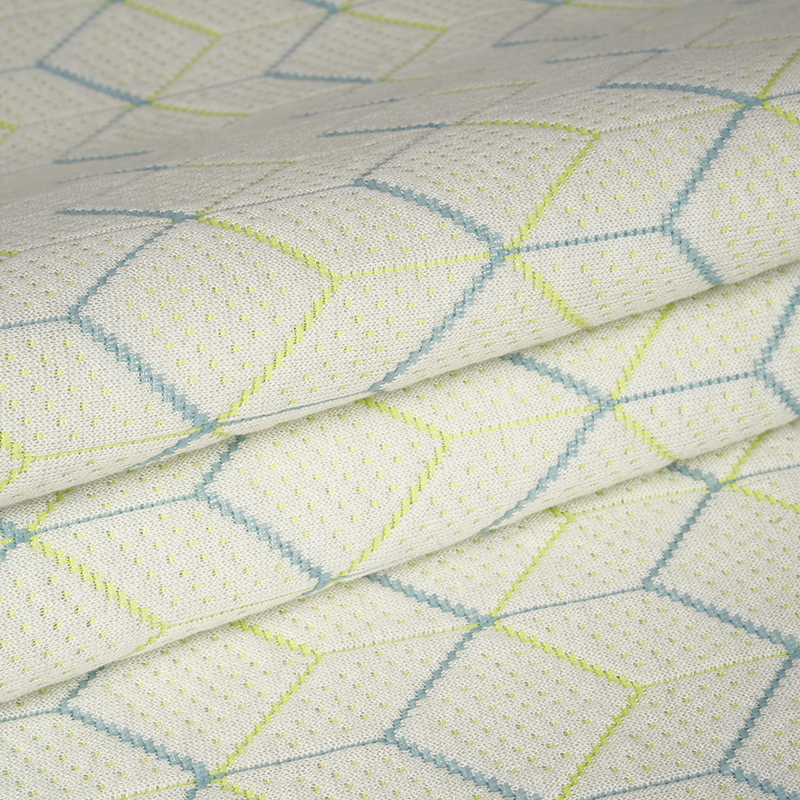
Cotton Bedding Fabric
Understanding Cotton Bedding Fabric
Cotton bedding fabric is a textile made primarily from cotton fibers and designed for products such as bed sheets, duvet covers, pillowcases, mattress covers, quilt shells, blankets, and other sleep-related articles. Depending on the intended use, cotton may be woven into different structures, including plain weave, twill, satin-inspired constructions, dobby structures, and blended or specially finished fabric formats.
The performance of cotton bedding fabric depends on more than the fiber itself. Fiber length, yarn quality, yarn count, weave density, finishing method, dyeing process, fabric weight, and final inspection all influence how the fabric feels and performs. A carefully engineered fabric can be soft without becoming weak, breathable without being too thin, and durable without feeling excessively rigid.
For bedding manufacturers, cotton fabric is attractive because it offers both familiarity and flexibility. It can be dyed in many colors, printed with various patterns, finished with different surface effects, and adapted to different market positions. It may be developed for economical everyday bedding, premium hotel collections, children’s bedding, maternity pillow products, cooling-related bedding systems, or decorative home textiles.
Natural cotton fibers also have a comfortable tactile character that many synthetic fabrics attempt to imitate but do not fully reproduce. Cotton generally feels warm and soft in cooler conditions while remaining relatively breathable in warmer environments. This adaptability makes it suitable for year-round bedding collections and for consumers with different preferences regarding hand feel and moisture management.
Core Advantages of Cotton Bedding Fabric
Natural Softness and Skin Comfort
One of the most important advantages of cotton bedding fabric is its comfortable surface. Cotton fibers can be spun and woven into textiles with a smooth, soft hand that is suitable for prolonged contact with the skin. Because people may spend many hours in bed each day, the tactile qualities of sheets, pillowcases, and duvet covers have a direct influence on the perceived quality of the sleep environment.
Well-manufactured cotton bedding fabric can provide a gentle surface without relying entirely on heavy chemical softeners. Controlled yarn preparation and precise finishing help create a balanced hand feel that remains comfortable after repeated washing. This is particularly important for pillowcases and children’s bedding, where softness and surface comfort are often primary purchasing considerations.
Breathability and Air Circulation
Cotton bedding fabric is valued for its ability to support airflow through the textile structure. The exact level of breathability depends on weave construction, fabric density, weight, and finishing, but cotton generally provides a more naturally ventilated feel than many dense or poorly engineered synthetic materials.
Good air circulation helps reduce the stuffy sensation that can occur during sleep. In warm climates, breathable bedding can make the sleeping environment feel lighter and more comfortable. In hotels and furnished residences, the use of breathable fabrics can contribute to a more pleasant experience for a wide range of users.
For manufacturers developing cooling mat fabric, mattress fabric, or bedding systems that require temperature comfort, cotton may also serve as an important outer or blended layer. It can be combined with other functional textile technologies to create a fabric system that supports moisture movement, surface comfort, and improved thermal perception.
Moisture Absorption
Cotton fibers naturally absorb moisture, which is one reason cotton bedding fabric has remained popular for generations. During sleep, the human body releases heat and moisture. A suitable bedding textile can help manage this moisture at the fabric surface, reducing the uncomfortable feeling associated with damp or clammy bedding.
Moisture absorption does not mean that cotton fabric should remain wet. Proper fabric design must also support drying and air exchange. Yarn structure, fabric weight, finishing, and laundering instructions all affect how quickly moisture is distributed and released. Xinsili’s focus on functional decorative fabrics allows cotton bedding products to be considered as part of a broader comfort system rather than as a basic commodity fabric.
Durability for Repeated Use
Bedding fabrics are washed frequently, handled regularly, and exposed to friction from the body, bedding accessories, and laundering equipment. A fabric that feels attractive when new but loses strength, color, or dimensional stability after a short period can create unnecessary replacement costs.
Quality cotton bedding fabric is developed with repeated use in mind. Suitable yarn selection, controlled weaving tension, balanced construction, and appropriate finishing can improve resistance to tearing, abrasion, pilling, and shrinkage. Durability is especially valuable in hotels, dormitories, healthcare environments, rental properties, and family households where bedding may be washed more frequently than decorative home textiles.
Versatile Appearance and Design Potential
Cotton fabric offers broad design flexibility. It may be produced in solid colors, yarn-dyed patterns, printed designs, textured surfaces, subtle decorative constructions, or fabrics with a natural and understated appearance. This makes it compatible with modern, traditional, minimalist, children’s, luxury, and commercial interior styles.
Designers can select different fabric weights and surface effects to create distinct product identities. A lightweight cotton fabric may be suitable for summer bedding or breathable pillowcases, while a heavier construction may be used for quilt covers, mattress-related applications, or decorative bedroom products. The ability to create different visual and tactile effects from the same basic fiber category gives cotton a strong advantage in product development.
Consumer Familiarity and Market Acceptance
Cotton is widely recognized by consumers, which can simplify product communication and build confidence at the point of purchase. Buyers often understand the general benefits associated with cotton, including softness, natural origin, breathability, and everyday practicality.
For bedding brands, this familiarity can reduce the educational burden required to introduce a new product. Manufacturers can then focus their communication on measurable details such as fabric weight, weave structure, finishing performance, color fastness, functional treatments, and care instructions.
Advantages Over Lower-Quality and Less Adaptable Alternatives
Not all bedding fabric is produced to the same standard. Some low-cost materials may appear attractive initially but provide limited long-term value because of weak yarns, inconsistent dyeing, excessive shrinkage, unstable dimensions, poor color fastness, or an uncomfortable surface. In contrast, professionally developed cotton bedding fabric is designed around a complete performance profile.
A major advantage is the balance between comfort and strength. Some very soft fabrics achieve their hand feel through aggressive finishing that may decline after washing. Other inexpensive fabrics are made with coarse fibers or loose construction, resulting in a rougher surface and reduced service life. A properly engineered cotton fabric seeks to maintain softness through fiber, yarn, weaving, and finishing choices rather than relying on one temporary treatment.
Another advantage is application flexibility. Generic bedding fabric may be suitable for only one narrow use, while a functional cotton textile can be adapted for pillowcases, sheets, mattress covers, quilt covers, and decorative bedding components. This versatility helps brands reduce development complexity and create coordinated product ranges.
Cotton bedding fabric can also offer a more balanced consumer experience than fabrics that emphasize only one feature. For example, a highly smooth synthetic fabric may offer low friction but feel less absorbent. A very thick textile may appear durable but retain more heat. A very lightweight fabric may feel cool but wear quickly. Cotton, when correctly specified, can provide a practical middle ground of softness, moisture management, breathability, appearance, and durability.
| Performance Factor | High-Quality Cotton Bedding Fabric | Low-Quality Basic Fabric | Potential Customer Benefit |
|---|---|---|---|
| Surface comfort | Soft, balanced, and suitable for extended skin contact | May feel rough, excessively slick, or temporarily soft | More comfortable sleep and better product perception |
| Breathability | Designed through suitable fiber, yarn, and weave selection | May feel dense or poorly ventilated | Improved comfort in different seasons |
| Moisture management | Supports absorption and distribution of perspiration | May create a clammy or less comfortable surface | A fresher sleeping environment |
| Dimensional stability | Controlled through finishing and inspection | May shrink or distort after laundering | Better fit and reduced replacement frequency |
| Color performance | Managed through controlled dyeing and testing | Color may fade or vary between batches | Longer-lasting visual appeal |
| Application range | Suitable for coordinated residential and commercial products | Often limited to basic, low-demand uses | Greater product development flexibility |
Functional Development for Modern Bedding
Modern bedding consumers increasingly expect more than a pleasant appearance. They may look for antibacterial properties, moisture resistance, flame-retardant performance, improved sleep comfort, temperature-related comfort, easy care, and environmentally responsible production. Functional decorative textiles respond to these expectations by combining design with technical development.
Antibacterial Textile Development
Antibacterial bedding fabrics are developed to help inhibit the growth or activity of certain microorganisms on the textile surface. The exact performance depends on the treatment technology, test method, dosage, durability, and intended application. For bedding products, antibacterial development may be considered for hotel rooms, healthcare-related environments, children’s products, and households where frequent hygiene management is important.
Any antibacterial claim should be supported by appropriate laboratory testing and clearly defined product documentation. A responsible manufacturer does not treat antibacterial performance as a vague marketing term. Instead, the manufacturer should identify the tested property, the testing conditions, the expected durability, and the care requirements.
Moisture-Resistant and Moisture-Responsive Options
Moisture-resistant fabric development can serve several purposes. In some cases, the objective is to reduce the penetration of liquid into a protective layer. In other cases, the goal is to improve moisture distribution, surface drying, or resistance to damp conditions. These are different performance targets and should be selected according to the final product structure.
For mattress covers, pillow protectors, and bedding used in hospitality or healthcare settings, a carefully selected moisture-related finish can support cleanliness and maintenance. The treatment must still preserve an acceptable hand feel, breathability, and appearance. Xinsili’s functional textile approach is relevant because the company focuses on integrating performance requirements into decorative and comfort-oriented fabric development.
Flame-Retardant Applications
Flame-retardant textile development may be required for particular commercial, hospitality, public-space, or regulatory applications. The suitable technical solution depends on the end-use product, local requirements, fabric construction, and testing standards.
Flame-retardant performance should always be evaluated as part of the complete finished product rather than assumed from the fiber name alone. Seam construction, filling materials, coatings, backing layers, and laundering conditions may all influence performance. A capable textile manufacturer can help customers define the correct fabric specification and coordinate testing for the intended application.
Sleep-Supporting Comfort
Sleep-supporting bedding does not depend on one single material property. It is influenced by surface softness, temperature perception, moisture management, breathability, tactile stability, noise, and the overall feel of the bedding system. Cotton fabric can contribute to this experience by providing a familiar, breathable, and skin-comfortable surface.
For products related to pregnancy pillows, children’s mattresses, mattress covers, and sleep accessories, surface comfort and reliable construction are especially important. These products may be used for extended periods and may need to satisfy consumers who are more sensitive to heat, friction, pressure, or material feel.
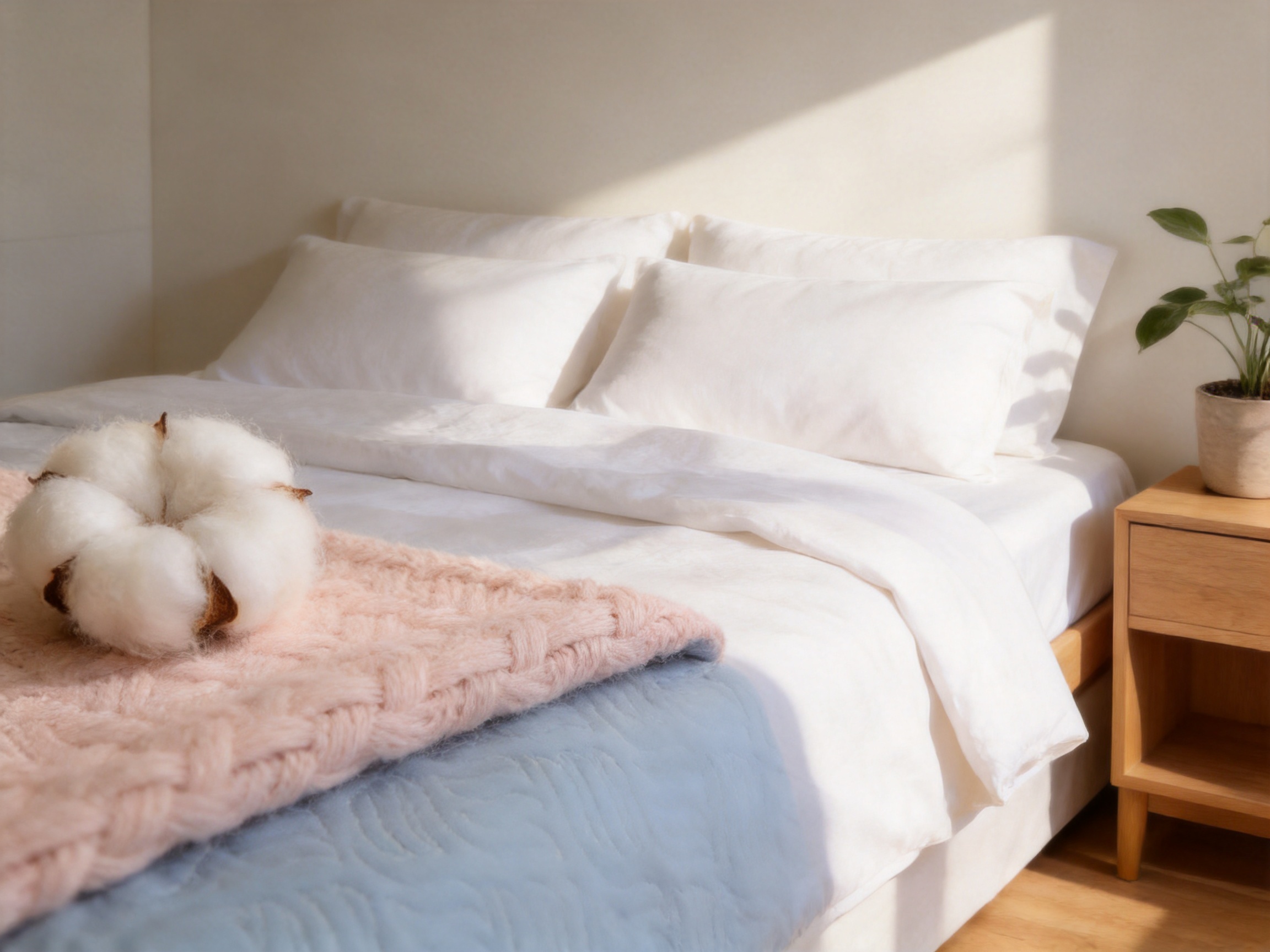
Advanced Manufacturing Process
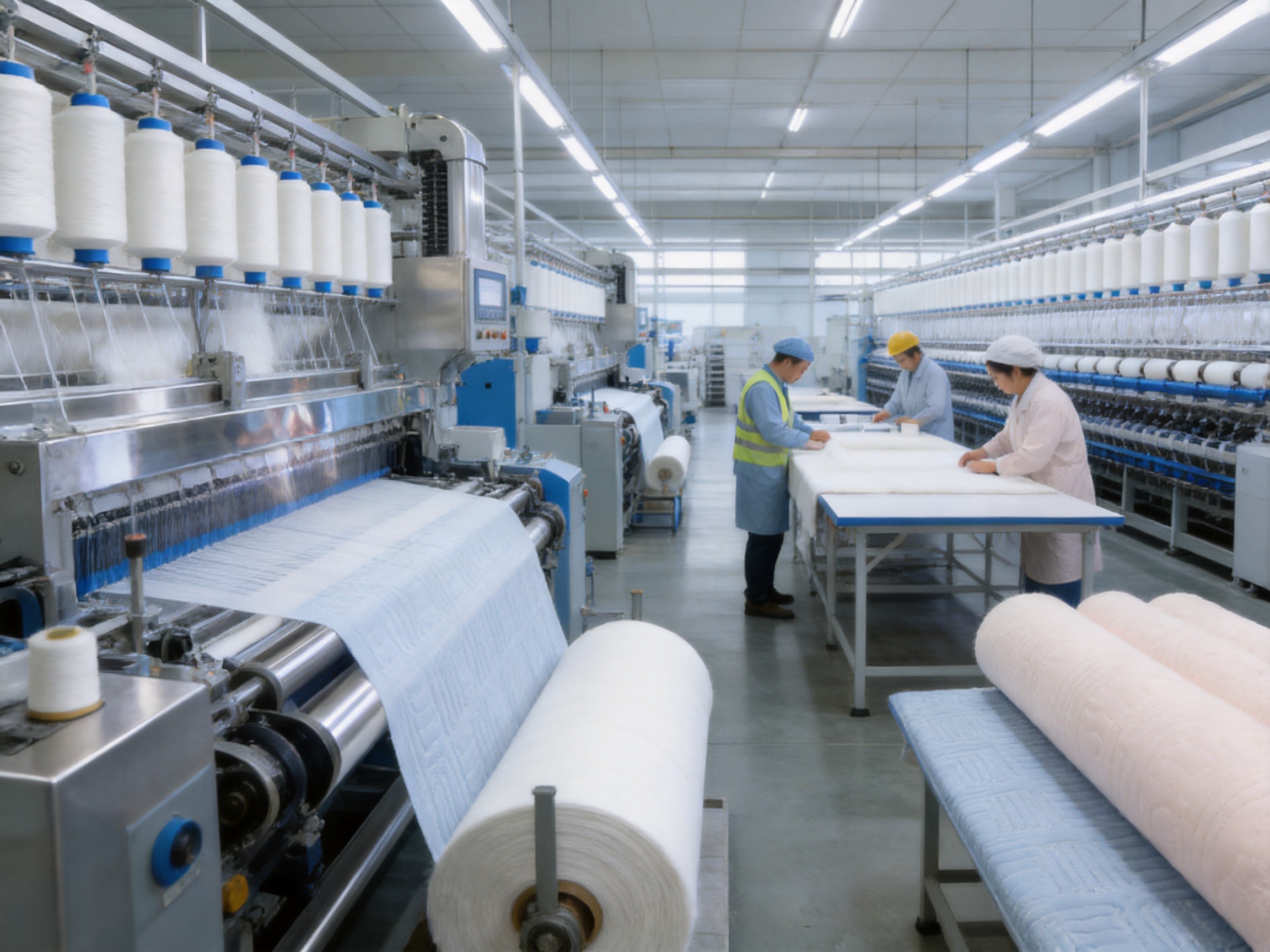
The quality of cotton bedding fabric is established through a sequence of connected manufacturing steps. Each stage has an effect on the final textile. Advanced manufacturing does not simply mean using modern equipment; it also involves disciplined process control, experienced personnel, accurate documentation, and continuous improvement.
1. Fiber and Raw Material Selection
The process begins with the selection of suitable cotton fiber and supporting raw materials. Fiber length, strength, fineness, cleanliness, color, and uniformity influence yarn performance and fabric appearance. Longer and more consistent fibers can generally support smoother yarns and improved fabric strength, although the appropriate choice depends on the desired product grade and cost structure.
Raw material evaluation helps reduce variation before production begins. Consistent material selection is particularly important for customers who require stable quality across multiple orders, coordinated colors, or long-term supply programs.
2. Spinning and Yarn Preparation
During spinning, cotton fibers are transformed into yarn. Yarn count, twist, strength, evenness, and hairiness all influence the subsequent weaving process and the feel of the finished fabric. A yarn with suitable strength can reduce breakage during weaving, while controlled hairiness can contribute to a smoother surface.
Yarn preparation may include winding, clearing, sizing, and other steps designed to improve weaving efficiency and fabric regularity. The yarn must be selected according to the target fabric construction. A fine yarn may produce a lighter, smoother fabric, while a coarser or stronger yarn may be appropriate for heavier, more durable applications.
3. Warping and Weaving
Warping arranges yarns in a controlled parallel formation before they enter the loom. Accurate warping helps maintain consistent tension and reduces defects caused by irregular yarn placement. During weaving, warp and weft yarns interlace according to the selected construction.
Weave design determines many important characteristics, including surface appearance, strength, flexibility, air permeability, drape, and dimensional behavior. Plain weave may provide a clean and stable structure. Twill constructions can offer a distinctive diagonal appearance and enhanced drape. Other constructions may be selected for decorative texture or specific comfort requirements.
Precise control of loom settings is essential. Excessive tension can create stiffness or distortion, while insufficient control may lead to loose areas, uneven density, or structural instability. Experienced production teams monitor machine conditions and fabric formation to maintain consistency.
4. Inspection of Greige Fabric
After weaving, greige fabric is inspected before wet processing. This stage can identify weaving defects, missing yarns, slubs, holes, oil marks, inconsistent density, and other irregularities. Early inspection helps prevent defects from moving through later stages where correction may become more difficult or costly.
Inspection systems may combine visual checking, measurement, production records, and defect classification. A clear classification system helps the factory analyze recurring problems and improve the relevant process rather than merely removing individual defective pieces.
5. Pretreatment and Scouring
Pretreatment prepares the fabric for dyeing, printing, or finishing. Scouring removes natural impurities, spinning oils, waxes, and other substances that may interfere with color absorption or finishing uniformity. The process must be controlled carefully to clean the fabric without causing unnecessary fiber damage.
Effective pretreatment supports more even dyeing, improved whiteness where required, and better consistency across the fabric width and length. It also provides a more reliable foundation for functional treatments applied later in production.
6. Dyeing and Color Management
Cotton bedding fabric may be produced in a wide range of colors. Dye selection and dyeing conditions depend on the fiber, shade, end use, and performance requirements. Important considerations include color uniformity, color fastness to washing, rubbing, perspiration, light, and other relevant exposures.
Color management requires more than matching a laboratory sample. Production scale, water quality, machine conditions, fabric weight, and drying conditions can all influence the final shade. A reliable supplier maintains controlled procedures for lab dips, sample approval, batch production, and color evaluation.
For bedding brands and home textile manufacturers, stable color performance is essential. Bedding is often sold as a coordinated collection, so slight differences between production batches can affect customer satisfaction and inventory planning.
7. Functional Finishing
Finishing is where the fabric’s final hand feel, appearance, dimensional behavior, and selected functional characteristics are developed. Mechanical finishing may include calendering, brushing, compacting, or softening processes. Chemical finishing may be used for moisture management, antibacterial effects, flame retardancy, water resistance, or other defined functions.
The correct finishing route depends on the desired balance. A finish should not improve one characteristic while damaging another. For example, an excessive coating may reduce breathability, while aggressive mechanical treatment may affect strength or dimensional stability. The objective is to create a fabric that performs consistently in its intended product rather than maximizing one laboratory value in isolation.
8. Heat Setting and Dimensional Control
Dimensional stability is particularly important for bedding products because fitted sheets, mattress covers, pillowcases, and duvet covers must maintain appropriate dimensions after washing. Depending on the fabric construction and fiber composition, controlled drying, compacting, or heat treatment may be used to reduce shrinkage and improve stability.
Dimensional measurements should be evaluated in relation to the customer’s cutting and sewing process. A fabric may meet a general shrinkage requirement but still create problems if the lengthwise and widthwise behavior is not properly understood. Technical communication between fabric supplier and finished-product manufacturer helps ensure that the fabric specification is practical.
9. Final Inspection and Packing
Before shipment, the finished fabric is inspected for appearance, width, weight, color, defects, hand feel, and other agreed specifications. Rolls are packed to protect the textile from moisture, contamination, handling damage, and compression-related problems.
Clear labeling and production records support traceability. If a customer later reports an issue, accurate records allow the supplier to review the relevant raw materials, machine settings, finishing route, inspection results, and shipment information. This strengthens corrective action and supports long-term quality improvement.
Manufacturing Strengths and Company Capabilities
Hangzhou Xinsili Decorative Fabric Weaving Co., Ltd. has built its business around decorative and functional textile manufacturing. Its experience in this field provides a foundation for developing cotton bedding fabric that combines appearance, comfort, and practical performance.
The company’s 19 years of industry experience represent accumulated knowledge in yarn selection, weaving, finishing, textile applications, and customer cooperation. Experience is valuable because textile performance often depends on the interaction of many variables. A small change in yarn, construction, finishing temperature, or production speed may influence the final result. Experienced technical teams are better positioned to identify these relationships and adjust the process efficiently.
The company operates within a 12,000-square-meter factory area, providing a structured manufacturing environment for production, inspection, development, and order management. Factory scale alone does not guarantee quality, but an organized production base can support clearer process separation, better equipment management, more consistent workflow, and improved customer coordination.
Recognition as a National High-Tech Enterprise in 2023 reflects the company’s emphasis on research, development, and technological advancement. For textile customers, this orientation is important because functional fabrics require more than traditional production experience. They require product development, testing awareness, formulation control, and an understanding of how textile functions behave during actual use and laundering.
Xinsili’s stated vision, “Weaving Beautiful Spaces,” connects technical textile development with interior and lifestyle applications. Cotton bedding fabric is not only a material for sleep products; it also contributes to the visual atmosphere of bedrooms, hotels, guest rooms, children’s spaces, and commercial environments. By combining decorative design with functional performance, the company can support customers seeking fabrics that are both attractive and useful.
The company serves residential, hotel, and commercial environments. These sectors have different requirements. Residential customers may focus on softness, appearance, easy care, and family comfort. Hotels may prioritize durability, consistent supply, color coordination, and laundering performance. Commercial customers may require specification compliance, technical documentation, functional treatment, or special design development. A supplier with experience across these environments can better understand the practical differences between them.
Research and Development Orientation
Research and development in decorative textiles may involve new constructions, surface treatments, functional finishes, color systems, environmental improvements, and application-specific solutions. For cotton bedding fabric, development work can focus on softness retention, moisture management, antibacterial performance, dimensional stability, flame-retardant requirements, or compatibility with particular sewing and filling materials.
An effective development process begins by defining the customer’s actual need. Instead of selecting a function simply because it is commercially popular, the manufacturer should consider where the fabric will be used, how it will be cleaned, what level of performance is required, and how the fabric will interact with the rest of the finished product.
Quality Consistency
Stable quality is one of the most important differences between a dependable textile manufacturer and a supplier focused only on initial price. Bedding products are often manufactured in repeated batches. If fabric width, color, weight, shrinkage, or hand feel changes significantly between shipments, the finished-product manufacturer may experience cutting loss, sewing problems, customer complaints, or inconsistent retail presentation.
Consistency is supported by controlled raw materials, documented production procedures, inspection checkpoints, trained operators, and feedback systems. It is also supported by communication. Customers should be able to discuss specifications, samples, tolerance ranges, packaging requirements, and quality expectations before mass production begins.
Applications of Cotton Bedding Fabric
Bed Sheets and Fitted Sheets
Bed sheets require a fabric that balances softness, durability, breathability, and dimensional stability. The fabric must tolerate repeated laundering while retaining a comfortable surface. For fitted sheets, dimensional behavior is especially important because the fabric must conform to mattress dimensions and remain secure during use.
Duvet Covers and Quilt Covers
Duvet and quilt covers provide both functional protection and visual character. Cotton bedding fabric can be developed in solid colors, printed patterns, textured constructions, or coordinated decorative styles. The fabric should be sufficiently durable for regular handling while retaining an attractive drape and comfortable hand.
Pillowcases
Pillowcases remain in direct and prolonged contact with the face and hair, making surface softness, smoothness, breathability, and color fastness especially important. Cotton bedding fabric can be designed for a gentle feel and may be combined with functional treatments selected for hygiene, moisture management, or easy care.
Children’s Bedding
Children’s bedding requires careful attention to comfort, durability, appearance, and safety-related expectations. Bright colors and playful patterns may be important, but these visual elements must be supported by stable dyeing, appropriate construction, and a surface that feels comfortable against sensitive skin.
For children’s mattress fabric and bedding components, manufacturers may also consider antibacterial or moisture-related functions, provided that the selected treatment is properly tested and documented. Clear care instructions are equally important because children’s bedding may require frequent washing.
Pregnancy Pillow Covers
Pregnancy pillows are often used for long periods and may come into contact with the user’s arms, face, and body. Cotton fabric can provide the soft, breathable surface that supports comfort during rest. A suitable construction should also withstand repeated removal and washing of the cover.
Mattress Covers and Mattress-Related Products
Mattress fabric must withstand friction, compression, movement, and regular maintenance. Cotton bedding fabric may be used as an outer cover, a decorative layer, or part of a composite structure. Depending on the product design, additional functions such as moisture resistance, antibacterial treatment, flame retardancy, or enhanced durability may be considered.
Cooling Mat and Sleep Comfort Products
Cotton fabric can be used as a comfortable contact layer in cooling mats or other temperature-comfort products. In such applications, the fabric must be evaluated together with the filling, gel, foam, coating, or functional inner layer. The cotton surface can contribute breathability and tactile comfort while the underlying construction provides the principal cooling effect.
Hotel and Commercial Bedding
Hotels require bedding textiles that can support a consistent guest experience and survive commercial laundering. Cotton fabric is a familiar and practical choice for hotel sheets, pillowcases, duvet covers, and decorative bedding. Suppliers must pay particular attention to roll consistency, repeatability, color matching, washing durability, and delivery reliability.
Customization Options for Buyers
Different buyers may require different cotton bedding fabric specifications. Customization may begin with the fiber composition and extend through fabric weight, width, weave structure, color, pattern, finishing, functional treatment, packing, and documentation.
Buyers can discuss whether they need a lightweight, medium-weight, or heavier fabric. They may also specify a particular surface effect, such as smooth, brushed, textured, crisp, or naturally soft. The suitable choice depends on the final product, target market, climate, sewing method, and expected price level.
Color customization is another important area. A supplier may support development based on physical samples, color cards, standardized references, or customer-approved laboratory dips. For coordinated bedroom collections, buyers should confirm acceptable color tolerances and establish a clear approval process before bulk production.
Functional customization may include antibacterial treatment, moisture-related finishing, flame-retardant development, sleep-comfort features, or other application-specific requirements. The buyer should define the desired function in measurable terms and identify the relevant testing method. This helps avoid misunderstandings and ensures that the final fabric is appropriate for the intended market.
Packaging and logistics can also be customized. Fabric may be packed in rolls, folded formats, protective wrapping, or customer-specific labeling systems. For international orders, accurate roll information, batch identification, and moisture protection are important for warehouse management and incoming inspection.
Sustainability and Responsible Textile Production
Environmental responsibility is becoming increasingly important in textile procurement. Cotton bedding fabric can support more responsible product development when manufacturers pay attention to raw material efficiency, water management, energy use, chemical control, waste reduction, packaging, and product durability.
Longer-lasting fabric may reduce the frequency of replacement, which can lower the resource demand associated with manufacturing and transportation. Durable bedding also supports more efficient commercial operations because hotels and institutions can maintain products for longer periods when they retain acceptable appearance and performance.
Responsible production includes careful chemical management. Dyes, auxiliaries, softeners, coatings, and functional agents should be selected and controlled according to the intended use and applicable requirements. Wastewater treatment and process management are also important elements of modern textile manufacturing.
Environmental claims should be specific and supported by evidence. Terms such as eco-friendly, sustainable, or green can mean different things in different markets. Buyers should ask for relevant product information, testing records, material details, and production documentation rather than relying only on general promotional language.
Xinsili’s emphasis on environmentally friendly decorative fabric solutions reflects the growing need to integrate sustainability with performance. A practical approach recognizes that environmental responsibility and product quality are connected: reducing waste, improving process stability, extending product life, and selecting appropriate treatments can benefit both the manufacturer and the customer.
Quality Evaluation Checklist
Before purchasing cotton bedding fabric, buyers should evaluate the material according to the final product’s actual requirements. A useful checklist may include the following points.
- Fiber composition and declared material content.
- Fabric width and acceptable width tolerance.
- Fabric weight and construction details.
- Surface appearance and hand feel.
- Color uniformity and color fastness.
- Shrinkage and dimensional stability after washing.
- Tensile strength, tear strength, and abrasion resistance where relevant.
- Pilling performance for products exposed to friction.
- Air permeability and moisture-related characteristics.
- Compatibility with printing, embroidery, coating, filling, and sewing processes.
- Testing requirements for antibacterial or flame-retardant performance.
- Packaging, roll length, labeling, and traceability.
- Production capacity and delivery schedule.
- Technical support and communication during product development.
Sample approval should ideally include both visual and practical evaluation. A fabric may look correct but behave differently during cutting, sewing, washing, or filling. Testing a sample through the customer’s actual production process can reveal issues before large-scale manufacturing begins.
Why Professional Supplier Selection Matters
The choice of fabric supplier affects more than material cost. It influences product development speed, manufacturing efficiency, quality stability, customer satisfaction, and long-term brand reputation. A reliable supplier can help identify the correct construction and finishing route before production starts.
Professional suppliers also provide better communication around technical limitations. For example, a particular finish may improve moisture resistance but change the hand feel. A denser construction may increase durability but reduce breathability. A certain dye may provide a desirable color but require special care to achieve the required fastness. Transparent technical discussion allows buyers to make informed decisions.
Hangzhou Xinsili Decorative Fabric Weaving Co., Ltd. positions itself as a manufacturing partner for functional decorative textiles rather than simply a source of standard fabric. Its experience, factory resources, research orientation, and focus on residential, hotel, and commercial environments support customers who need reliable and adaptable textile solutions.
The company’s product categories include mattress fabric, children’s mattress fabric, pillowcase fabric, pregnancy pillow fabric, cooling mat fabric, bedding fabric, sofa fabric, and pet-friendly fabrics. This broader product experience is useful because many bedding projects involve related components and coordinated materials. A supplier familiar with several application areas may be better able to support a complete textile program.
Care and Maintenance Considerations
The service life of cotton bedding fabric depends on both manufacturing quality and customer care. Washing temperature, detergent selection, mechanical agitation, drying method, ironing, storage, and exposure to sunlight can affect color, softness, shrinkage, and strength.
Manufacturers should provide care guidance that reflects the actual construction and finishing of the fabric. Commercial bedding may require different washing recommendations from residential products. Functional treatments may also have specific durability limits or care requirements. Clear instructions help the end user maintain the expected performance.
For hotel and institutional applications, laundering procedures should be reviewed during product selection. A fabric that performs well under household washing may require additional evaluation under industrial washing conditions. Testing should reflect the actual laundering environment whenever possible.
Q&A: Cotton Bedding Fabric
Q1: What makes cotton bedding fabric suitable for sleeping products?
Cotton bedding fabric is suitable because it can provide softness, breathability, moisture absorption, comfort, and practical durability. Its versatility also allows it to be produced in different weights, constructions, colors, and finishes for sheets, pillowcases, duvet covers, mattress covers, and related products.
Q2: Is cotton bedding fabric suitable for all seasons?
Many cotton bedding fabrics can be used throughout the year, but the seasonal comfort depends on fabric weight, weave density, finishing, and the surrounding bedding system. Lightweight and breathable constructions may be suitable for warmer conditions, while heavier fabrics may provide a more substantial feel in cooler environments.
Q3: Can cotton bedding fabric be used for hotel bedding?
Yes. Cotton bedding fabric can be developed for hotel sheets, pillowcases, duvet covers, and decorative bedding. Hotel buyers should pay particular attention to washing durability, dimensional stability, color fastness, roll consistency, and supply reliability because commercial bedding is exposed to frequent laundering and intensive use.
Q4: Can the fabric be customized in color and construction?
Customization may be available for color, width, weight, weave structure, surface appearance, finishing, and functional treatment. The exact options depend on the product specification, order quantity, and manufacturing requirements. Buyers should confirm the details during sample development.
Q5: Can cotton bedding fabric have antibacterial properties?
It may be developed with an antibacterial treatment, depending on the intended application and required performance standard. Any antibacterial claim should be supported by suitable laboratory testing, and buyers should confirm the test method, durability, care conditions, and regulatory requirements for the target market.
Q6: Is cotton bedding fabric suitable for children’s products?
Cotton fabric can be suitable for children’s bedding when the construction, dyes, finishes, and finished product meet the applicable safety and quality requirements. Softness, color fastness, wash durability, and clear care instructions are especially important for children’s products.
Q7: Can cotton fabric be used for pregnancy pillow covers?
Yes. Cotton can provide a soft and breathable surface for pregnancy pillow covers. The fabric should also be selected for repeated washing, comfortable drape, dimensional stability, and compatibility with the pillow’s shape and closure system.
Q8: How does high-quality cotton fabric differ from inexpensive bedding fabric?
High-quality cotton bedding fabric generally offers better consistency, surface comfort, strength, color stability, dimensional control, and performance after washing. Inexpensive fabric may reduce initial cost but can create higher replacement, defect, cutting, sewing, or customer-service costs over time.
Q9: What should buyers request before placing a bulk order?
Buyers should request representative samples, fabric specifications, color approvals, test information, estimated shrinkage, care guidance, packaging details, production lead time, and agreed quality tolerances. If the fabric will be used in a demanding environment, buyers should also conduct performance testing under realistic conditions.
Q10: How can a manufacturer support product development?
A capable manufacturer can help select yarn and construction, recommend finishing methods, develop colors, evaluate functional requirements, prepare samples, discuss testing, and adjust the specification according to the final product. Early technical cooperation helps reduce risk before mass production.
Q11: Is cotton bedding fabric environmentally responsible?
Its environmental profile depends on the complete lifecycle, including fiber sourcing, processing, dyeing, finishing, laundering, durability, and disposal. A durable fabric that uses controlled processes and appropriate chemicals may support more responsible product development, but buyers should request specific evidence for environmental claims.
Q12: What information should be included in a fabric specification?
A specification should normally include fiber content, width, weight, construction, color, finish, functional requirements, tolerance ranges, shrinkage expectations, testing methods, packing requirements, and inspection criteria. Clear specifications help both parties maintain consistent production.
Conclusion
Cotton bedding fabric continues to offer a strong combination of natural comfort, breathable performance, moisture absorption, design flexibility, and practical durability. Its value becomes even greater when it is developed through disciplined manufacturing and supported by modern functional textile technology.
Compared with low-quality alternatives, professionally produced cotton bedding fabric can provide better consistency, more reliable washing performance, improved dimensional stability, stronger visual durability, and a more balanced sleeping experience. It can be adapted for sheets, pillowcases, mattress products, children’s bedding, pregnancy pillows, cooling-related products, hotel textiles, and other residential or commercial applications.
Hangzhou Xinsili Decorative Fabric Weaving Co., Ltd. brings together 19 years of textile experience, a 12,000-square-meter factory area, research and development capabilities, and a focus on functional decorative fabrics. Its manufacturing approach emphasizes craftsmanship, design innovation, technological advancement, environmental responsibility, and stable cooperation with customers.
For buyers seeking cotton bedding fabric, the most important decision is not simply choosing a natural fiber. It is selecting a complete textile solution with the right construction, finish, functional properties, inspection controls, and supply support. When these elements are managed together, cotton bedding fabric can become a dependable foundation for comfortable, attractive, and durable sleep products.
References
1. Textile Institute, “Textile Terms and Definitions,” textile fiber, yarn, weave, and finishing terminology.
2. International Organization for Standardization, textile testing guidance for color fastness, dimensional change, tensile strength, and fabric performance.
3. American Society for Testing and Materials, standard methods for evaluating textile strength, abrasion, pilling, air permeability, and laundering behavior.
4. International Labour Organization, guidance concerning responsible production, occupational practices, and sustainability in textile manufacturing.
5. Cotton Incorporated, technical resources on cotton fiber properties, moisture behavior, comfort, and textile applications.
6. Textile Exchange, materials and sustainability guidance for responsible textile sourcing and production.
7. Industry technical documentation on functional textile finishes, including antibacterial, moisture-management, flame-retardant, and comfort-related treatments.
Product: Cotton Bedding Fabric

Our Featured Products
-
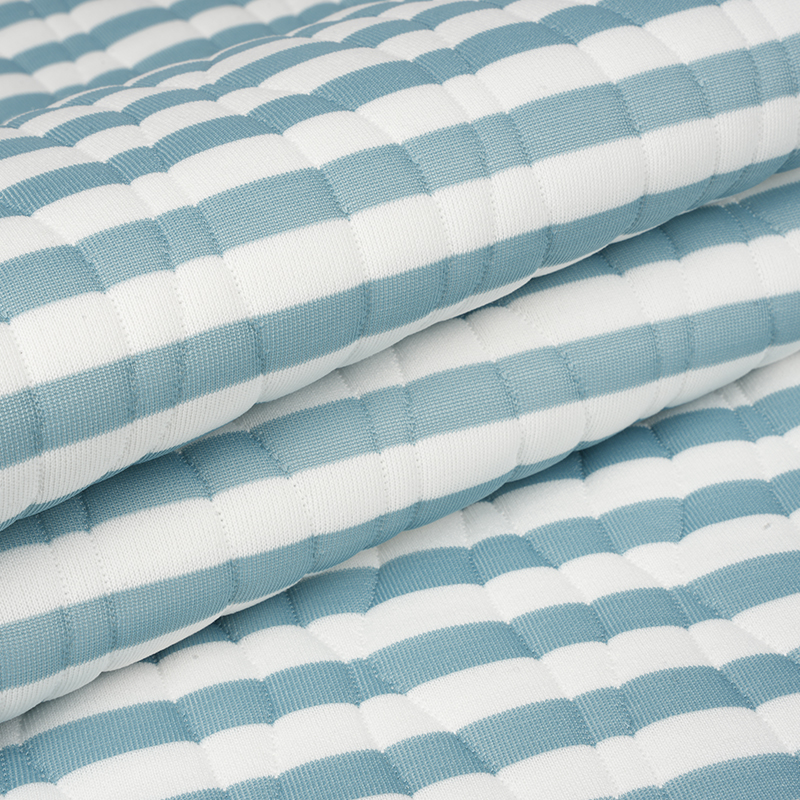
Cotton Pillowcase Fabric
Cotton Pillowcase Fabric
Haven’t Found The Products You Want?
-
-
Shen Jinyan:+86-15158070676
[email protected]
Liang Jinwen:+86-15757186621
[email protected]
Qiu Yingyingn:+86-13819545790
[email protected]
Yi qiao Town, Xiaoshan District, Hangzhou City, Zhejiang Province, China
-
Products
Mattress Fabric Children Mattress Fabric Pillowcase Fabric Pregnancy Pillow Fabric Cooling Mat Fabric Bedding Fabric Sofa Fabric Pet Friendly Fabrics -
Contact Information
About Us Products Strength Sustainability News Contact Us
Copyright © Hangzhou Xinsili Decorative Fabric Weaving Co.,Ltd. All Rights Reserved.
Functional Decorative Textile Manufacturers
