

 English
 中文简体
 Español
 عربى
 русский



Polyester Pregnancy Pillow Fabric: Functional Comfort, Reliable Performance, and Advanced Textile Manufacturing
Content
- 1 Understanding Polyester Pregnancy Pillow Fabric
- 2 Key Advantages of the Fabric
- 3 Product Comparison with Common Alternative Fabrics
- 4 Advanced Manufacturing Process
- 5 Manufacturing Strengths and Supplier Value
- 6 Applications for Pregnancy and Maternity Products
- 7 Customization Options for Buyers
- 8 Quality Evaluation Checklist
- 9 Why Manufacturing Quality Affects Competitive Position
- 10 Ordering and Product Development Recommendations
- 11 Care and Use Considerations
- 12 Frequently Asked Questions
- 12.1 What is Polyester Pregnancy Pillow Fabric used for?
- 12.2 Why is polyester suitable for pregnancy pillow covers?
- 12.3 Is polyester fabric comfortable for sleeping?
- 12.4 Can the fabric be customized?
- 12.5 Can this fabric be used for large U-shaped pregnancy pillows?
- 12.6 Does polyester fabric dry quickly?
- 12.7 Can functional properties be added to the fabric?
- 12.8 How should buyers compare different suppliers?
- 12.9 What information should be included in an inquiry?
- 12.10 Why is supplier experience important for this product?
- 13 Conclusion
- 14 References
- 15 Product: Polyester Pregnancy Pillow Fabric
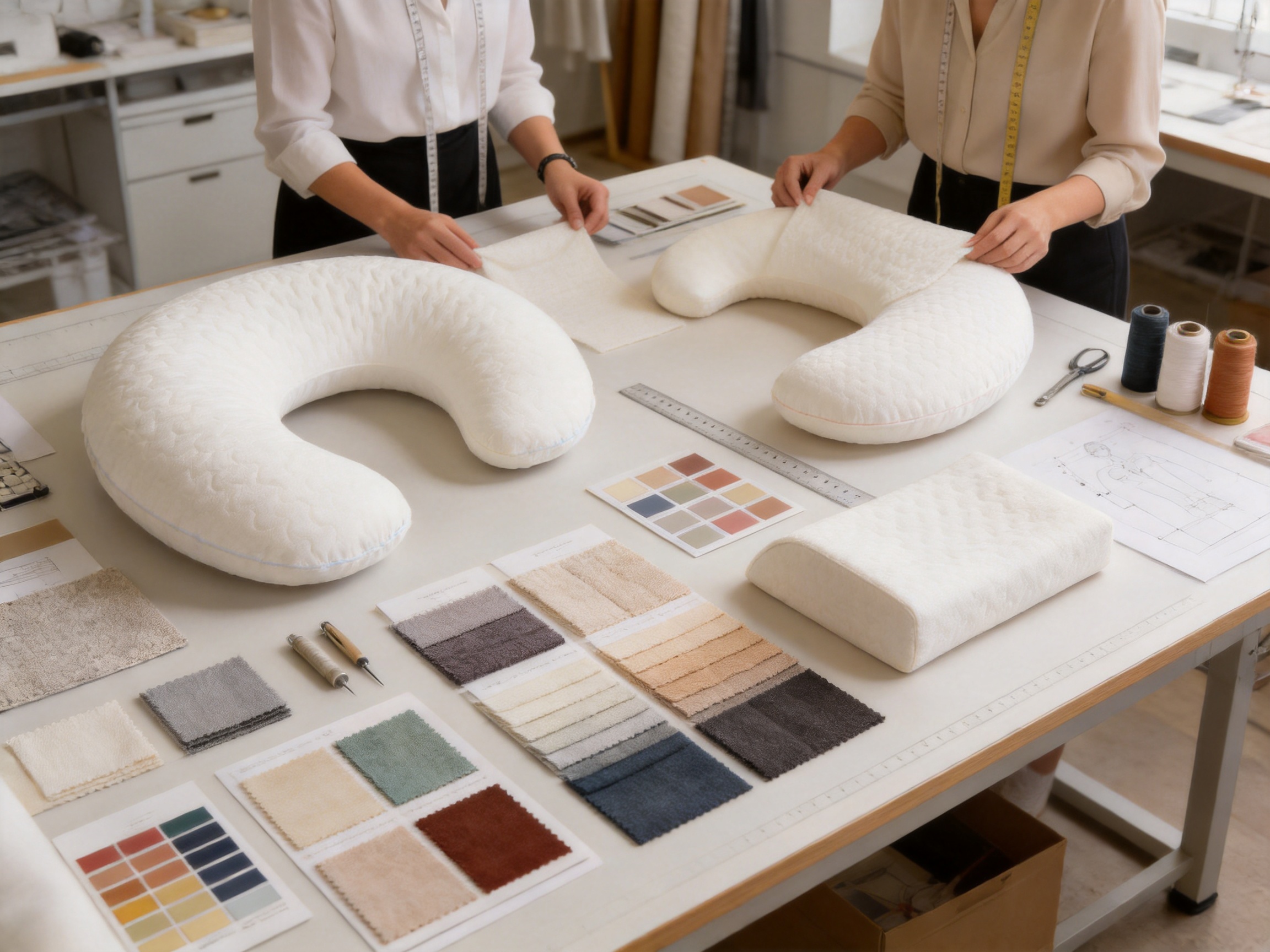
Pregnancy pillows are designed to provide support during a period when sleeping comfort, body alignment, and fabric performance become especially important. The textile used for a pregnancy pillow cover is not merely an outer decorative layer. It influences softness, breathability, moisture management, durability, appearance, cleaning convenience, and the overall user experience. Polyester pregnancy pillow fabric offers a practical combination of comfort, strength, design flexibility, and production efficiency, making it a suitable material for maternity pillows, full-body support pillows, U-shaped pillows, C-shaped pillows, wedge pillows, and other specialized bedding products.
For manufacturers and distributors seeking a dependable textile solution, the quality of the fabric is closely connected to the quality of the weaving process, finishing technology, inspection standards, and customization capabilities behind it. Hangzhou Xinsili Decorative Fabric Weaving Co., Ltd. develops and manufactures functional decorative textiles for residential, hotel, and commercial applications. Its product portfolio includes mattress fabric, children’s mattress fabric, pillowcase fabric, pregnancy pillow fabric, cooling mat fabric, bedding fabric, sofa fabric, and pet-friendly fabrics.
The Polyester Pregnancy Pillow Fabric product is developed for applications that require a balance between pleasant hand feel and dependable daily performance. The fabric can be used for pillow covers, removable cases, protective shells, maternity support cushions, and coordinated bedding collections. Its polyester base supports stable production, broad design possibilities, and resistance to the repeated handling associated with bedding products.
In addition to its product performance, the manufacturing background is an important reason to evaluate this fabric for long-term supply. With 19 years of industry experience, a 12,000-square-meter factory area, and recognition as a National High-Tech Enterprise in 2023, the manufacturer combines practical textile expertise with ongoing research and development. Its focus on antibacterial, moisture-resistant, flame-retardant, sleep-supporting, and comfort-improving technologies provides a foundation for developing functional fabrics suited to changing market expectations.
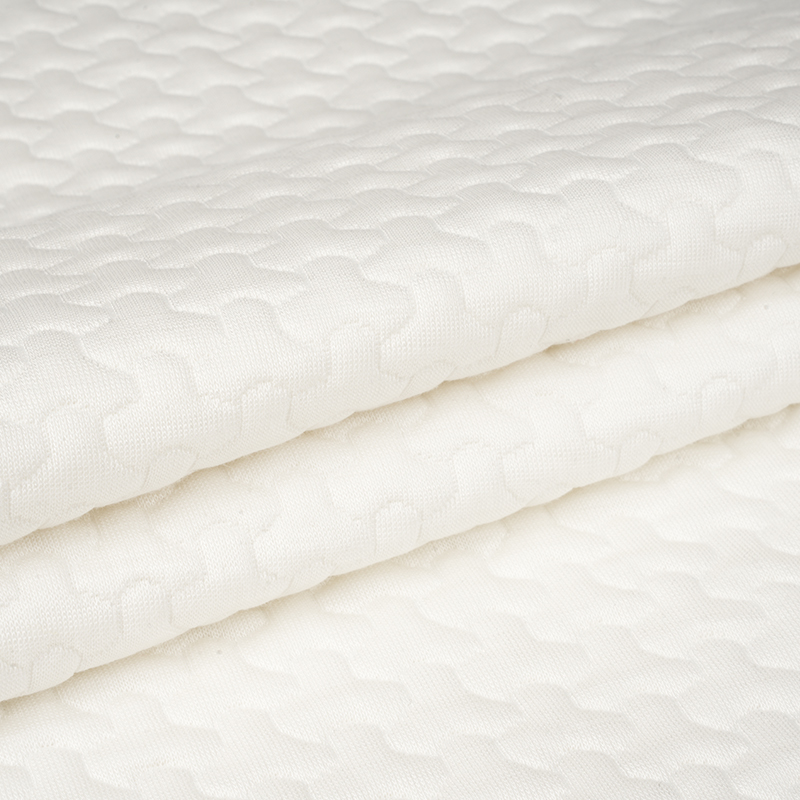
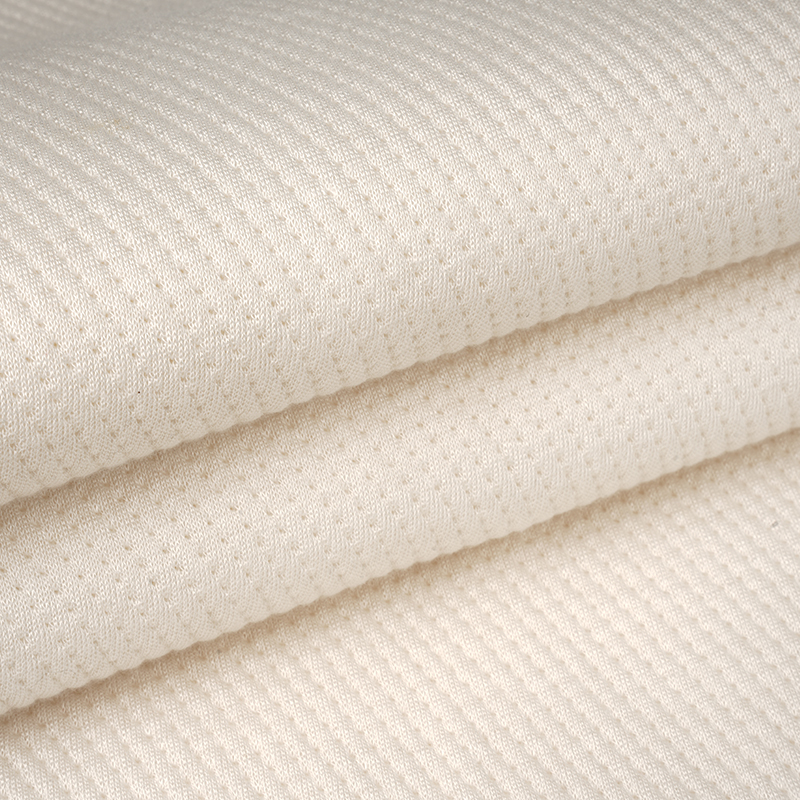
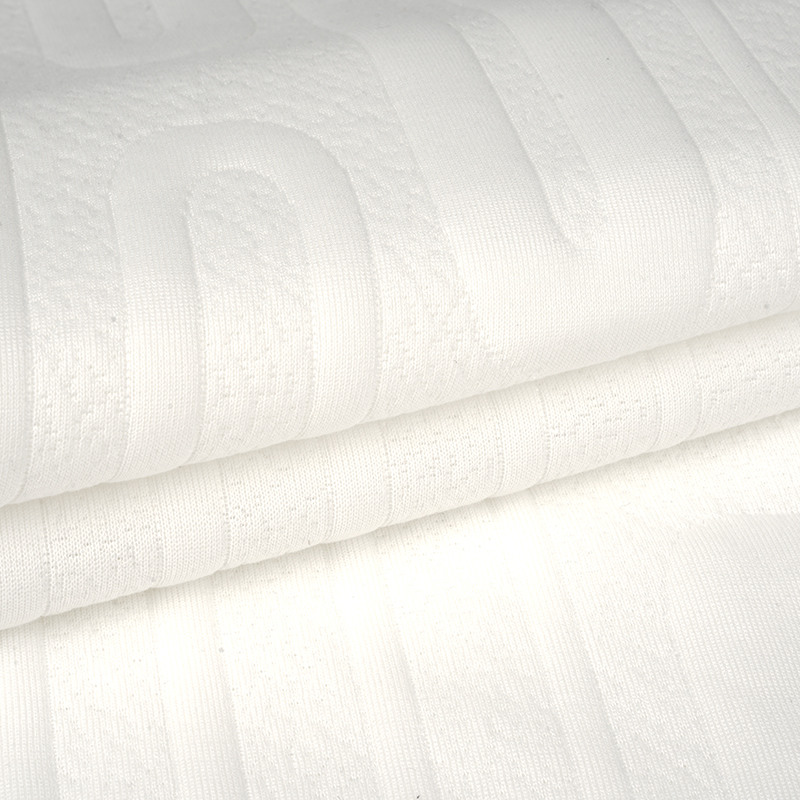
Polyester Pregnancy Pillow Fabric
Understanding Polyester Pregnancy Pillow Fabric
Polyester pregnancy pillow fabric is a textile made primarily from polyester fibers and engineered for use in maternity and pregnancy support pillow products. Polyester is widely used in home textiles because it offers good dimensional stability, high tensile strength, flexible styling options, and efficient processing. When the fiber, yarn, weave, dyeing, and finishing stages are properly controlled, the resulting fabric can provide a smooth, comfortable, and visually attractive surface for products used every day.
A pregnancy pillow is often larger and more structurally complex than an ordinary sleeping pillow. Its cover may need to accommodate a long body shape, multiple curves, side panels, fastening systems, piping, or sections with different levels of tension. Therefore, the fabric must be suitable for cutting, sewing, and repeated movement. It should retain a consistent appearance across large panels and should not easily lose its shape during normal use.
The textile also serves an important emotional function. Pregnancy products are often selected by consumers who are looking for reassurance, comfort, and a sense of care. A fabric that looks clean, feels gentle, and performs reliably can strengthen the perceived value of the final pillow. Color, surface texture, drape, and tactile softness all contribute to the product’s identity.
Polyester is particularly useful for this category because it can be engineered into many different fabric structures. Depending on the intended market, the material can be developed with a smooth surface, brushed touch, knitted elasticity, woven stability, textured appearance, or decorative pattern. This adaptability allows pillow manufacturers to create products for different price levels and design styles without changing the basic fiber family.
Key Advantages of the Fabric
Comfortable Surface Performance
Comfort is one of the first qualities consumers notice when using a pregnancy pillow. The fabric comes into direct or indirect contact with the user’s skin for extended periods, especially when the pillow is placed around the abdomen, back, legs, or shoulders. A well-finished polyester textile can provide a smooth, soft, and comfortable surface suitable for pillow covers and removable cases.
The final hand feel depends on many factors, including fiber fineness, yarn construction, fabric density, finishing method, and surface treatment. A professional textile manufacturer can adjust these factors to create a fabric that feels light and smooth or fuller and more cushioned, depending on the design requirements. This gives buyers more flexibility than relying on a single standard fabric construction.
Strength for Repeated Use
Pregnancy pillows are frequently repositioned, folded, leaned against, and washed. Their covers may experience friction from bedding, clothing, furniture, and movement during sleep. Polyester fibers are known for their strength and resistance to everyday wear, making them appropriate for products that need to maintain a presentable appearance over time.
Compared with less stable textiles, a well-constructed polyester fabric can reduce the likelihood of excessive stretching, surface distortion, or early loss of visual quality. This is particularly valuable for large U-shaped and C-shaped pillows, where the cover is exposed to more handling than a standard pillowcase.
Dimensional Stability
Dimensional stability is essential for a pregnancy pillow cover. If the textile shrinks or changes shape significantly after laundering, the cover may become difficult to reinstall, create tension around the filling, or develop unattractive wrinkles. Properly produced polyester fabric can offer stable dimensions when suitable yarn selection, heat setting, finishing, and quality control procedures are applied.
Stable fabric dimensions also improve manufacturing efficiency. Cutting patterns remain more consistent, sewing operations are easier to control, and the final cover is more likely to fit the pillow insert accurately. For brands producing large quantities, this can help reduce material waste and improve product uniformity.
Moisture Management and Drying Convenience
Sleeping environments can become warm, especially when a user surrounds the body with a large support pillow. Moisture management is therefore an important consideration when selecting pregnancy pillow fabric. Polyester can be engineered for a surface and structure that support practical moisture handling and relatively quick drying.
Moisture-related performance depends on the overall fabric design rather than fiber content alone. Yarn selection, fabric openness, surface treatment, and finishing all contribute to the result. A manufacturer with functional textile experience can develop fabrics that are more suitable for bedding applications where freshness and maintenance convenience are important.
Design Versatility
Pregnancy pillow products are sold in many visual styles, from minimalist neutral collections to soft pastel designs and coordinated maternity bedding ranges. Polyester supports a wide range of colors, patterns, textures, and finishing effects. It can be manufactured for simple solid-color products or used as a base for more distinctive decorative surfaces.
This versatility helps manufacturers respond to different markets. A single product category can be adapted for private-label bedding brands, maternity product specialists, hotel and healthcare environments, or online retailers. The appearance can be adjusted while maintaining the core advantages of polyester performance.
Practical Care Characteristics
Consumers expect pillow covers to be reasonably easy to maintain. Pregnancy pillows are used close to the body and may require regular cleaning. Fabrics that can be removed, washed, dried, and returned to use conveniently are more attractive to practical buyers.
Care instructions should always be determined according to the exact fabric construction, dyeing process, finishing treatment, and sewing design. Nevertheless, polyester is widely selected for home textiles because it can support practical care routines when properly manufactured and handled according to the supplier’s specifications.
Product Comparison with Common Alternative Fabrics
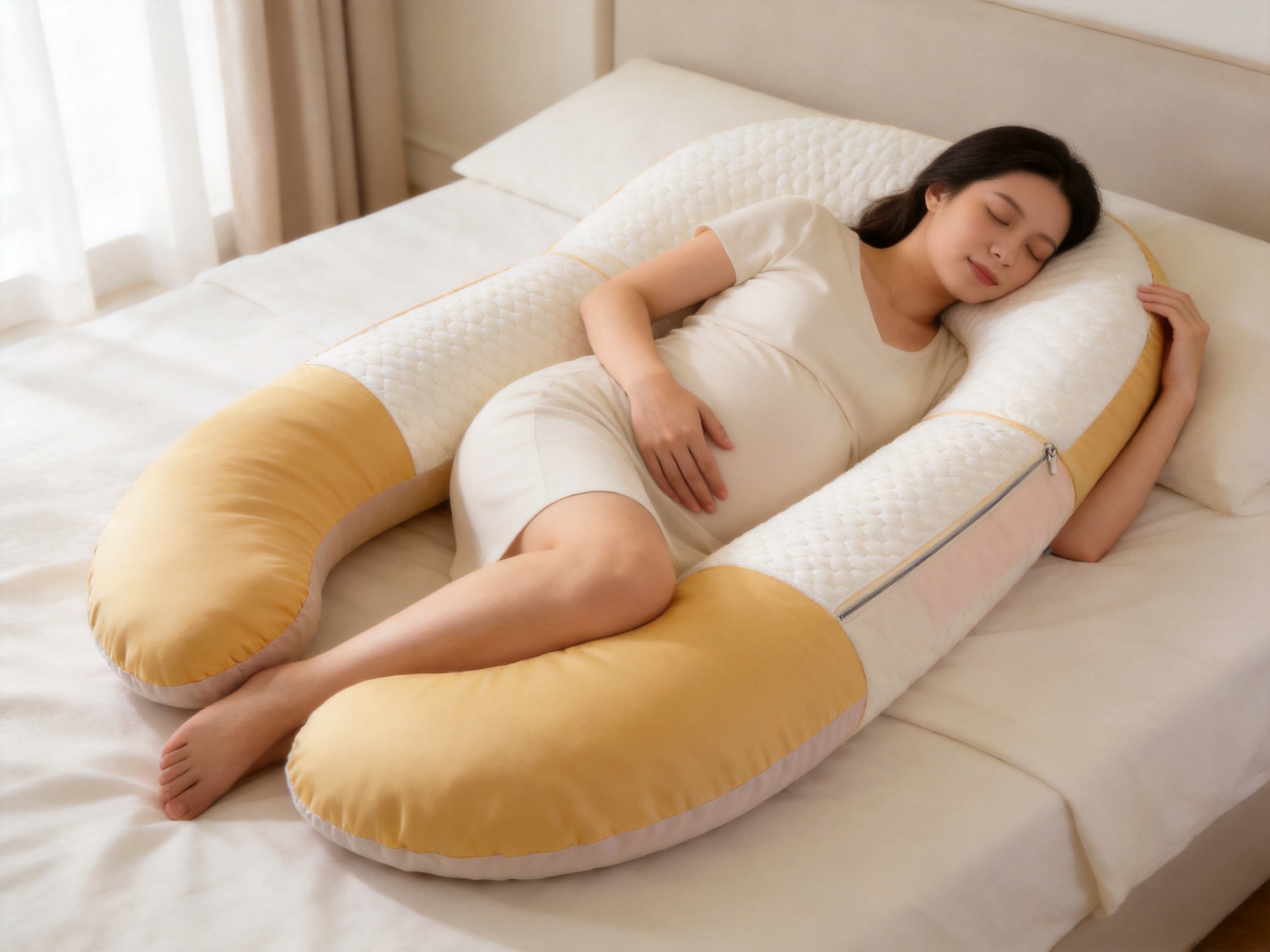
Choosing the right fabric requires more than comparing fiber names. The actual result depends on yarn quality, construction, finishing, colorfastness, testing, and manufacturing consistency. Even so, polyester pregnancy pillow fabric offers a balanced performance profile against several common alternatives.
| Evaluation Factor | Polyester Pregnancy Pillow Fabric | Cotton-Based Fabric | Rayon or Viscose-Based Fabric | Blended Fabric |
|---|---|---|---|---|
| Durability | Generally strong and suitable for repeated handling | Comfortable but may show more wear depending on construction | Often softer but may require more careful handling | Performance depends on blend ratio and construction |
| Dimensional Stability | Can provide stable dimensions with suitable finishing | May require shrinkage control | Can be more sensitive to moisture and washing | Varies according to fiber combination |
| Drying Convenience | Usually practical for products requiring regular care | May retain more moisture | May dry more slowly depending on structure | Moderate to good, depending on composition |
| Design Flexibility | Broad color, texture, and surface options | Good natural appearance and print potential | Good drape and visual softness | Wide range of results |
| Production Efficiency | Suitable for high-volume, consistent production | May require additional processing for stability | Can require more careful process control | Depends on fiber compatibility |
| Typical Value Proposition | Balanced comfort, strength, care convenience, and cost control | Natural-touch positioning and familiar comfort | Soft drape and premium tactile appeal | Combined characteristics of selected fibers |
The table shows why polyester is often selected when a manufacturer needs a balance between performance and commercial practicality. Cotton can provide a familiar natural touch, but it may require additional controls for shrinkage and moisture retention. Rayon or viscose can offer attractive softness and drape, but may need more cautious care and handling. Blended fabrics can be useful when a specific combination of properties is desired, but their performance depends on precise fiber ratios and production conditions.
The competitive advantage of polyester pregnancy pillow fabric is not based on one isolated characteristic. It comes from the combination of strength, dimensional stability, styling flexibility, production consistency, and practical maintenance. For large pillow forms and high-frequency use, this balance can be more important than pursuing only maximum softness or a single premium feature.
Advanced Manufacturing Process
Requirement Analysis and Product Planning
Manufacturing begins with a clear understanding of the intended application. Pregnancy pillow fabric may be developed for an outer cover, an inner liner, a decorative panel, or a removable washable case. Each application can require different levels of softness, strength, stretch, breathability, surface texture, and colorfastness.
During product planning, the manufacturer considers the pillow shape, sewing method, expected washing frequency, target market, design style, and cost objectives. A U-shaped pillow, for example, may require a fabric that can handle long seams and curved sections. A compact wedge pillow may place different demands on cutting accuracy and surface appearance.
Clear planning helps prevent the common problem of selecting a fabric based only on its appearance. A textile that looks attractive on a sample card may not perform as expected when used on a large, fitted cover. Professional development connects visual requirements with construction, finishing, and end-use performance.
Fiber and Yarn Selection
Polyester fabric quality begins with the selection of suitable fibers and yarns. Fiber characteristics influence softness, strength, dye uptake, appearance, and processing behavior. Yarn count, filament or spun construction, twist, and uniformity all affect the final textile.
For pregnancy pillow applications, yarn selection may be adjusted to achieve a smooth hand feel, a fuller surface, improved abrasion resistance, or a particular visual effect. Finer yarns can contribute to a softer touch, while stronger yarn configurations may be preferred for products subject to frequent movement and washing.
Consistent raw materials are essential for repeat orders. If the yarn quality changes significantly between production batches, customers may notice differences in color, weight, texture, or hand feel. Reliable sourcing and incoming material inspection are therefore important parts of a stable manufacturing system.
Weaving or Knitting Control
The fabric structure determines how the textile behaves during cutting, sewing, and use. Woven structures can provide dimensional stability and a clean, structured appearance. Knitted structures may offer greater flexibility and comfort, especially when the cover needs to follow curves or accommodate movement.
During weaving or knitting, production teams monitor fabric density, tension, width, surface consistency, and defects. Proper tension control reduces problems such as uneven appearance, distortion, or excessive variation from one roll to another. For large pillow covers, width stability is especially important because it affects marker planning and material utilization.
The manufacturer’s experience with decorative textiles can be valuable at this stage. Decorative fabric production often requires careful control of surface appearance, color presentation, texture, and pattern continuity. These capabilities can be transferred to pregnancy pillow fabrics that must combine functionality with attractive visual design.
Dyeing and Color Development
Color plays a central role in bedding and maternity products. Buyers may request neutral shades such as beige, gray, ivory, or taupe, as well as gentle pinks, blues, greens, and other colors associated with softness and relaxation. Commercial collections may also require coordinated colors across pillow fabric, mattress fabric, sofa fabric, and other home textiles.
Professional color development involves sample approval, controlled dyeing, evaluation under suitable lighting, and batch-to-batch comparison. Color consistency is important because pregnancy pillows are often sold as part of a coordinated bedding set. A slight mismatch between pillow covers and related products can reduce the perceived quality of the complete collection.
Colorfastness is another important consideration. The fabric should be evaluated according to the intended use and relevant testing requirements. Resistance to washing, rubbing, perspiration, and light can help preserve the appearance of the finished product during ordinary use.
Functional Finishing
Finishing is the stage where the fabric’s touch, appearance, stability, and selected functional properties are refined. Depending on the product objective, finishing may address softness, smoothness, moisture management, surface texture, dimensional stability, or other performance requirements.
Hangzhou Xinsili focuses on functional decorative textiles and integrates technologies associated with antibacterial, moisture-resistant, flame-retardant, sleep-supporting, and comfort-improving applications. Not every feature is required for every pregnancy pillow product, but the availability of this technical direction allows buyers to discuss application-specific development rather than choosing only from generic fabrics.
Functional finishing should be selected responsibly and tested according to the final product’s intended claims. For example, an antibacterial or flame-retardant claim should be supported by appropriate technical documentation and testing. A reliable manufacturer helps customers distinguish between a fabric’s general characteristics and performance properties that require formal verification.
Heat Setting and Dimensional Control
Polyester fabrics can benefit from controlled heat treatment and stabilization processes. These operations help establish the fabric’s final dimensions and reduce the risk of unwanted deformation during later cutting, sewing, and care procedures.
Proper process control is especially important for large pregnancy pillow covers because small dimensional changes can become more visible across long panels. Stable fabric improves sewing accuracy, zipper or fastening alignment, and the final fit around the pillow insert.
Inspection and Quality Assurance
Quality assurance should be carried out throughout the production process rather than only at the end. Raw materials, greige fabric, dyed fabric, finished fabric, and packed rolls can each require inspection. Typical checkpoints may include width, weight, color, surface defects, stains, holes, weaving or knitting faults, hand feel, and dimensional stability.
For buyers, quality consistency is as important as the performance of one approved sample. A reliable supply partner should be able to maintain similar standards across repeat orders, seasonal color programs, and large-volume production. Consistent inspection procedures help reduce claim rates and protect the reputation of the final pillow brand.
Fabric inspection also contributes to production efficiency downstream. Detecting a defect before cutting is less costly than discovering it after covers have been sewn. Proper roll identification and batch management further improve traceability and make it easier to investigate any quality issue that may arise.
Manufacturing Strengths and Supplier Value
Long-Term Industry Experience
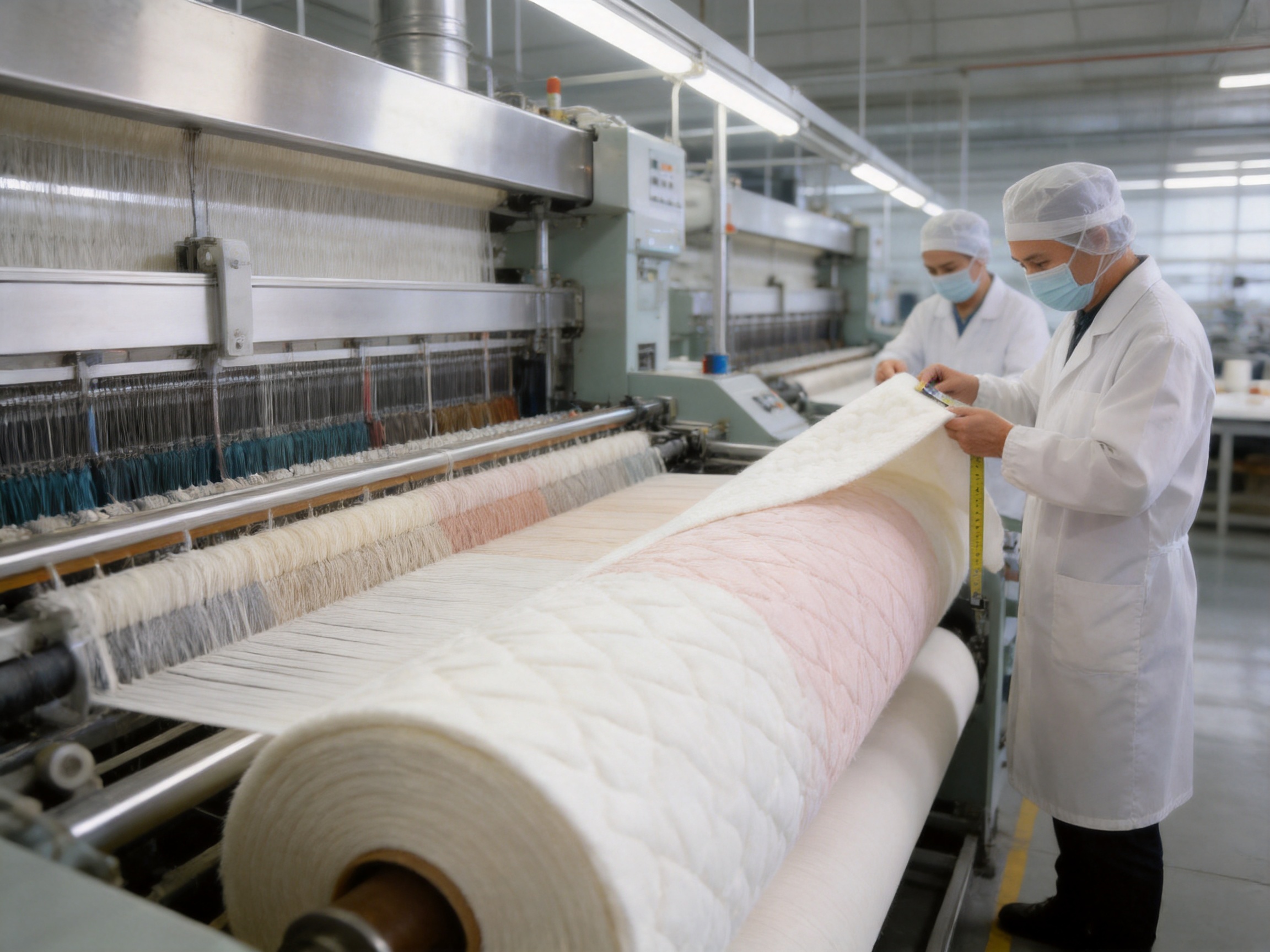
Experience matters in textile manufacturing because many quality problems are connected to process details that are not immediately visible. A manufacturer with 19 years of industry experience has had time to develop practical knowledge of yarn behavior, fabric construction, dyeing, finishing, inspection, packaging, and customer coordination.
This experience can help buyers move from a general product idea to a fabric specification that is realistic and commercially useful. Instead of focusing only on a name such as “soft polyester,” experienced technicians can discuss the relationship between softness, durability, weight, structure, finishing, and price.
Dedicated Production Capacity
A 12,000-square-meter factory area indicates a substantial operating foundation for textile development and manufacturing. Factory scale alone does not guarantee product quality, but it can support the organization of production areas, equipment, material storage, inspection activities, sample development, and order management.
For customers purchasing pregnancy pillow fabric, production capacity can influence lead-time planning and supply continuity. Stable access to manufacturing resources is especially important for bedding brands that need repeated replenishment, seasonal color programs, or gradual expansion into related textile categories.
Research and Development Orientation
Functional textile markets are changing as consumers become more attentive to hygiene, comfort, sleep quality, environmental impact, and product safety. A supplier that invests in research and development can respond more effectively to these expectations.
Xinsili’s stated focus on innovative research, development, and precision manufacturing supports a product-development approach rather than a purely transactional fabric supply model. Buyers can explore options for texture, weight, construction, surface treatment, and functional performance according to the requirements of a specific pregnancy pillow collection.
Application Knowledge Across Decorative Textiles
Pregnancy pillow fabric does not exist in isolation. It may need to coordinate with mattress fabric, pillowcase fabric, bedding fabric, sofa fabric, or other interior textiles. A manufacturer serving several decorative textile categories can understand how fabric appearance and performance influence the wider home environment.
This cross-category experience is useful for brands developing complete collections. A consistent color family, surface language, and performance standard can make products look more professional and improve opportunities for bundled sales. It can also simplify communication when multiple textile products are sourced from one experienced supplier.
Focus on Responsible and Sustainable Living Spaces
Modern buyers increasingly consider the environmental and health implications of home textiles. Although no single fabric can solve every sustainability concern, responsible manufacturing can contribute through efficient production, controlled chemical use, durable product design, reduced material waste, and longer service life.
Xinsili describes its mission in terms of safe, healthy, comfortable, and sustainable living spaces. In practical terms, this orientation encourages attention to product durability, functional value, manufacturing consistency, and the suitability of materials for residential, hotel, and commercial environments.
Applications for Pregnancy and Maternity Products
Polyester Pregnancy Pillow Fabric can be applied to a broad range of product designs. The most direct application is the removable outer cover of a full-body pregnancy pillow. The fabric can also be used for pillowcase panels, decorative inserts, matching cushions, maternity support products, and coordinated bedding accessories.
For U-shaped pillows, fabric stability and sewing performance are important because the cover contains long curved seams. For C-shaped pillows, the textile may need to follow a continuous curved form while maintaining an even appearance. For wedge pillows, surface appearance and compact construction may be prioritized. For leg or knee support pillows, durability and easy maintenance can be especially valuable.
Manufacturers can also consider combining different fabric constructions within one product. A softer surface may be selected for the main contact zones, while a more stable or abrasion-resistant textile can be used on side panels or lower sections. Such combinations should be tested carefully to ensure that the finished product remains visually consistent and comfortable.
Customization Options for Buyers
Color and Appearance
Color customization allows brands to match fabric with existing packaging, bedding collections, seasonal campaigns, or interior design trends. Neutral colors can support a premium minimalist position, while soft colors may communicate warmth and maternity comfort. Custom color development should include sample approval and batch control procedures.
Weight and Thickness
Fabric weight influences hand feel, opacity, drape, durability, and cost. A lighter fabric may be suitable for a breathable removable cover, while a heavier construction can create a fuller, more substantial impression. The correct weight should be selected according to the pillow filling, cover design, intended market, and cleaning requirements.
Surface Texture
Texture can make a product visually distinctive and can change the tactile experience. Smooth surfaces offer a clean and contemporary appearance. Brushed or softly textured surfaces may create a warmer and more comforting impression. Patterned or structured surfaces can help a product stand out in retail presentation.
Functional Requirements
Depending on the target market, buyers may request moisture-resistant, antibacterial, flame-retardant, or comfort-oriented textile solutions. These functions should be defined clearly and evaluated with appropriate testing. The fabric should be matched to the regulations and labeling requirements of the destination market.
Packaging and Order Coordination
Packaging requirements can influence fabric roll handling, moisture protection, labeling, and warehouse efficiency. Buyers should confirm roll length, packing method, identification details, inspection documents, and shipment arrangements at the beginning of the project. Clear coordination reduces confusion when several colors or fabric specifications are included in one order.
Quality Evaluation Checklist
Before approving a polyester pregnancy pillow fabric, buyers should request representative samples and evaluate both the textile and the supplier’s process. The following checklist can support a more complete assessment.
| Inspection Area | Questions to Consider |
|---|---|
| Surface and Hand Feel | Is the fabric smooth, soft, even, and suitable for prolonged contact? |
| Construction | Are the width, weight, density, and structure consistent across the sample? |
| Color | Does the color match the approved standard under appropriate lighting? |
| Dimensional Stability | Does the fabric maintain its size and appearance after the intended care process? |
| Durability | Can the fabric withstand expected friction, handling, and repeated use? |
| Moisture Performance | Is the textile appropriate for the expected sleeping environment and maintenance routine? |
| Functional Claims | Are antibacterial, flame-retardant, or other claims supported by suitable documentation? |
| Production Consistency | Can the supplier maintain the approved quality for repeat orders? |
| Customization | Can the supplier adjust color, weight, texture, and finishing according to the product brief? |
Testing should reflect the actual product rather than relying only on general fabric assumptions. For instance, a cover with a zipper, piping, and curved seams may behave differently from a flat textile sample. Where possible, buyers should make a prototype cover and assess the fit, sewing performance, appearance after washing, and user comfort.
Why Manufacturing Quality Affects Competitive Position
In the pregnancy pillow market, many products may appear similar at first glance. Competitive differentiation often depends on details that consumers experience after purchase. A cover that remains attractive, fits properly, feels comfortable, and is easy to maintain can create stronger satisfaction than a product selected only for a low initial price.
Fabric quality also affects return rates and customer reviews. Excessive pilling, color fading, poor fit after washing, rough touch, or seam-related distortion can damage a brand’s reputation. By contrast, reliable fabric performance supports positive customer experiences and improves the perceived value of the pillow insert and overall product package.
For manufacturers, the use of stable fabric can reduce production interruptions. Consistent width and surface quality make cutting more predictable. Controlled stretch and dimensional stability support accurate sewing. Properly developed finishing can reduce the need for corrective operations. These advantages can contribute to lower total production costs even if the selected fabric is not the cheapest option at the quotation stage.
The competitive strength of Polyester Pregnancy Pillow Fabric therefore comes from total value. It combines an adaptable raw material with a manufacturing process capable of delivering comfort, durability, stable dimensions, design variety, and practical care performance. When backed by an experienced supplier, the fabric can support both product quality and commercial efficiency.
Ordering and Product Development Recommendations
Buyers should begin with a detailed product brief. The brief can include pillow shape, cover dimensions, filling type, target retail price, intended market, preferred color, desired hand feel, anticipated washing method, required functional properties, and expected order quantity.
After receiving samples, the buyer should compare several constructions rather than evaluating only one option. Differences in weight, texture, structure, and finishing may produce different results when applied to the same pillow design. A sample approval process should record the selected color, fabric specification, finishing, width, weight, and acceptable tolerance.
Prototype testing is recommended before mass production. The prototype should be cut and sewn using the intended manufacturing method. It should then be checked for fit, seam behavior, zipper or fastening performance, surface appearance, comfort, and care response. If the pillow will be sold in a coordinated set, the fabric should also be compared with the other products in the collection.
Communication is particularly important for customized fabrics. Buyers should clarify whether they need an existing product or a new development, whether functional claims are required, and which documents will be needed for market entry. Early communication gives the manufacturer more time to evaluate feasibility and propose the most suitable textile structure.
Care and Use Considerations
The final care instructions should be supplied according to the confirmed fabric specification. Consumers should follow the recommended washing temperature, drying method, ironing guidance, and detergent instructions. A removable cover can improve hygiene and extend the useful life of the pillow insert, but the cover should be removed and handled carefully to avoid damage to fasteners or seams.
Product designers should also consider care during the design stage. Smooth zippers, durable seam allowances, reinforced stress points, and well-finished edges can improve the overall user experience. The fabric and the sewing construction should work together; even a high-quality textile cannot compensate for weak seams or an unsuitable cover pattern.
Storage should protect the fabric from prolonged moisture, direct sunlight, excessive compression, and contamination. Proper roll packaging during transportation and warehouse handling can help preserve the appearance of the fabric before it reaches the cutting department.
Frequently Asked Questions
What is Polyester Pregnancy Pillow Fabric used for?
It is primarily used for removable covers, pillowcases, protective shells, and decorative panels for pregnancy pillows and maternity support cushions. It may also be used in coordinated bedding and other comfort-oriented home textile products.
Why is polyester suitable for pregnancy pillow covers?
Polyester can offer a useful balance of softness, strength, dimensional stability, design flexibility, and practical care performance. Its properties can be adjusted through yarn selection, fabric construction, dyeing, and finishing.
Is polyester fabric comfortable for sleeping?
A properly developed and finished polyester fabric can provide a comfortable surface for sleeping products. Comfort depends on the specific yarn, construction, weight, texture, and finishing treatment, so buyers should evaluate samples rather than relying on fiber content alone.
Can the fabric be customized?
Customization may include color, weight, texture, construction, surface appearance, and selected functional properties. The feasibility of each request depends on the intended quantity, specification, testing requirements, and production schedule.
Can this fabric be used for large U-shaped pregnancy pillows?
It can be suitable for large U-shaped pillows when the selected construction provides adequate width, stability, sewing performance, and dimensional control. A prototype should be produced to confirm fit and behavior around curved seams.
Does polyester fabric dry quickly?
Polyester is commonly selected for practical drying performance, but the actual result depends on fabric density, finishing, moisture conditions, and the care method. The exact textile should be tested and labeled with appropriate care instructions.
Can functional properties be added to the fabric?
Depending on the development plan, functional options may include antibacterial, moisture-resistant, flame-retardant, sleep-supporting, or comfort-improving features. Any performance claim should be supported by appropriate testing and documentation for the intended market.
How should buyers compare different suppliers?
Buyers should compare sample quality, production consistency, technical communication, inspection procedures, customization capability, factory resources, experience, documentation, and total supply value. Price is important, but it should be evaluated together with durability, quality stability, and service reliability.
What information should be included in an inquiry?
An inquiry should include the intended use, pillow shape, preferred color, fabric weight, width, hand feel, functional requirements, quantity, sample expectations, destination market, and delivery schedule. Clear information helps the supplier recommend a more accurate solution.
Why is supplier experience important for this product?
Pregnancy pillow fabric must perform during cutting, sewing, washing, and repeated use. An experienced textile supplier can better understand the relationship between raw materials, construction, finishing, inspection, and final product performance.
Conclusion
Polyester Pregnancy Pillow Fabric is a practical and adaptable textile solution for the growing maternity comfort and bedding market. Its value comes from a balanced combination of surface comfort, strength, dimensional stability, design flexibility, moisture-related practicality, and efficient production potential. These characteristics make it suitable for large pregnancy pillows, removable covers, maternity cushions, and coordinated home textile collections.
Compared with alternative fabrics, polyester can provide a particularly effective combination of durability, stable dimensions, styling options, and commercial efficiency. Its performance can be further refined through careful yarn selection, weaving or knitting control, dyeing, heat setting, functional finishing, and inspection. The result is a fabric that can support both consumer comfort and dependable manufacturing.
Hangzhou Xinsili Decorative Fabric Weaving Co., Ltd. strengthens this product proposition through 19 years of textile experience, a 12,000-square-meter factory area, research and development capabilities, and a focus on functional decorative textiles. Its experience across mattress, pillowcase, bedding, sofa, cooling, and pet-friendly fabrics provides a broader understanding of residential and commercial textile requirements.
For buyers, the best results come from treating fabric selection as part of product engineering rather than as a simple purchasing decision. By defining the application clearly, evaluating samples, testing prototypes, confirming functional claims, and working with an experienced manufacturer, brands can develop pregnancy pillows that deliver comfort, durability, attractive design, and reliable long-term value.
References
1. Textile Institute, Textile Terms and Definitions, general principles of textile construction and performance.
2. International Organization for Standardization, general guidance on textile testing, colorfastness, dimensional stability, and fabric performance.
3. American Society for Testing and Materials, standard methods for evaluating textile strength, abrasion resistance, colorfastness, and care performance.
4. International Association for the Study of Obesity and Sleep Health, general discussions of sleep comfort, body support, and bedding environments.
5. Technical product information supplied for Polyester Pregnancy Pillow Fabric and related functional decorative textile applications.
6. Manufacturer information concerning textile research, development, production experience, functional fabric technologies, and quality-oriented manufacturing practices.
Product: Polyester Pregnancy Pillow Fabric

Our Featured Products
-
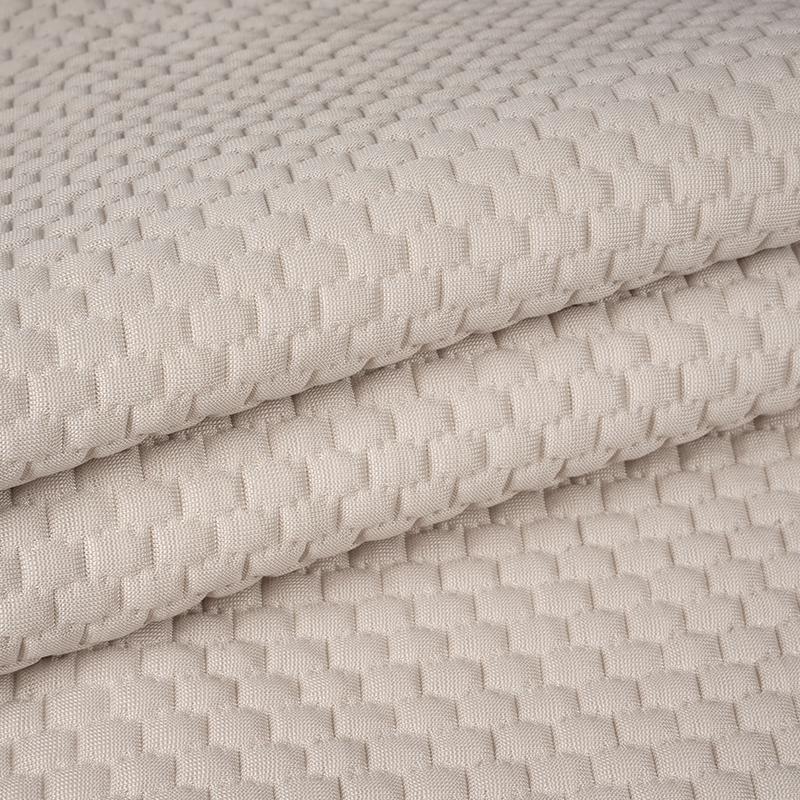
Polyester Pillowcase Fabric
Polyester Pillowcase Fabric
Haven’t Found The Products You Want?
-
-
Shen Jinyan:+86-15158070676
[email protected]
Liang Jinwen:+86-15757186621
[email protected]
Qiu Yingyingn:+86-13819545790
[email protected]
Yi qiao Town, Xiaoshan District, Hangzhou City, Zhejiang Province, China
-
Products
Mattress Fabric Children Mattress Fabric Pillowcase Fabric Pregnancy Pillow Fabric Cooling Mat Fabric Bedding Fabric Sofa Fabric Pet Friendly Fabrics -
Contact Information
About Us Products Strength Sustainability News Contact Us
Copyright © Hangzhou Xinsili Decorative Fabric Weaving Co.,Ltd. All Rights Reserved.
Functional Decorative Textile Manufacturers
