

 English
 中文简体
中文简体 Español
 عربى
عربى русский


Cotton Pregnancy Pillow Fabric: Comfort, Performance, and Reliable Textile Manufacturing
Content
- 1 Understanding Cotton Pregnancy Pillow Fabric
- 2 Core Advantages of Cotton Pregnancy Pillow Fabric
- 3 Advantages Compared with Common Alternative Fabrics
- 4 Material and Construction Considerations
- 5 Advanced Manufacturing Process
- 6 Manufacturing Strengths and Business Capabilities
- 7 Applications Beyond Pregnancy Pillows
- 8 How to Select the Right Specification
- 9 Sustainability and Responsible Textile Development
- 10 Product Development Workflow for Buyers
- 11 Quality Checklist for Cotton Pregnancy Pillow Fabric
- 12 Why Consistency Is a Competitive Advantage
- 13 Frequently Asked Questions
- 13.1 What makes cotton suitable for pregnancy pillow covers?
- 13.2 Is cotton pregnancy pillow fabric suitable for hot climates?
- 13.3 Can the fabric be customized in different colors?
- 13.4 Can patterns or decorative effects be added?
- 13.5 How should buyers test a fabric before placing a bulk order?
- 13.6 Can cotton fabric be used for removable pillow covers?
- 13.7 Does a softer fabric always provide better quality?
- 13.8 Can functional treatments be applied to cotton fabric?
- 13.9 Is cotton better than polyester for every pregnancy pillow?
- 13.10 What information should be provided when requesting a quotation?
- 13.11 Why is factory experience important for this product?
- 14 Conclusion
- 15 References
- 16 Product: Cotton Pregnancy Pillow Fabric
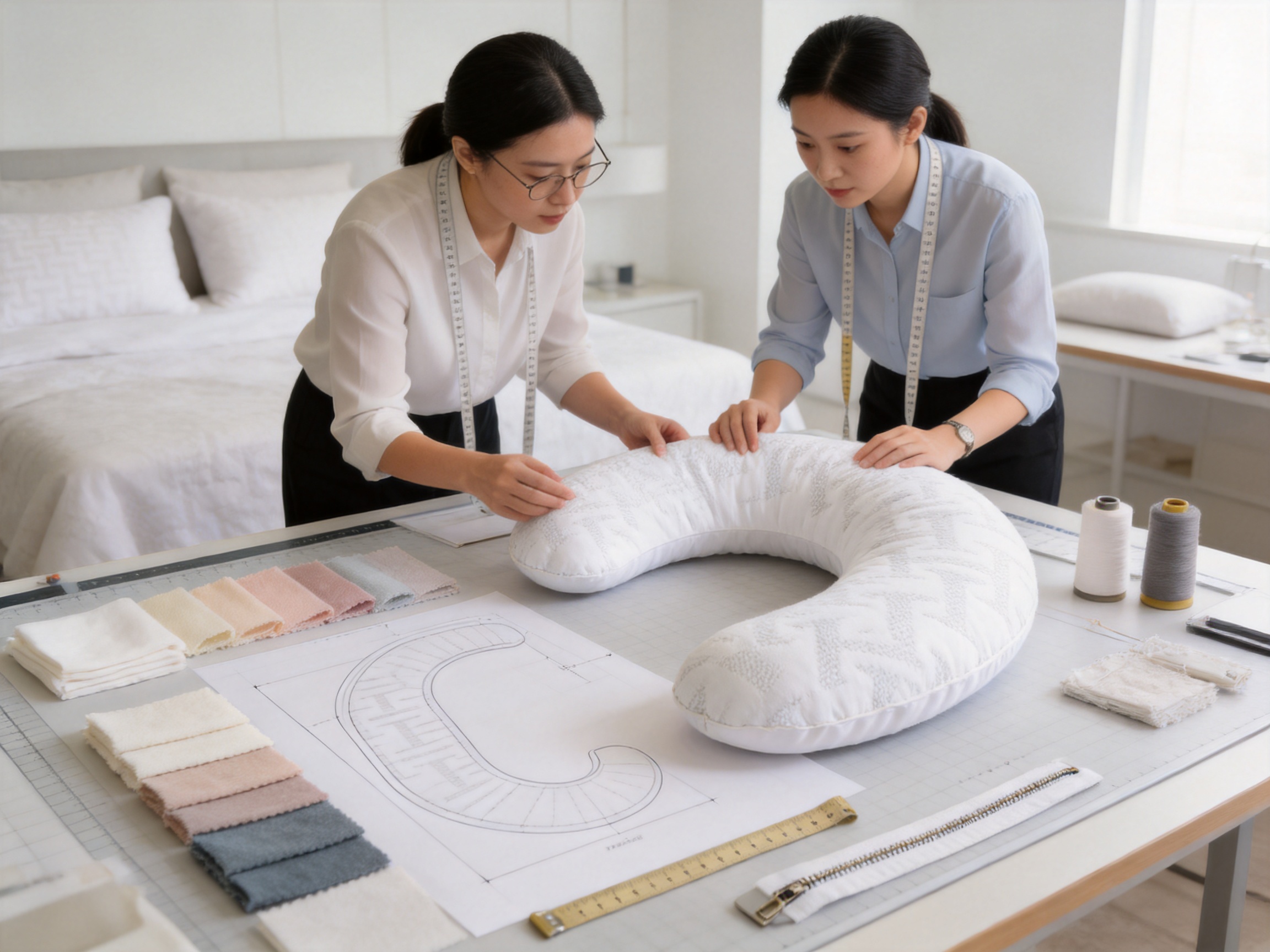
Choosing the right fabric for a pregnancy pillow is essential because the textile directly affects softness, breathability, skin comfort, durability, appearance, and care performance. Pregnancy pillows are used for extended periods and remain in close contact with the body throughout sleep and rest. As a result, their covers and outer fabric must provide more than an attractive surface. They must create a comfortable contact layer, support hygienic use, tolerate repeated washing, and maintain their structure after long-term handling.
Cotton pregnancy pillow fabric is a practical solution for manufacturers seeking a natural-feeling, adaptable, and commercially reliable textile. Cotton is widely recognized for its soft hand feel, moisture absorption, air permeability, and broad consumer acceptance. When it is developed through controlled weaving, finishing, inspection, and customization processes, cotton fabric can become a dependable material for pregnancy pillows, maternity cushions, nursing pillows, body pillows, and other sleep-support products.
Hangzhou Xinsili Decorative Fabric Weaving Co., Ltd. specializes in the research, development, and precision manufacturing of decorative and functional textiles. With 19 years of industry experience, a 12,000-square-meter factory area, and recognition as a National High-Tech Enterprise in 2023, the company applies manufacturing discipline and textile innovation to products designed for residential, hotel, commercial, and specialized comfort environments. Its capabilities support the production of functional fabrics that combine practical performance with attractive design.
This article examines the advantages of cotton pregnancy pillow fabric, the factors that influence its performance, the manufacturing processes behind a consistent finished textile, and the reasons it can offer a strong alternative to less breathable or less versatile materials.
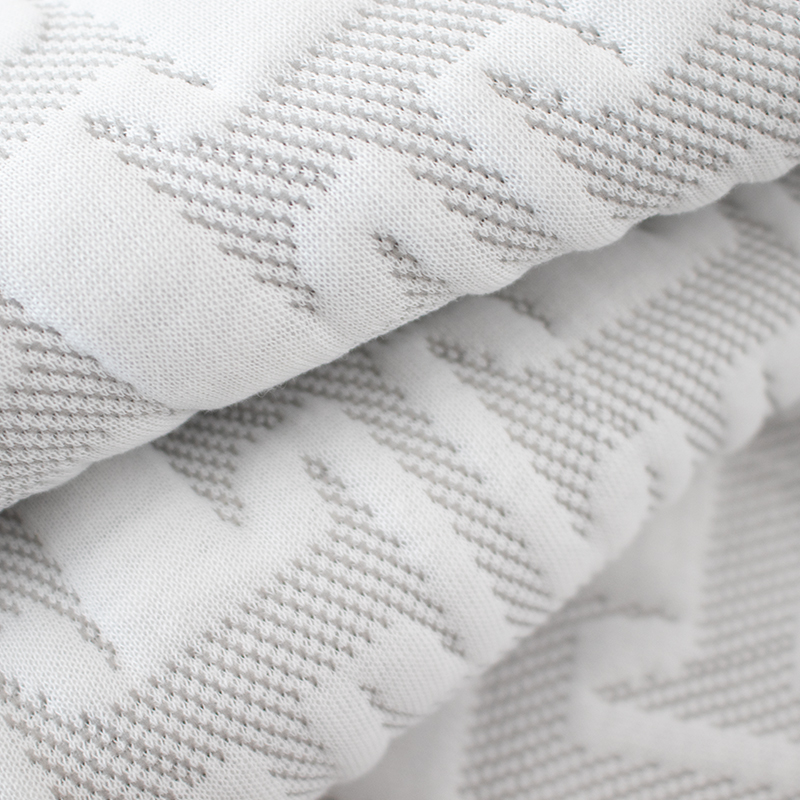
Cotton Pregnancy Pillow Fabric
Understanding Cotton Pregnancy Pillow Fabric
Cotton pregnancy pillow fabric is a textile designed for use in the production of covers, shells, liners, or finished outer surfaces for pregnancy pillows. It may be woven or developed in other textile structures according to the required product design. The fabric can be used for removable pillow covers, washable protective layers, inner pillow compartments, or coordinated bedding collections.
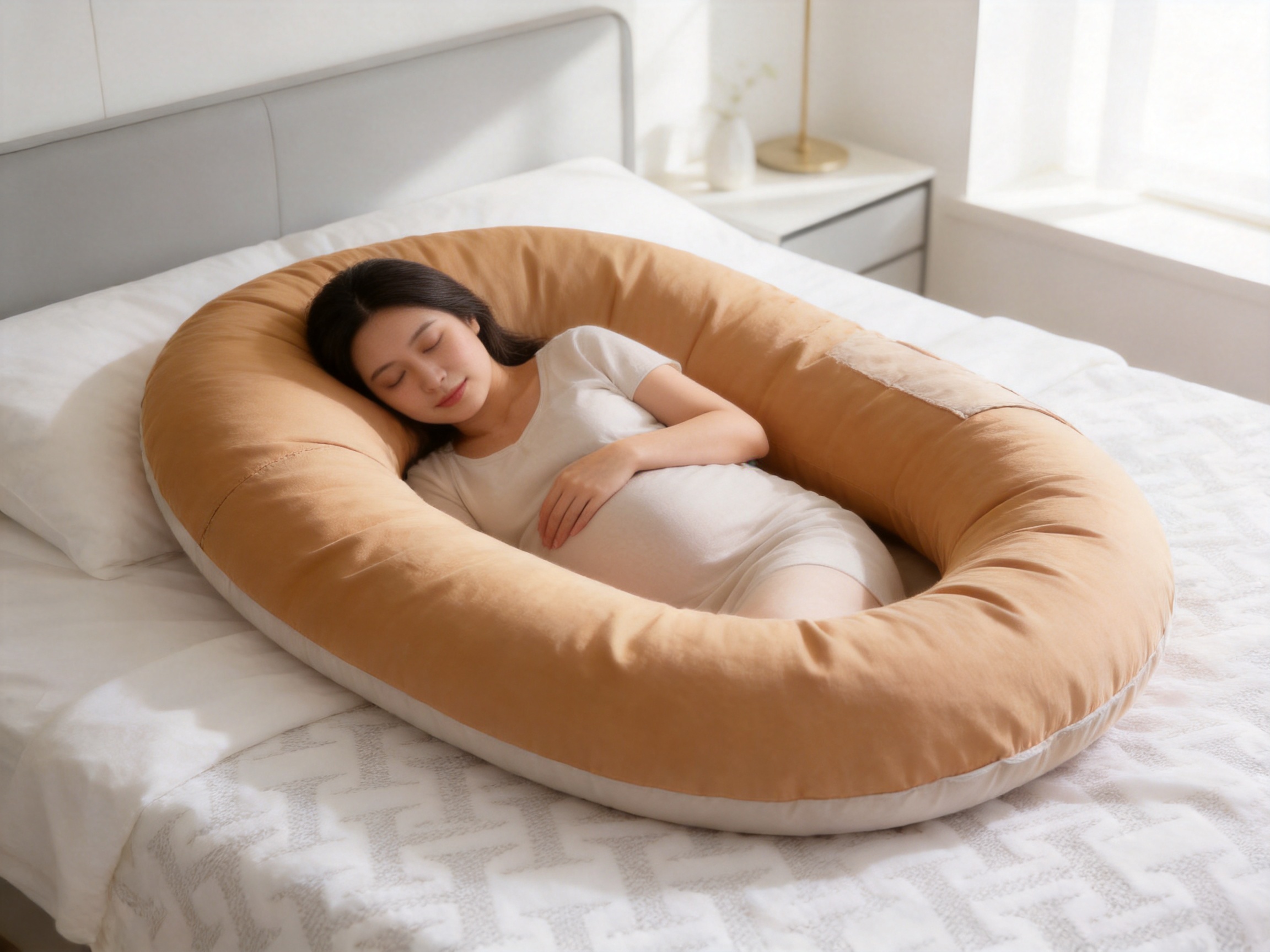
Pregnancy pillows are often larger and more ergonomically shaped than ordinary pillows. They may be designed as full-body pillows, U-shaped pillows, C-shaped pillows, wedge pillows, or long side-sleeping cushions. These products require fabric that can follow curved patterns, accommodate seams, withstand filling pressure, and remain comfortable against the skin.
A suitable textile must also work with the complete manufacturing system. This includes cutting, sewing, zipper installation, piping, quilting, embroidery, printing, washing, packaging, and final inspection. A fabric that feels soft but frays excessively, distorts during cutting, or loses its appearance after washing may create problems for pillow manufacturers. Therefore, product selection should consider both consumer comfort and production efficiency.
Cotton provides a strong foundation because it combines a familiar natural fiber profile with the flexibility to receive different treatments, colors, patterns, and finishing effects. Depending on the final specification, the fabric can be engineered to emphasize softness, moisture management, abrasion resistance, color stability, easy care, or a particular decorative appearance.
Why the Fabric Matters in Pregnancy Pillow Design
A pregnancy pillow is usually used for many hours at a time. The user may place the pillow against the abdomen, chest, back, hips, knees, or legs. The cover therefore needs to feel comfortable in multiple positions. Roughness, excessive heat retention, poor moisture management, or unstable seams can reduce the user’s experience even when the pillow filling itself is well designed.
The fabric also influences perceived product quality. Consumers often judge a pillow through the touch, appearance, and cleanliness of its cover before evaluating the internal filling. A smooth and pleasant cotton textile can make a product feel more carefully manufactured. It can also support a premium product position when paired with thoughtful construction and a refined color or pattern range.
For manufacturers, a suitable fabric can simplify the supply chain. A textile that can be produced in different colors, widths, weights, constructions, and finishing options allows one material platform to serve multiple pillow collections. This supports coordinated product development and reduces the need to source unrelated fabrics for every new design.
Core Advantages of Cotton Pregnancy Pillow Fabric
Natural Softness and Skin-Friendly Comfort
One of the most important advantages of cotton is its naturally comfortable hand feel. Properly processed cotton fabric can provide a soft, smooth, and non-irritating surface that is suitable for products used close to the skin. This quality is especially valuable for pregnancy pillows because the user’s face, arms, neck, abdomen, or legs may remain in contact with the cover for long periods.
Softness is influenced by fiber quality, yarn selection, weave construction, finishing methods, and fabric washing or setting. A professional manufacturer can adjust these variables to create different tactile effects. Some customers may prefer a smooth and cool surface, while others may request a brushed, peach-skin, or softly raised effect. The appropriate choice depends on the target market, season, product positioning, and intended price range.
Compared with many coarse synthetic fabrics, cotton can offer a more familiar and natural tactile experience. This can be a competitive advantage in maternity and sleep-product markets, where customers often look for materials associated with comfort, care, and everyday usability.
Breathability and Moisture Absorption
Pregnancy can make temperature regulation and sleep comfort more challenging. A pillow cover that does not permit sufficient air exchange may feel warm or clammy, particularly in humid climates or during extended use. Cotton fibers can absorb and release moisture, helping the fabric manage perspiration more naturally than many highly closed or plastic-like surfaces.
Breathability depends on the entire fabric structure rather than fiber content alone. Yarn size, weave density, fabric weight, finishing, and the presence of coatings all affect air movement. A balanced cotton construction can provide adequate coverage while retaining comfortable permeability. This makes it suitable for sleep products intended for spring, summer, transitional seasons, and climate-controlled interiors.
The moisture-handling behavior of cotton can also support a more comfortable microclimate between the user and the pillow. It does not eliminate the need for regular washing or proper ventilation, but it can contribute to a less stuffy feeling during normal use.
Comfortable Use Across Multiple Seasons
Cotton fabric can be developed for different seasonal preferences. A lighter construction may provide a fresher feel for warm weather, while a denser or softly finished construction may deliver additional warmth and coziness during colder months. This flexibility allows manufacturers to develop seasonal pregnancy pillow collections without abandoning the familiar cotton material platform.
For brands selling across multiple regions, this adaptability is useful. The same general cotton product family can be customized for different climates through changes in construction, color, finishing, and weight. A manufacturer may request a breathable specification for tropical markets, a brushed surface for cold regions, or a balanced all-season fabric for broad distribution.
Durability for Repeated Washing
Pregnancy pillow covers should be washable because they are exposed to body oils, perspiration, dust, skincare products, and household use. Cotton fabric with appropriate yarn quality, construction stability, and finishing can withstand repeated laundering when the care instructions are correctly followed.
Durability involves more than tensile strength. A high-quality pillow fabric should resist excessive seam slippage, unacceptable shrinkage, rapid surface wear, color fading, and shape distortion. The exact performance depends on the selected specification and treatment. For this reason, manufacturers should evaluate fabric samples through washing, drying, abrasion, colorfastness, and dimensional stability tests before approving bulk production.
Repeated-wash performance is a significant advantage over fabrics that look attractive initially but quickly lose their smoothness or shape. A stable cotton textile can help extend the useful life of the pillow cover and reduce replacement frequency.
Wide Design and Customization Potential
Cotton is compatible with a broad range of colors, patterns, textures, and finishing effects. This supports product differentiation in a crowded sleep-product market. Manufacturers can create neutral maternity collections, children’s and family-oriented designs, hotel-style basics, seasonal prints, or coordinated bedding and pillow programs.
Potential customization areas include color matching, fabric width, surface texture, pattern scale, finishing, shrinkage control, and packaging format. Depending on production requirements, the fabric may be developed for solid-color products, printed covers, quilted shells, embroidered panels, or decorative piping.
This design flexibility gives cotton pregnancy pillow fabric an advantage over materials that are limited to a narrow appearance or surface treatment range. It also allows product developers to match the pillow cover with bedroom décor, maternity accessories, nursing products, or broader home textile collections.
Compatibility with Different Pillow Structures
Pregnancy pillows often have complex outlines and substantial dimensions. A practical fabric should be suitable for cutting and sewing around curves, corners, gussets, and opening structures. It should also cooperate with common closures such as concealed zippers, exposed zippers, buttons, ties, and envelope openings.
A well-controlled woven cotton fabric can provide predictable cutting behavior and a clean sewing appearance. When the fabric has suitable dimensional stability, manufacturers can improve pattern accuracy and reduce the risk of mismatched panels. This is particularly important for U-shaped or C-shaped pillows that require long seams and carefully aligned sections.
The material can also be paired with quilting or layered construction. For example, a cotton outer fabric may be combined with an inner protective layer, light padding, or decorative stitching. The exact structure should be confirmed through sample development because different pillow shapes place different demands on drape, recovery, and seam performance.
Advantages Compared with Common Alternative Fabrics
Different textile materials have valid applications, and the best choice depends on the product’s intended use. However, cotton pregnancy pillow fabric offers a balanced combination of comfort, breathability, appearance, and consumer familiarity that can be difficult to achieve with a single alternative material.
| Evaluation Factor | Cotton Pregnancy Pillow Fabric | Basic Polyester Fabric | Very Light Synthetic Mesh | Heavy Coated Textile |
|---|---|---|---|---|
| Skin comfort | Soft, natural-feeling surface when properly finished | Can be smooth but may feel less natural | Airy but may feel structured or rough | May feel less breathable against the skin |
| Moisture behavior | Can absorb and release moisture | Usually low absorbency | May allow airflow but does not necessarily absorb moisture | Often limited by coating or dense structure |
| Design flexibility | Broad color, weave, print, and finish options | Broad design range, depending on construction | More limited decorative possibilities | Usually focused on protection or technical use |
| Washability potential | Suitable for washable covers when properly specified | Often easy to care for but may retain odors or heat | Can be washable but may require careful handling | Care requirements may be more restrictive |
| Consumer perception | Widely associated with comfort and natural materials | Practical but sometimes viewed as less premium | Usually perceived as a functional component | More commonly associated with protective applications |
Basic polyester can provide strength, low cost, and quick drying, but it may not provide the same moisture absorption or natural tactile quality as cotton. Some polyester fabrics may also feel warm or slippery depending on yarn and finishing choices. Cotton can therefore be an attractive option for products where comfort is a central selling point.
Mesh fabrics can improve airflow, but they may not deliver the smooth, cozy surface desired for a full pillow cover. They may be better suited to ventilation panels, inner layers, or targeted product zones. A cotton fabric can offer a more complete surface solution when the entire cover must feel comfortable.
Coated or dense textiles may provide barrier properties, but they can reduce air exchange and create a less natural contact surface. Such materials may be appropriate for waterproof protectors or specialized technical layers, while cotton is often better suited to the visible and skin-contact cover of a sleep-support product.
The competitive advantage of cotton is not that it replaces every other textile. Its advantage is balance. It can combine everyday comfort, visual appeal, reasonable durability, and customization potential in one material family.
Material and Construction Considerations
Fiber and Yarn Selection
The quality of cotton pregnancy pillow fabric begins with the selection and preparation of fibers and yarns. Fiber length, cleanliness, strength, fineness, and consistency can influence the resulting surface, durability, and weaving behavior. Yarn quality also affects pilling tendency, evenness, breaking performance, and the appearance of the finished fabric.
Manufacturers should select yarn according to the intended fabric construction rather than choosing a specification based only on fiber content. A soft yarn may be ideal for a comfort-focused cover, while a stronger yarn may be beneficial for a high-wash or commercial-use product. In some applications, a blended yarn or complementary functional component may be considered, subject to the customer’s material requirements and labeling standards.
Weave Structure
Weave structure affects air permeability, surface smoothness, strength, drape, and dimensional stability. Plain weaves can provide a clean and versatile appearance. Twill structures may offer a distinctive diagonal texture and robust handling. Other constructions can be selected for softness, visual depth, or decorative effect.
The correct construction must balance comfort with production requirements. An extremely loose structure may feel breathable but could be more vulnerable to snagging or seam movement. An extremely dense structure may improve coverage but reduce airflow and create a heavier hand feel. Professional development involves sampling and testing to identify the appropriate balance.
Fabric Weight and Thickness
Fabric weight should be selected according to the pillow’s design, target market, climate, and required hand feel. A lighter fabric can create a fresh and flexible cover, while a heavier fabric may provide a more substantial appearance and stronger resistance to handling. There is no single ideal weight for every pregnancy pillow.
The outer fabric may also be combined with an inner lining, quilting layer, or protective barrier. In these cases, the outer material does not need to provide every performance characteristic by itself. Instead, the complete textile system should be evaluated for comfort, breathability, washability, and construction efficiency.
Surface Finishing
Finishing can significantly change how cotton fabric feels and performs. Processes may be used to improve softness, control shrinkage, enhance smoothness, create a brushed effect, or support a particular appearance. Finishing must be carefully controlled because excessive treatment can reduce breathability, alter color, or affect later sewing operations.
For pregnancy pillow covers, a balanced finish is generally preferred. The fabric should feel comfortable without becoming excessively coated, stiff, or slippery. The finish should also remain stable after appropriate care. Sample testing is essential because the same fabric may behave differently after laundering, pressing, or exposure to different humidity conditions.
Advanced Manufacturing Process
Product Requirement Review
Reliable fabric production begins with a detailed review of the customer’s intended application. A manufacturer should understand the pillow shape, cover construction, expected washing frequency, target market, color requirements, packaging method, and desired price level.
For a pregnancy pillow, additional considerations may include the size of the panels, the length of curved seams, the presence of zippers, the amount of filling pressure, and the intended contact areas. This information helps the textile manufacturer recommend a suitable construction rather than offering a generic fabric that may not perform well in the final product.
Laboratory Development and Sample Confirmation
After the product requirements are clarified, the development team can select fibers, yarns, weave structures, and finishing options. Laboratory or small-batch samples allow the customer to assess color, hand feel, drape, surface appearance, and sewing behavior.
Sample confirmation is a critical stage because tactile preferences can vary between markets and product categories. A maternity pillow intended for a premium home collection may require a smoother and more refined surface than a basic institutional product. A summer collection may need a lighter and more breathable construction than a winter design.
Samples may also be evaluated after washing. This reveals whether the fabric experiences unacceptable shrinkage, color change, surface roughness, or distortion. Early testing helps reduce the risk of large-scale production problems.
Warping and Weaving Control
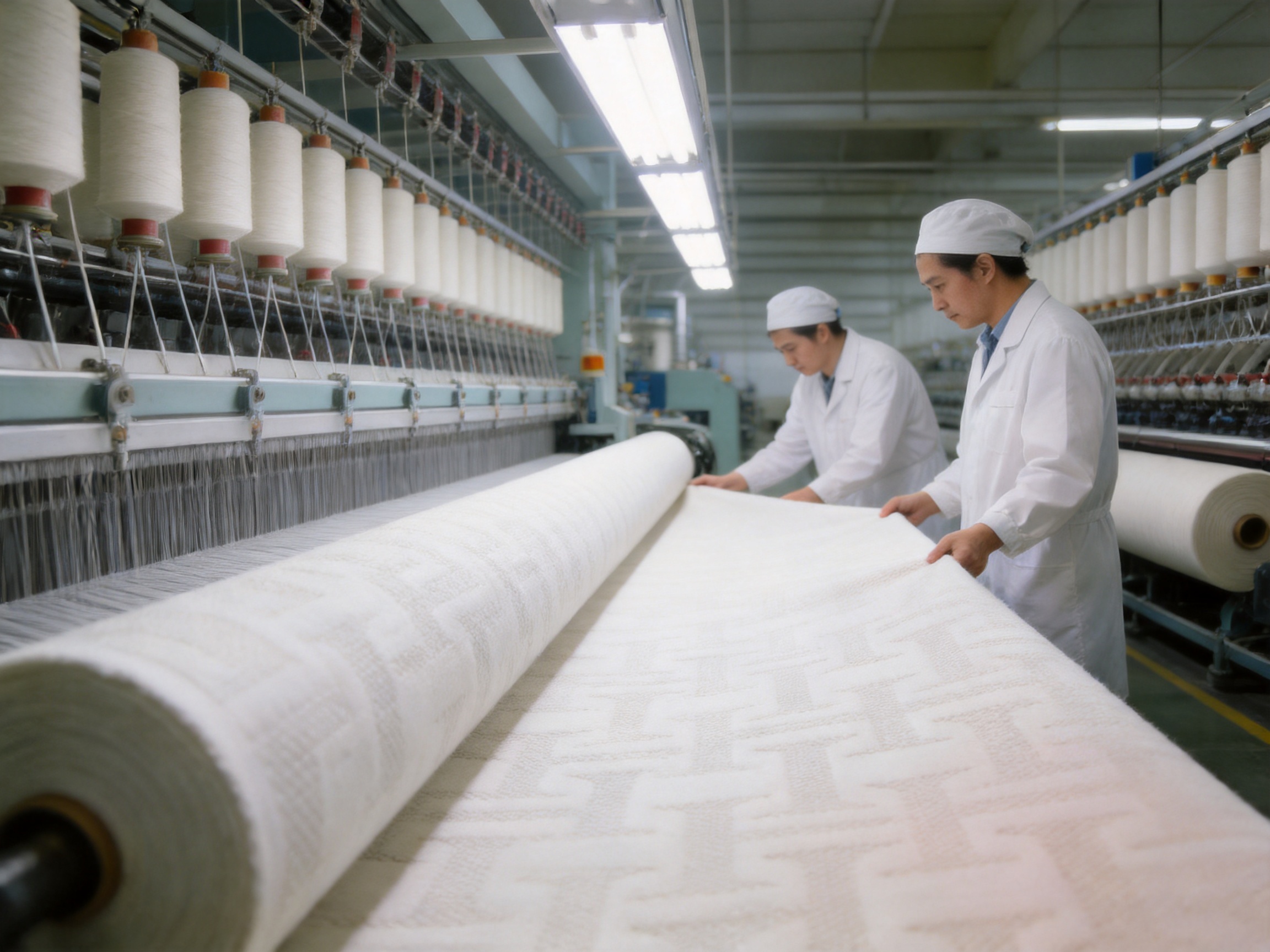
During weaving, stable yarn tension and accurate machine settings are important for producing an even fabric. Irregular tension can create bars, streaks, width variation, or structural inconsistency. Controlled weaving helps ensure that the finished fabric can be cut into pillow panels with predictable behavior.
For a professional textile manufacturer, weaving is not simply the act of interlacing yarns. It is a controlled process involving equipment condition, operator skill, material preparation, production parameters, and real-time monitoring. Consistency in this stage supports better appearance and fewer defects in the finished roll.
Dyeing and Color Management
Color is an important commercial element for pregnancy pillow products. Soft neutrals, gentle pastels, natural shades, and coordinated bedding colors are often used to create a calm visual atmosphere. However, color selection must be supported by accurate production management.
Color management includes laboratory dips, standard comparison, dye-batch control, shade evaluation, and appropriate documentation. A reliable process reduces shade variation between lots and supports consistent production for repeat orders. It is also important to consider how the color will appear under different lighting conditions and after laundering.
Customers may request custom colors based on a sample, a recognized color system, or a previously approved production standard. Final color approval should be completed before bulk production begins.
Functional Finishing
Functional decorative textiles can be developed to support more than appearance. Depending on the project, finishing technologies may address antibacterial performance, moisture resistance, flame-retardant requirements, sleep-supporting comfort, or other product objectives. The suitability of any treatment depends on the application, local regulations, testing requirements, and customer expectations.
For pregnancy pillow fabric, comfort-related performance is generally a key priority. A finishing process should not compromise breathability or create an unpleasant hand feel. If a customer requests a specialized treatment, the finished textile should be evaluated for durability, wash resistance, safety, labeling, and compatibility with the intended use.
Functional claims should always be supported by appropriate testing and technical documentation. A responsible manufacturing process distinguishes between a fabric’s inherent characteristics, a tested performance property, and a marketing statement that requires regulatory review.
Inspection and Quality Assurance
Quality control should be implemented throughout production rather than only at the end. Incoming materials, yarn condition, weaving performance, dyeing results, finishing stability, roll length, fabric width, and surface appearance should all be monitored.
Final inspection may identify weaving defects, stains, holes, broken yarns, color inconsistency, width variation, creasing, or other issues. Rolls can be inspected using standardized lighting and fabric inspection systems. Defect records help manufacturers identify recurring causes and improve future production.
For buyers, clear quality standards are valuable. These may include approved color samples, acceptable defect levels, width tolerance, shrinkage limits, weight range, packaging requirements, and test methods. A detailed specification reduces misunderstanding between supplier and customer.
Packaging and Shipment Preparation
After inspection, the fabric should be rolled, labeled, protected, and packaged according to the customer’s requirements. Appropriate packaging helps prevent moisture, dust, compression marks, and handling damage during storage and transport.
Roll labels may include product code, color, lot number, length, width, production date, and inspection status. Traceable labeling supports efficient stock management and makes it easier to investigate any quality issue that may arise after delivery.
Manufacturing Strengths and Business Capabilities
Hangzhou Xinsili Decorative Fabric Weaving Co., Ltd. has built its business around decorative textile research, development, and manufacturing. Its focus on functional decorative fabrics supports applications in homes, hotels, commercial interiors, and comfort-oriented products. This background is relevant to pregnancy pillow fabric because the product requires both a pleasing decorative surface and reliable everyday performance.
The company’s 19 years of industry experience provide a foundation for understanding textile construction, customer customization, production coordination, and quality consistency. Experience is valuable when a project requires more than a standard catalog material. It enables the manufacturer to identify practical solutions for hand feel, weave selection, color control, finishing, and bulk production.
A 12,000-square-meter factory area provides an established manufacturing environment for coordinating development, weaving, finishing, inspection, and order preparation. Factory scale alone does not guarantee quality, but a structured production site can support better process organization, clearer workflow, and more stable communication between technical and production teams.
The company’s recognition as a National High-Tech Enterprise in 2023 reflects an orientation toward research, innovation, and technology-supported manufacturing. This is particularly relevant to functional textile development, where customers may require specialized performance characteristics alongside decorative appeal.
The company also promotes a manufacturing philosophy centered on craftsmanship, design innovation, environmental responsibility, and win-win cooperation. These principles can support long-term business relationships because textile buyers typically need dependable repeat production rather than a single successful sample.
Integrated Development Approach
An integrated approach connects design requirements with manufacturing feasibility. Instead of treating fabric design, weaving, finishing, and inspection as separate activities, the product can be developed as a complete textile solution. This helps reduce conflicts between appearance and performance.
For example, a very soft finish may be attractive during sampling but could reduce sewing stability if it changes the fabric’s surface friction. A dense construction may appear premium but could reduce breathability. An intense color may look appealing but require additional attention to colorfastness. Integrated evaluation helps address these relationships before production.
Customization for Different Markets
Pregnancy pillow manufacturers serve different customer groups, including online retail brands, bedding companies, maternity product specialists, furniture and home textile businesses, hotels, and healthcare-related accommodation providers. Each group may require different textile priorities.
Retail products may emphasize color, softness, packaging, and visual differentiation. Hotel or commercial products may focus on durability, repeatability, and efficient laundering. Premium products may require refined finishing, coordinated colors, and a high-quality hand feel. A flexible textile manufacturer can help adapt the same broad material concept to these different commercial needs.
Coordination for Bulk Orders
Bulk production requires careful planning of raw materials, machine scheduling, color lots, finishing capacity, inspection time, and shipment preparation. A supplier with established systems can provide clearer production communication and help customers plan inventory.
Buyers should discuss minimum order quantities, sample lead times, bulk lead times, repeat-order procedures, color approval, testing, and packaging before confirming an order. Early communication supports realistic delivery planning and helps prevent changes after production has begun.
Applications Beyond Pregnancy Pillows
Although the primary focus is pregnancy pillow fabric, the same textile platform can support many related products. Long body pillows, nursing pillows, maternity cushions, lumbar cushions, reading pillows, children’s pillows, and decorative bedding accessories may all benefit from a soft, breathable, washable cotton surface.
The fabric can also be incorporated into coordinated bedroom collections. Matching pillowcases, mattress accessories, duvet components, bed runners, and soft decorative cushions can create a unified product story. This gives manufacturers an opportunity to expand a single successful fabric into a broader home textile range.
For hospitality applications, cotton-based decorative fabrics may be used for selected cushions, guest-room comfort products, lounge textiles, or interior accessories. In these environments, appearance and durability must be evaluated alongside laundering procedures, commercial cleaning methods, and relevant fire or safety requirements.
Pet-friendly home products are another possible application area. However, fabrics for pet beds and accessories may require additional abrasion, hair-release, stain-management, and odor considerations. The final specification should be adapted to the intended environment rather than assuming that a pregnancy pillow specification is automatically suitable for every application.
How to Select the Right Specification
Define the Intended User Experience
Before selecting a fabric, define how the product should feel and perform. Important questions include whether the pillow is intended for warm or cold climates, whether the cover will be removed frequently, whether the product should feel lightweight or substantial, and whether the target customer expects a natural textile story.
It is also useful to identify contact areas. A cover that touches the face and neck may require a smoother surface than an outer decorative panel. If the pillow is intended for full-body contact, overall breathability and moisture management become more important.
Consider the Cover Construction
The pattern and sewing method influence fabric selection. Curved designs may require a textile with adequate flexibility and dimensional stability. Zippered covers require stable edges and reliable seam performance. Quilted products may need a construction that can withstand needle penetration without excessive yarn displacement.
Manufacturers should create a prototype using the proposed fabric. The prototype can reveal problems that are not visible in a flat swatch, including puckering, seam slippage, difficult turning, uneven curves, and zipper distortion.
Test Care Performance
Care instructions should be established through testing rather than assumption. The fabric should be washed and dried according to the intended consumer instructions. Measurements before and after laundering can help determine dimensional change. Surface evaluation can identify pilling, fading, roughness, or loss of softness.
If the pillow will be sold with a removable cover, the cover should be tested independently and as part of the complete product. Filling materials, zippers, thread, labels, and trims may respond differently to washing and should be considered in the final care recommendation.
Review Safety and Compliance Needs
Textiles used in consumer products may be subject to material, chemical, labeling, flammability, or consumer safety requirements depending on the destination market. Buyers should identify the applicable regulations before production and request appropriate test documentation from the supplier.
When functional treatments are used, the buyer should confirm the treatment chemistry, intended performance, washing durability, and required declarations. Transparent documentation supports responsible product marketing and reduces compliance risk.
Sustainability and Responsible Textile Development
Environmental responsibility is increasingly important in home textiles and maternity products. Cotton pregnancy pillow fabric can support a more responsible product strategy when the entire life cycle is considered, including fiber sourcing, dyeing, finishing, durability, washing, packaging, and end-of-life options.
Durability is one part of sustainability. A fabric that maintains its appearance and function through repeated use may reduce the need for frequent replacement. Washable removable covers can also help consumers maintain the pillow without discarding the entire product when the cover becomes soiled.
Efficient production practices can reduce material waste by improving width control, pattern planning, defect prevention, and roll utilization. Accurate sampling and color approval can also reduce the risk of producing unwanted bulk fabric.
Environmental claims should be specific and supported by evidence. Terms such as eco-friendly, sustainable, biodegradable, or low-impact should not be used without appropriate documentation. Buyers and manufacturers should work together to determine which sustainability attributes can be verified and communicated accurately.
Product Development Workflow for Buyers
A practical development workflow can make the sourcing process more efficient. The first stage is requirement definition. The buyer provides information about the pillow shape, cover construction, fabric composition, preferred appearance, target market, required quantity, and expected performance.
The second stage is material recommendation. The textile manufacturer proposes one or more constructions, finishes, color options, and testing plans. The buyer reviews the samples for hand feel, appearance, sewing behavior, and compatibility with the complete pillow design.
The third stage is prototype production. A full pillow cover or sample product is made using the selected fabric. This allows both parties to identify construction problems before bulk production.
The fourth stage is performance confirmation. Tests may include dimensional stability, colorfastness, abrasion, pilling, seam performance, air permeability, moisture-related behavior, and any requested functional treatment evaluation.
The fifth stage is bulk production and inspection. Approved standards are used to control color, width, weight, appearance, packaging, and shipment details. Lot information should be retained to support future repeat orders.
The final stage is review and continuous improvement. Feedback from manufacturing, retailers, and end users can guide future adjustments to softness, colors, finishing, packaging, and care instructions.
Quality Checklist for Cotton Pregnancy Pillow Fabric
| Quality Area | What to Review | Why It Matters |
|---|---|---|
| Composition | Fiber content, yarn type, and any blended components | Supports accurate product labeling and performance expectations |
| Hand feel | Softness, smoothness, flexibility, and surface comfort | Directly influences user satisfaction |
| Appearance | Color, weave regularity, texture, and visible defects | Creates perceived product quality |
| Dimensional stability | Width, shrinkage, skew, and shape retention after washing | Helps maintain accurate cover dimensions |
| Strength | Tensile strength, tear resistance, and seam behavior | Supports long-term use and repeated handling |
| Color performance | Colorfastness to washing, rubbing, perspiration, and light where required | Reduces fading and color transfer risks |
| Surface durability | Pilling, abrasion, snagging, and finish stability | Protects appearance during normal use |
| Functional treatment | Performance claims, durability, safety, and documentation | Supports responsible technical and marketing communication |
| Packaging | Roll protection, labels, lot information, and moisture prevention | Helps preserve quality during storage and transport |
Why Consistency Is a Competitive Advantage
In textile sourcing, consistency can be more valuable than a single impressive sample. A buyer needs the same general hand feel, color, width, and performance from one order to the next. Inconsistent fabric can cause cutting adjustments, sewing problems, shade mismatches, customer complaints, and additional inspection costs.
Stable manufacturing processes help reduce these risks. Standardized specifications, retained samples, controlled raw materials, production records, and inspection procedures all contribute to repeatability. When a company combines technical development with organized manufacturing, it can support both initial product creation and long-term supply.
Consistency is especially important for pregnancy pillow products because the cover is often part of a recognizable product identity. A brand may offer multiple pillow shapes in a coordinated collection. If the fabric changes noticeably between shapes or production seasons, the collection may appear less unified.
A capable supplier can help customers establish a fabric standard that includes physical properties, appearance references, color approvals, finishing instructions, testing methods, and packaging requirements. This standard becomes a foundation for future orders and product extensions.
Frequently Asked Questions
What makes cotton suitable for pregnancy pillow covers?
Cotton can provide a soft and familiar skin-contact surface, good moisture absorption, useful breathability, and broad customization options. It is also suitable for washable cover designs when the fabric is properly constructed and the care instructions are followed.
Is cotton pregnancy pillow fabric suitable for hot climates?
It can be suitable for warm climates when the fabric construction, weight, density, and finishing are selected for air permeability and comfortable moisture management. A lightweight or breathable specification may be preferable to a dense or heavily finished construction.
Can the fabric be customized in different colors?
Yes. Cotton fabric can generally be developed in custom colors, subject to the selected dyeing process, minimum order requirements, color standards, and production conditions. A laboratory sample or approved color swatch should be confirmed before bulk production.
Can patterns or decorative effects be added?
Depending on the construction, the fabric may support printing, woven patterns, textured effects, quilting, embroidery, or decorative finishing. The selected design should be tested for colorfastness, surface durability, and sewing compatibility.
How should buyers test a fabric before placing a bulk order?
Buyers should evaluate the fabric in both swatch and prototype form. Recommended checks may include hand feel, color, width, weight, air permeability, washing shrinkage, colorfastness, pilling, abrasion, seam behavior, and overall sewing performance. The exact test program should reflect the target market and product requirements.
Can cotton fabric be used for removable pillow covers?
Yes. Cotton is commonly considered for removable covers because it can be comfortable and washable when the fabric and construction are appropriately specified. Zippers, seams, labels, and trims should be tested together with the fabric.
Does a softer fabric always provide better quality?
Not necessarily. Softness is important, but a high-quality pregnancy pillow fabric should also provide suitable strength, dimensional stability, color performance, sewing behavior, and care durability. The best specification balances comfort with the complete product’s functional needs.
Can functional treatments be applied to cotton fabric?
Functional treatments may be available for properties such as antibacterial performance, moisture resistance, flame retardancy, or comfort enhancement. Any treatment should be selected according to the final application and supported by appropriate technical and safety documentation.
Is cotton better than polyester for every pregnancy pillow?
No single textile is ideal for every product. Polyester may offer quick drying, strength, or cost advantages, while cotton may offer a more natural hand feel and better moisture absorption. The best choice depends on the product’s price, climate, care requirements, performance goals, and customer expectations.
What information should be provided when requesting a quotation?
A quotation request should include the desired composition, fabric construction if known, width, approximate weight, color, finish, estimated quantity, application, sample requirements, delivery destination, packaging expectations, and any requested testing or certifications. Clear information helps the manufacturer recommend an appropriate solution.
Why is factory experience important for this product?
Experienced textile manufacturing supports better decisions in yarn selection, weaving, finishing, color control, defect prevention, and repeat production. It can also help customers adapt the fabric to curved pillow patterns, washing requirements, and different market positions.
Conclusion
Cotton pregnancy pillow fabric offers a balanced textile solution for manufacturers seeking comfort, breathability, moisture management, durability, design flexibility, and broad consumer acceptance. Its natural-feeling surface is well suited to products that remain close to the body for extended periods, while its adaptability supports different pillow shapes, cover constructions, colors, patterns, and market positions.
The strongest results come from treating the fabric as part of a complete product system. Fiber and yarn selection, weave structure, finishing, color management, dimensional stability, sewing behavior, care performance, and quality inspection must work together. Sample testing and prototype development are essential for confirming that the selected material performs as expected in the finished pillow.
Hangzhou Xinsili Decorative Fabric Weaving Co., Ltd. brings 19 years of textile industry experience, a 12,000-square-meter factory area, functional textile research capabilities, and a manufacturing philosophy focused on craftsmanship, innovation, environmental responsibility, and long-term cooperation. Its experience in decorative and functional fabrics supports the development of textile solutions for residential, hotel, commercial, bedding, comfort, and specialized applications.
For buyers, the most important advantage is the ability to develop a fabric that combines user comfort with reliable manufacturing performance. With clear specifications, controlled production, appropriate testing, and careful quality management, cotton pregnancy pillow fabric can help create products that are attractive, comfortable, washable, and competitive in the global sleep-support market.
References
International Organization for Standardization. Textile Testing Principles for Colorfastness, Dimensional Stability, and Fabric Performance.
American Society for Testing and Materials. Standard Practices for Testing Textile Fabrics, Seam Performance, Abrasion Resistance, and Pilling.
International Textile Manufacturers Federation. General Guidance on Textile Fiber Selection, Manufacturing Quality, and Responsible Production.
Textile Institute. Textile Materials and Processes: Fiber Properties, Yarn Formation, Weaving, Dyeing, and Finishing.
Home Textile Product Development Guidelines. Considerations for Comfort, Washability, Skin Contact, Product Construction, and Consumer Care.
Functional Decorative Textile Manufacturing Principles. Technical Coordination of Design, Performance, Quality Control, and Sustainable Product Development.
Product: Cotton Pregnancy Pillow Fabric

Our Featured Products
-
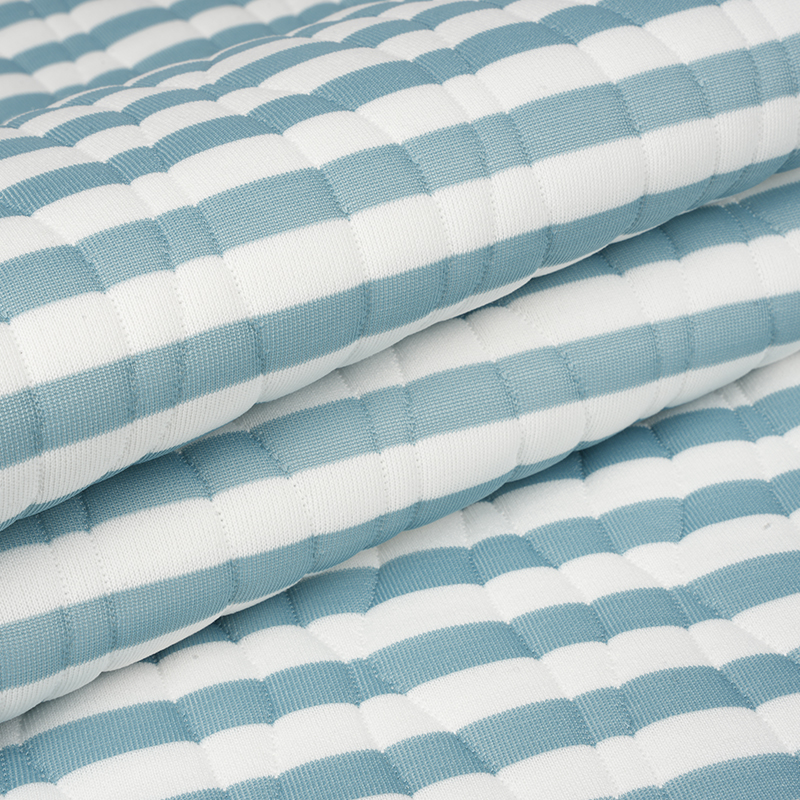
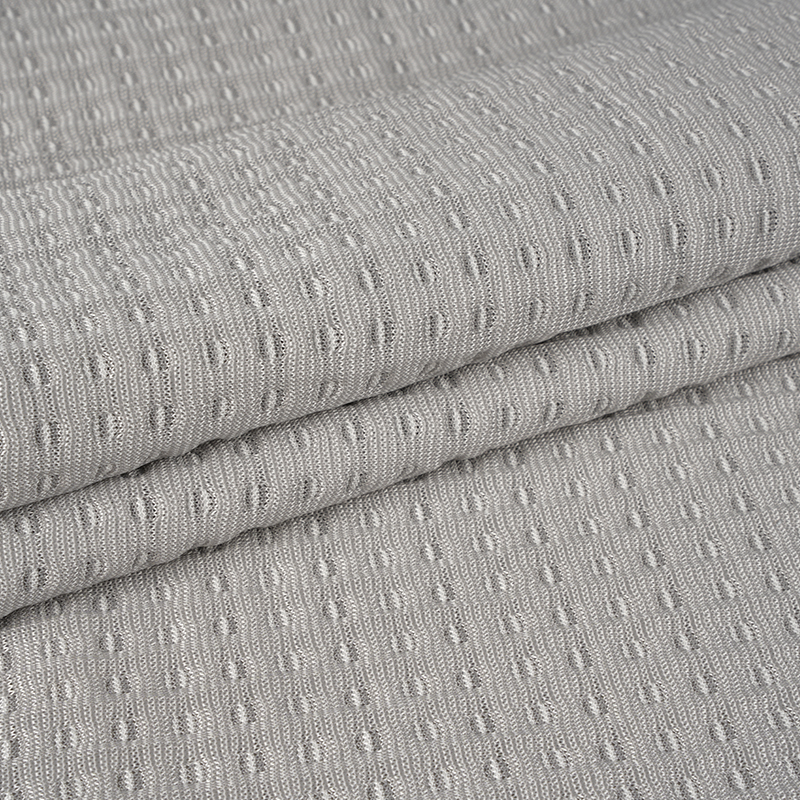
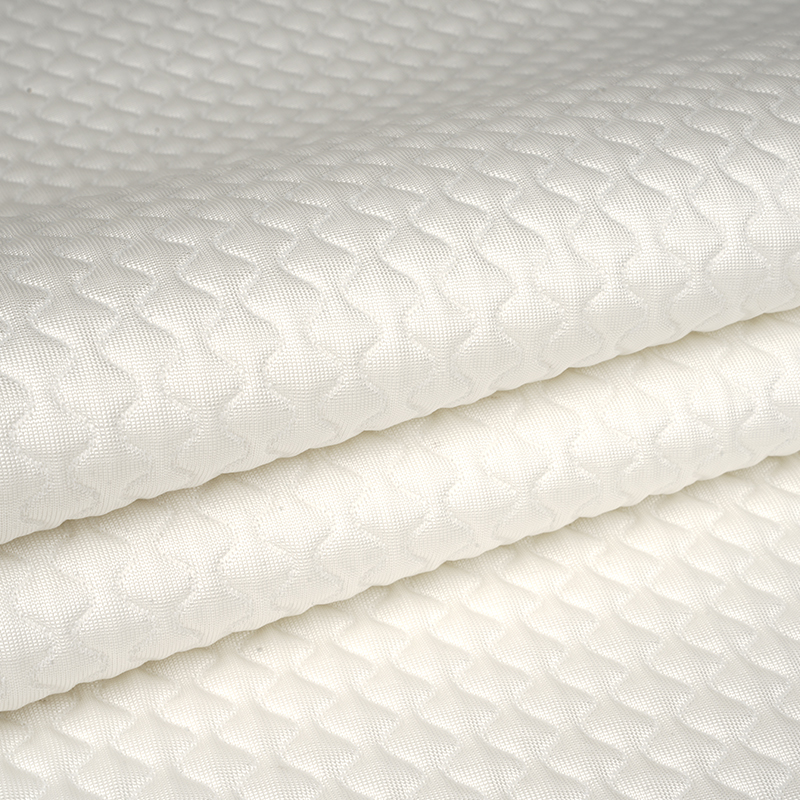
Cotton Pillowcase Fabric
Cotton Pillowcase Fabric
Haven’t Found The Products You Want?
-
-
Shen Jinyan:+86-15158070676
[email protected]
Liang Jinwen:+86-15757186621
[email protected]
Qiu Yingyingn:+86-13819545790
[email protected]
Yi qiao Town, Xiaoshan District, Hangzhou City, Zhejiang Province, China
-
Products
Mattress Fabric Children Mattress Fabric Pillowcase Fabric Pregnancy Pillow Fabric Cooling Mat Fabric Bedding Fabric Sofa Fabric Pet Friendly Fabrics -
Contact Information
About Us Products Strength Sustainability News Contact Us
Copyright © Hangzhou Xinsili Decorative Fabric Weaving Co.,Ltd. All Rights Reserved.
Functional Decorative Textile Manufacturers
